
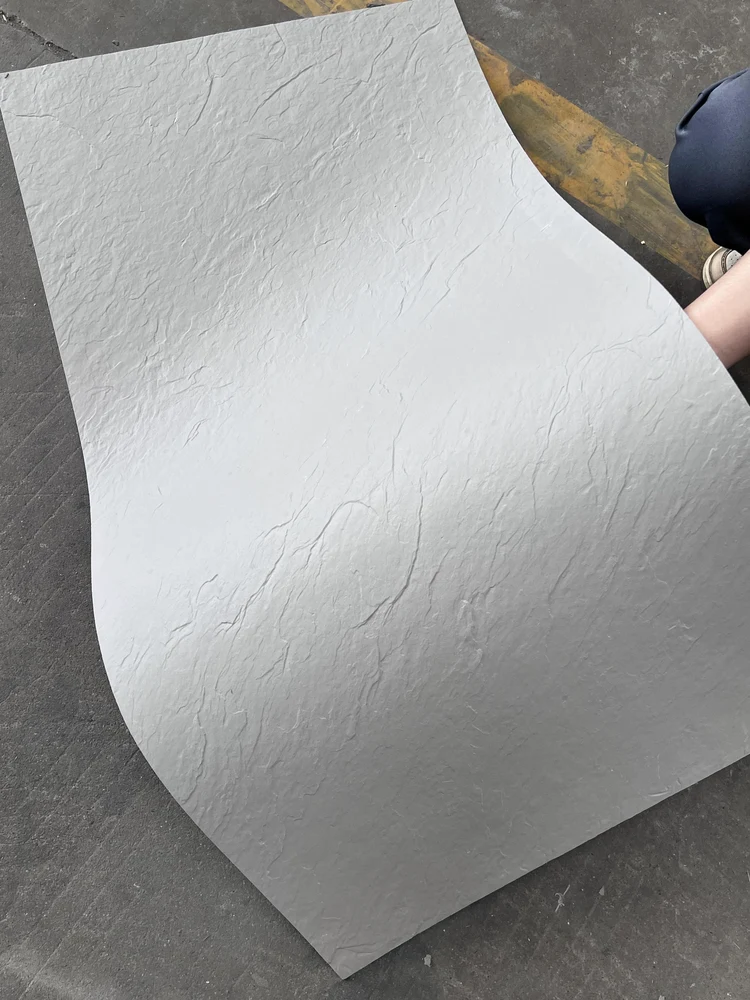
Grey Slate Flexible Stone
Grey Slate is a flexible stone with neutral gray tones, natural stratification, and irregular stone textures as the main visual features, suitable for wall designs in hotel public areas, catering spaces, commercial stores, and exhibition halls. This page provides specifications and packaging parameters, material and performance, construction methods and acceptance points, with applicable scenarios and selection suggestions; free samples and bulk engineering quotes are supported, and inspection reports can be provided.
IGOODS source factory products, suitable for hotel, inn, commercial and old city wall engineering projects; supports sample delivery and project quotation.
Specifications and packaging parameters
| Specifications (mm) | Thickness (mm) | Approx. weight per panel (kg) | Wooden crate packaging (pieces/crate) | Area of wooden crate after packaging (㎡) | Dimensions after packaging W×L×H (mm) | Weight after packaging approx. (kg) |
|---|---|---|---|---|---|---|
| 600×1200 | 2.3-2.8 | 2.5-2.8 | 330 | 237.6 | 680×1280×1100 | 900 |
| 1200×3000 | 2.3-2.8 | 15-15.5 | 80 | 288 | 1280×3100×600 | 1200 |
Optional colors:Grey, white, black (other colors customizable)
Packaging notes:Default wooden crate packaging, suitable for long-distance transportation or larger orders; export wooden crates (thicker and sturdier panels) are available for export orders. The above specifications, weights and packaging data are for reference only; the actual order confirmation shall prevail.
What is Gray Slate Flexible Stone?
Gray Slate Flexible Stone is a wall decorative material whose main visual features are a neutral gray tone and natural slate bedding. It belongs to the Slate and Natural Mountain Stone series of IGOODS Flexible Stone. Compared with travertine products that emphasize a porous feel, slate more prominently features surface bedding, fissures, and natural stone veining, thus presenting a more restrained, natural, and architectural material effect in commercial spaces.
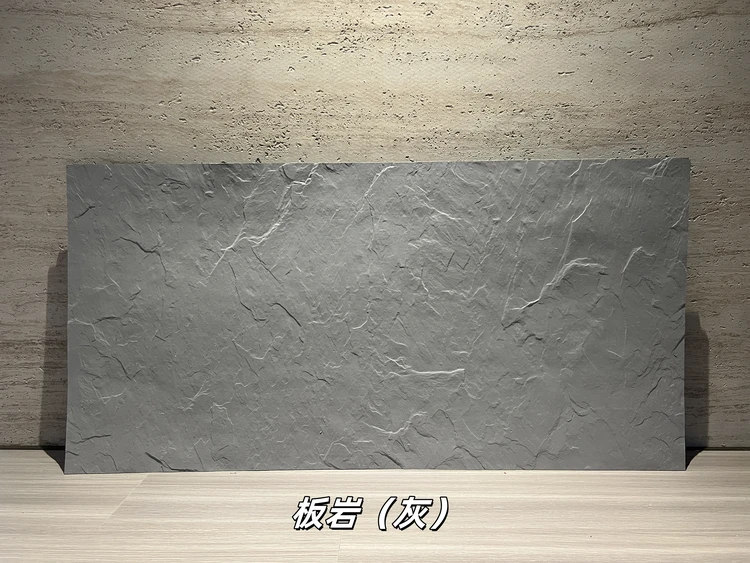
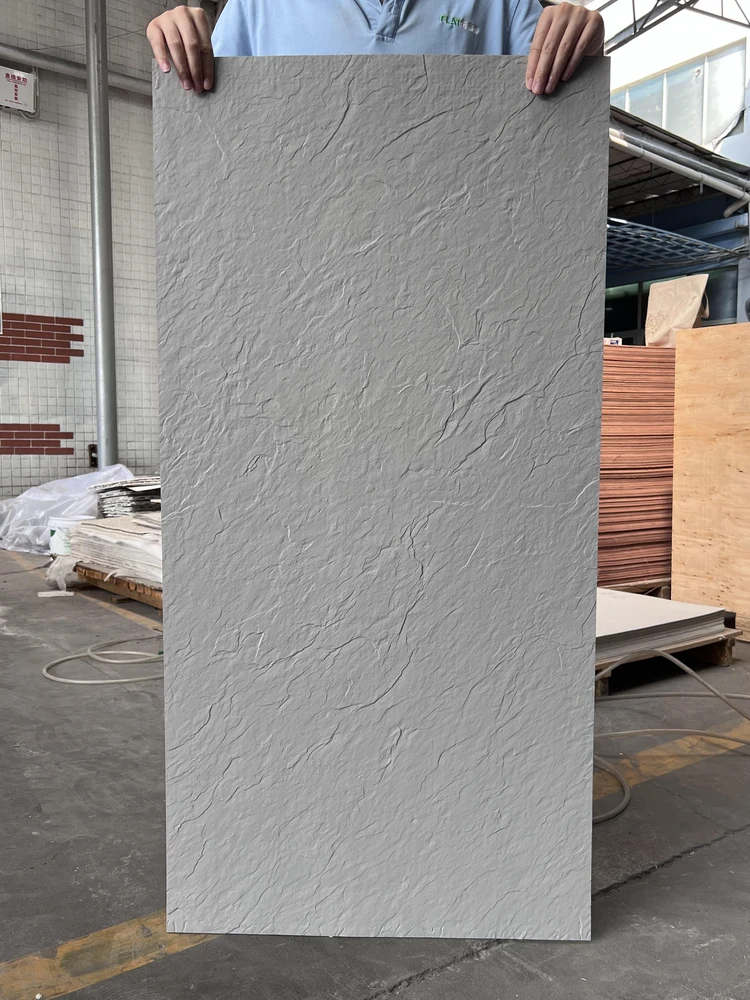
From this actual product photo, it can be seen that this gray slate as a whole maintains a relatively uniform gray base, with irregular veining of varying depths distributed across the surface, accompanied by a small number of light-colored veins. The veining does not form obvious regular repetition, and is therefore closer to the visual language of random variation in natural slate.
This product is mainly aimed at wall material selection for hotels, restaurants, commercial stores, showrooms, and other commercial fit-out projects, and is not promoted as a flooring material.
From the actual photos, what are the texture characteristics of gray slate?
Neutral gray base
This product has no obvious strong combined color tendency toward blue or warm; visually it is mainly neutral limestone gray, so it has good material compatibility in commercial spaces.
For designers, neutral gray is usually easier to establish overall color relationships with wood veneer, metal, glass and cement-based materials, and it is also easier to control the light and dark layers of the entire space.
Natural irregular slate bedding
From the actual photos, it can be seen that the material surface is not uniformly flat gray, but has relatively obvious irregular bedding, fissures and fine crushed stone veins.
This veining has no uniform direction, so visually it emphasizes the random variation typical of natural stone, making it suitable for commercial spaces that want the wall to retain a natural material feel without overly exaggerated veining.
Localized light-colored veining adds layering
In the gray surface, a small number of relatively light fine linear veins can be seen. These light-colored textures are not the main subject of the pattern, but are interspersed as details among the gray layers, giving the wall richer layering when observed up close.
What kind of commercial spaces is Gray Slate suitable for?
The greatest characteristic of Gray Slate is not creating a strong visual impact, but establishing a relatively stable material background for commercial spaces. Therefore, it is more suitable for projects that need to emphasize the balanced relationship among space design, furniture, lighting, and brand display.
Hotel public areas
Hotel lobbies, elevator halls, corridors and public lounge areas usually require walls to have a certain stone texture while not making the space feel too heavy. The neutral tones of gray slate are suitable as the main wall or local material accent in such spaces.
Dining area and coffee space
In food and beverage projects, gray slate can be combined with wood veneer, black metal, warm lighting and soft furnishings to form a material composition. Compared with simply using cement-gray walls, the natural slate bedding can add detailed variation to the wall.
Commercial storefronts
For clothing, furniture, lifestyle brands and other commercial stores, wall materials usually need to serve merchandise and brand display. Neutral gray slate will not create overly strong overall color interference, making it suitable as one of the material options for display areas, entrance areas and visual backdrop walls.
Showroom and material display space
The slate texture itself has clear material recognizability, so it is also suitable for design showrooms, building materials showrooms, and brand display spaces, where lighting can further express the natural layering of the surface.
How should one choose between Gray Slate and White Slate?
IGOODS official website has currently released white slate products. Although the two belong to the same slate system, their design directions are not entirely the same.
Gray Slate is more suitable for projects that want the space to present a neutral, restrained, natural, and architectural feel. When paired with dark wood veneer, natural wood, black metal, and warm light, the spatial layers become more pronounced.
White Slate leans toward a brighter and lighter composite color relationship, suitable for design schemes that need to increase the overall brightness of the space or use large amounts of light-colored materials.
When selecting materials for a project, it is not advisable to judge only by "which color looks better"; instead, consider the space's daylighting, furniture colors, lighting color temperature, other wall materials, and the brand's overall color system.
Gray Slate Flexible Stone Specifications and Parameters
| Project | Parameter description |
|---|---|
| Product name | Gray Slate Flexible Stone |
| English name | Gray Slate Flexible Stone |
| Product category | Flexible Stone |
| Series | Slate and natural mountain stone |
| Main tone | Neutral gray / limestone gray |
| Common specifications | 600×1200mm, 1200×2400mm, 1200×3000mm |
| Common thickness | 3–6mm |
| Weight | Approx. 3–7 kg/㎡, varying with different textures and thicknesses |
| Sample specifications | 20×30cm |
| Application Location | Building wall |
| Product standards | JG/T 540-2017"Flexible Stone-like Facing Materials for Buildings" |
Material and performance parameters
At the level of material and performance, several points about this type of material need to be clarified first. The material system is inorganic mineral raw materials plus a polymer flexible substrate, containing no asbestos and no heavy metals, and can be used in indoor spaces with air quality requirements. The material is thin and lightweight and flexible, bendable, and not prone to cracking or deformation; it also offers comprehensive performance including flame retardancy, moisture resistance, stain resistance, and UV resistance.
| Project | Parameter description |
|---|---|
| Composition of materials | Composite of natural mineral raw materials and polymer flexible substrate, an inorganic eco-material |
| Fabric process | A stone-imitation decorative surface formed by pressing or printing according to the surface texture of the color |
| Environmental performance | No added formaldehyde, no asbestos, meeting conventional environmental requirements for home and commercial decoration |
| Combustion performance | Flame retardant; the specific combustion performance grade shall be subject to the valid test report of the selected model. |
| Waterproof and moisture-proof | The material does not absorb water, and after construction the wall is less prone to dampness and mold |
| Mildew resistance | Can be used in humid environments and underground spaces, with daily maintenance mainly by wiping |
| UV resistance and weather resistance | Has UV resistance, high and low temperature resistance and weathering resistance, and can be used for exterior facades. |
| Anti-cracking | Flexible base material can absorb the micro deformation of the base, and the surface is not easy to appear fine cracks |
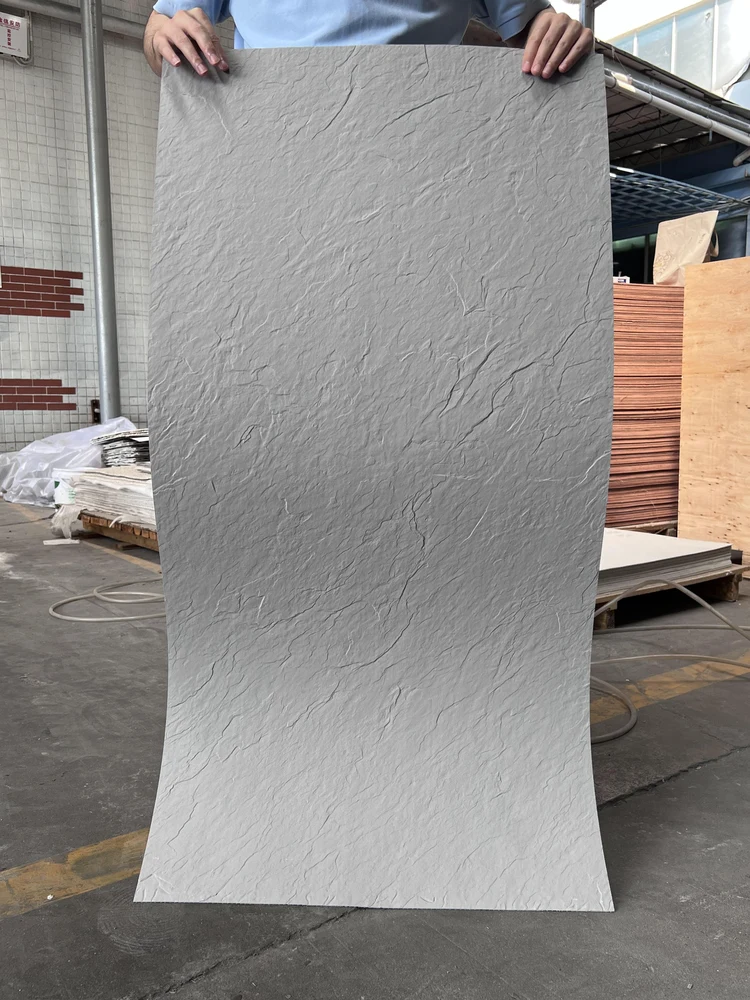
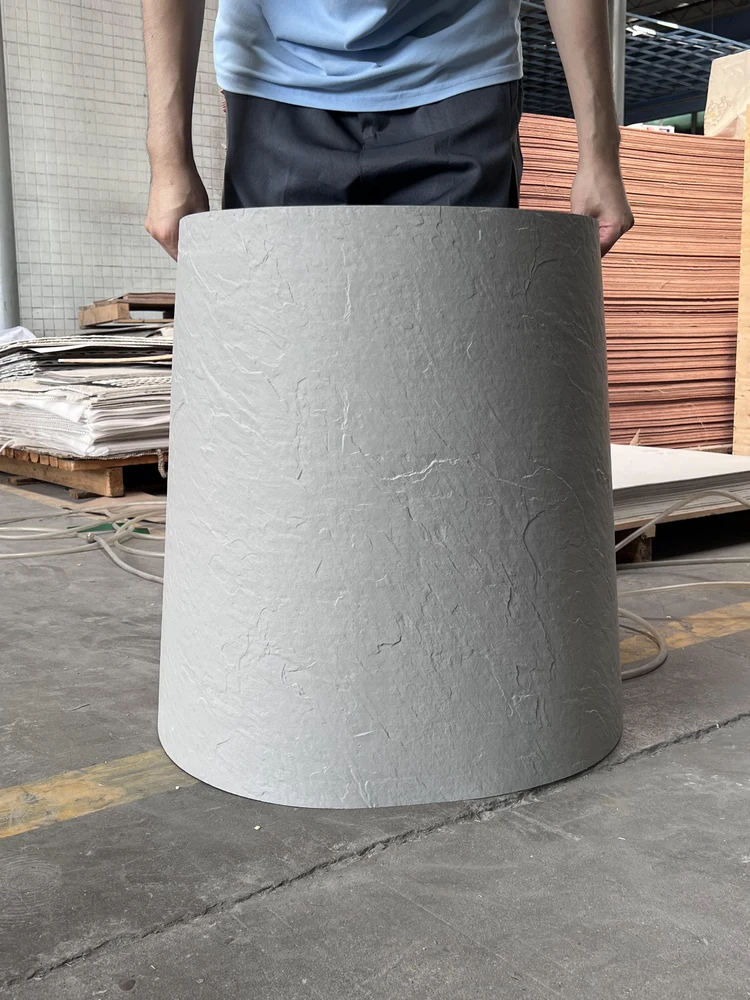
| Can be bent | The sheet material has certain flexibility and can be bent within a certain radius; the specific radius is determined by the model and base conditions |
| Bonding method | Full-bed adhesion is recommended for installation; select adhesive according to product instructions; weather-resistant adhesive is required outdoors |
| Stain resistance and cleaning | The surface is dense and not prone to retaining dirt; for daily cleaning, simply wipe with water or a neutral cleaner |
| Implementation standards | JG/T 540-2017 'Building Flexible Stone-faced Decorative Material' |
| Customizable item | Texture direction, color, texture, thickness, specifications and dimensions, and packaging method |
| Sample specifications | Physical samples can be provided for design material selection and texture confirmation |
The above are the general performance ranges for flexible stone as a category of material. For the acceptance of gray slate flexible stone in a specific project, the valid test reports for the selected model, the provisions of the supply contract, and the relevant standards of the project location shall govern.
Key installation and construction points
No keels or complex substrate preparation are needed; it can be directly adhered after the substrate is leveled. Corresponding construction methods are available for flat surfaces, curved surfaces, columns, special-shaped curtain walls, old walls, and insulated walls.
Substrate treatment
Before construction, confirm that the substrate is solid, clean, and free of obvious dusting and oil stains. If the original wall has a coating, check its adhesion strength; areas with poor adhesion should be removed first. When directly covering an old finish, ensure that the original finish itself bonds reliably.
Measurement and layout
During layout, first determine the starting point and the direction of the joints, then position each panel one by one. For large-area walls, it is recommended to first snap lines to control the continuity of horizontal and vertical joints, avoiding accumulated errors panel by panel that lead to slanted joints at the end.
Cutting and hole drilling
Can be scored multiple times with a utility knife and a straightedge and then snapped, or processed with a cutting machine; openings for switch panels, access panels and similar locations should be cut to actual dimensions, leaving a small allowance at the opening edge before trimming. Flexible stone is easy to cut on site and does not require prefabrication.
Pasting installation
Both dry-bonding and wet-bonding processes are compatible. Use a dedicated adhesive for flexible stone, apply with the full-surface bonding method, spread evenly with a notched trowel, and press firmly after installation to ensure there are no obvious voids between the back of the board and the substrate. For outdoor facade construction, a weather-resistant adhesive suitable for the external environment must be used.
Compaction and adjustment
Corners and edges are where flexibility problems most easily appear: the four corners must be compacted separately, and adjacent panels should be checked with a straightedge for flatness. If height differences are found, address them immediately while the adhesive has not yet begun to set.
Edge finishing and acceptance
Where corners cannot be bent directly, metal edge trim or internal corner trim must be used as a transition. During acceptance, focus on checking the hollowing rate, seam consistency, smoothness of closures, and verticality of internal and external corners.
What are the material selection differences between Gray Slate and traditional heavy slate?
Traditional slate and flexible slate are not entirely the same material system; the two should be selected according to specific project requirements.
Natural slate emphasizes the material structure, thickness, and true stone properties of natural stone itself; flexible slate focuses more on expressing slate-style comprehensive color and bedding effects in a lightweight wall system.
For some commercial spaces, renovation projects or projects with requirements on wall material weight and construction organization, flexible stone can provide another material option. However, in specific projects, judgment should still be based on the substrate structure, design requirements, usage environment and testing requirements, rather than simply understanding it as a direct replacement for all natural stone applications.
What should be noted when designing a gray slate wall?
Do not turn the entire space gray
Gray Slate itself is a neutral-color material. If the floor, walls, furniture, and ceiling all use similar gray tones, the space can easily lose its visual focal point.
It is more recommended to use wood veneer, metal, lighting, or other light-colored materials to create comprehensive color and material contrast.
Confirm the physical sample before large-area application
Stone-like textures may present different visual effects under different lighting, shooting environments and display devices. Before deciding on large-area use in a commercial project, it is recommended to first confirm the actual color, texture and feel through physical samples.
Determine the texture layout relationship in advance
Before constructing large-area commercial walls, layout should be carried out according to wall dimensions, and the texture direction and overall color relationship between different panels should be confirmed, to avoid overly concentrated local texture distribution after construction is complete.
What project information needs to be provided before purchasing Gray Slate?
For more accurate product selection and project communication, purchasers are advised to provide the following information when inquiring or requesting samples:
- Project type, such as hotel, restaurant, commercial store, or showroom;
- Estimated usable area;
- Specific wall application locations;
- Indoor or outdoor use environment;
- Flat walls or curved structures;
- Target specifications and thickness requirements;
- Whether there are fire safety, environmental protection, or other test data requirements;
- The region where the project is located and the planned delivery time.
IGOODS can provide material selection, physical samples, design coordination and engineering project support according to project conditions.
Frequently Asked Questions about Gray Slate Flexible Stone
What is Gray Slate Flexible Stone?
Gray Slate Flexible Stone is a flexible wall decorative material whose main visual features are a gray base and natural slate bedding. It is mainly used for walls in commercial and project spaces.
What are the common specifications for Gray Slate?
IGOODS flexible stone common specifications include 600×1200mm, 1200×2400mm, and 1200×3000mm. The specific specifications available need to be confirmed according to the corresponding product model.
How thick is Gray Slate generally?
IGOODS flexible stone is commonly 3–6mm thick; the specific thickness of the product varies according to the texture and model.
Is Gray Slate suitable for hotel lobbies?
Judging from the color and texture design perspective, neutral gray slate is suitable for walls in hotel lobbies, elevator halls and other public areas, and can be combined with wood veneer, metal and warm-colored lighting. The specific engineering application still needs to be determined in conjunction with the project design requirements.
What is the difference between Gray Slate and White Slate?
The main difference lies in the combined color and spatial expression. Gray slate is more neutral, restrained and architectural, while white slate is better suited to a bright, light combined color system. The final choice should take into account the space's daylighting and coordination with other materials.
Can Gray Slate be used on curved surfaces?
Flexible stone has flexible characteristics, but the current actual photos cannot prove the applicable curved surface range of this specific model. For projects involving columns, curved walls, etc., confirmation should be made according to the specific model, substrate structure and construction details.
Can Gray Slate be used for floors?
Not recommended. This product is positioned as an architectural wall decorative material and is not promoted as a floor paving material.
Can we first apply for samples?
Yes. IGOODS can provide 20×30cm physical samples, making it convenient for designers, decoration companies, engineering clients and buyers to confirm the actual color, texture and material effect.
Grey Slate Flexible Stone · Supply and Contact
- Supplier
- Chengdu Igoods Technology Co., Ltd. (IGOODS)
- Consultation Hotline
- 19136341389(same number for phone / WeChat / WhatsApp)
- 19136341389@163.com
- address
- No. 9001, 9th Floor, Building A, No. 166 Laifeng 5th Road, Wuhou District, Chengdu, Sichuan Province, China (Laifeng Digital Innovation Center)
- Delivery content
- Free sample · Drawing and specification customization · Engineering bulk supply · National shipping · After-sales technical support
- Applicable areas
- Interior and exterior building wall decoration (not applicable to ground paving)
- Product standards
- JG/T 540-2017 'Building Flexible Stone-faced Decorative Material'
- Material scope
- Specifications and weight are for reference; combustion performance and environmental grade are subject to the valid test report for the selected model
Data specifications:This page's unit of measurement is millimeters (mm), weight is kilograms per square meter (kg/㎡), and the base levelness is 2m gap value with a ruler; The thickness and self-weight are value ranges distinguished according to the series and texture depth, which are not equal to the performance commitment of a single model, and the actual value is confirmed by the corresponding model specification, inspection report, and order. The numbers for area, consumption, and project period are calculated according to the industry level, used for estimation, and do not constitute a quotation commitment. Please provide area, color, and delivery location for project quotation.
Completed projects using this material
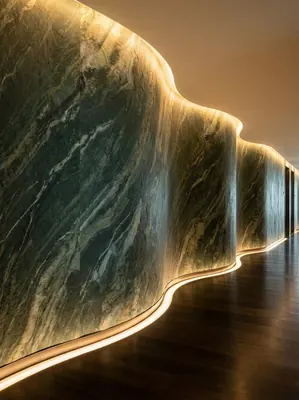
Hotel lobby 480㎡ printed granite (Glacier Green) wall construction case
IGOODS of AIGUOSI provides printed granite (Glacier G...
View cases →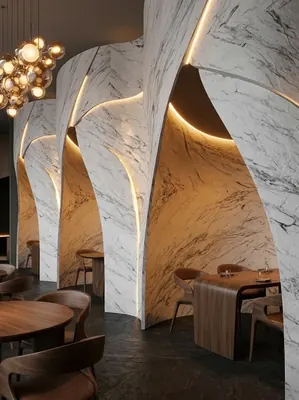
Hotel lobby 680㎡ printed slate wall construction case
IGOODS provided printed slate as wall material for a ...
View cases →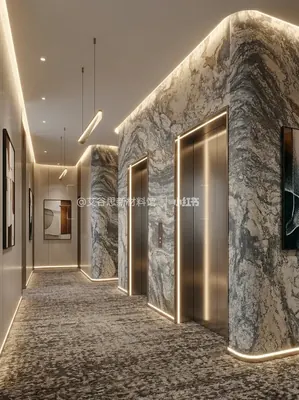
Business hotel 2150㎡ printed slate (Yunlong) wall construction case
The business hotel project is located in Ziyang City,...
View cases →Related Products
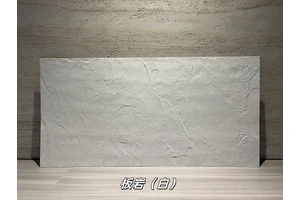
White Limestone Flexible Stone
White Limestone is a flexible stone in the Limestone and Natural Stone series, with a light ash gray tone and natural limestone stratification. It is mainly used for wall surfaces in commercial spaces such as hotels, restaurants, commercial stores, exhibition halls, etc. This page provides specifications and packaging parameters, material and performance, construction methods and acceptance points, as well as applicable scenarios and selection suggestions; it supports free samples and bulk quotation for engineering, and can provide inspection reports.
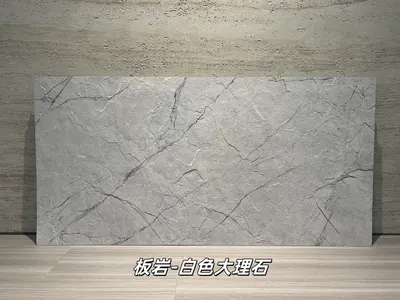
Flexible slabs of white marble rock
Extending from the light gray white stone base color to the dark gray marble veins, combined with the natural undulations of the slate surface, giving a more hierarchical and decorative visual effect, suitable for hotel lobbies, boutique commercial and catering space walls. This page provides specifications and packaging parameters, material and performance, construction methods and acceptance points, with application scenarios and selection suggestions; free samples and engineering bulk quotation support, and test reports can be provided.
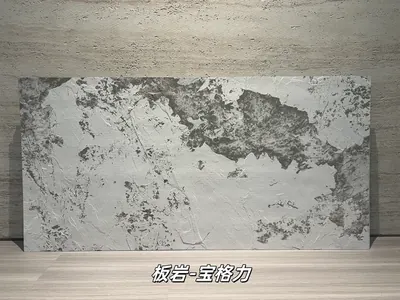
打印板岩宝格力柔性石材
浅灰白基底与深灰黑色斑驳纹理形成强烈对比,画面具有抽象矿物感和艺术张力,适合酒店大堂、精品商业及特色餐饮墙面。本页给出规格与包装参数、材质与性能、施工做法与验收要点,附适用场景与选型建议;支持免费寄样与工程批量报价,可提供检测报告。
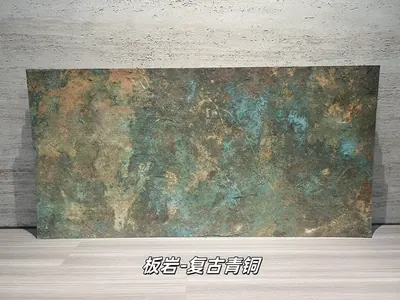
Printed slate antique bronze flexible stone
Antique industrial and time-stamped feeling presented by the emerald green patina color intertwined with brown and dark gray patchwork layers, suitable for boutique hotels, special catering and brand commercial space wall. This page provides specifications and packaging parameters, material and performance, construction methods and acceptance points, with applicable scenarios and selection suggestions; free samples and engineering bulk quotation support, and can provide test reports.
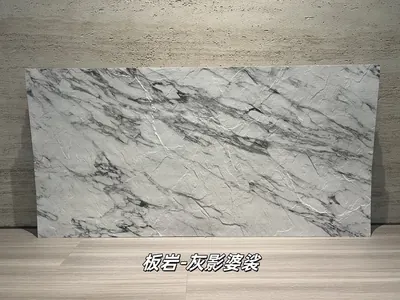
Printed slate gray shadow soft stone
Extending from the light gray stone base, there are deep gray black streaks, with textures flowing diagonally and overlapping, giving an overall modern and tense feel. Suitable for hotel, boutique business and exhibition hall key walls. This page provides specifications and packaging parameters, material and performance, construction methods and acceptance points, with applicable scenarios and selection suggestions; free samples and engineering bulk quotations are supported, and inspection reports can be provided.
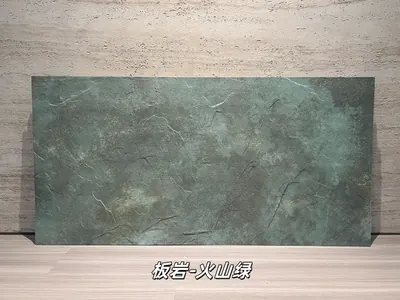
打印板岩火山绿柔性石材
低饱和灰绿色基底结合深灰细脉与浅色自然裂纹,整体沉静而富有矿物感,适合精品酒店、餐饮及现代商业空间墙面。本页给出规格与包装参数、材质与性能、施工做法与验收要点,附适用场景与选型建议;支持免费寄样与工程批量报价,可提供检测报告。