
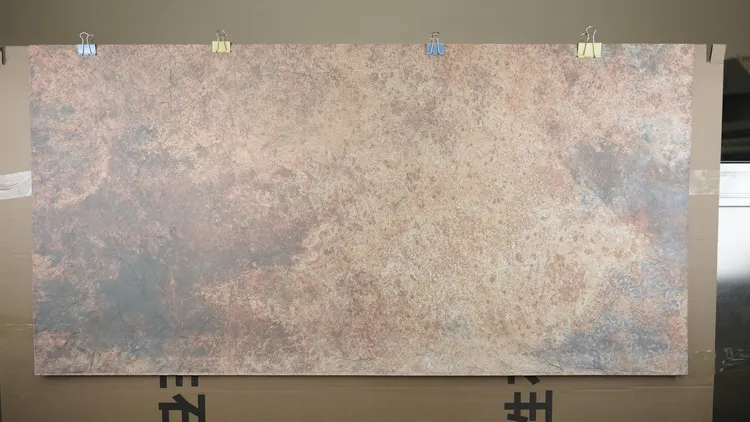
Printed rock rust red
A natural interweaving of rust red, copper brown and charcoal gray blocks, with deep and light spots bringing a distinct retro sense of time, suitable for special catering, clubs and commercial walls that emphasize atmosphere. This page provides specifications and packaging parameters, material and performance, construction methods and acceptance points, with applicable scenarios and selection suggestions; supports free samples and engineering bulk quotation, and can provide inspection reports.
IGOODS source factory products, suitable for hotel, inn, commercial and old city wall engineering projects; supports sample delivery and project quotation.
Product quick information
- Product name:Printed slate rust red flexible stone
- Brand: IGOODS
- Product category: Flexible Stone
- Series: Slate and natural mountain stone
- Craftsmanship: Printed board rock
- Main tone:Rust red, copper brown, deep brown, and charcoal gray
- Texture features:Large-area warm brown overall color blocks, dark mottled texture, overall color gradient and slate-like surface layering
- Recommended scenarios:Signature dining, clubs, boutique commercial spaces, hotel public areas
- Main applications: Building wall
Specifications and packaging parameters
| Specifications (mm) | Thickness (mm) | Approx. weight per panel (kg) | Wooden crate packaging (pieces/crate) | Area of wooden crate after packaging (㎡) | Dimensions after packaging W×L×H (mm) | Weight after packaging approx. (kg) |
|---|---|---|---|---|---|---|
| 600×1200 | 2.3-2.8 | 2.5-2.8 | 330 | 237.6 | 680×1280×1100 | 900 |
| 1200×3000 | 2.3-2.8 | 15-15.5 | 80 | 288 | 1280×3100×600 | 1200 |
Optional colors:Grey, white, black (other colors customizable)
Packaging notes:Default wooden crate packaging, suitable for long-distance transportation or larger orders; export wooden crates (thicker and sturdier panels) are available for export orders. The above specifications, weights and packaging data are for reference only; the actual order confirmation shall prevail.
What is printed slate rust red flexible stone?
Printed slate rust red flexible stone is a flexible wall decoration material whose main visual features are the combined colors of rust red, copper brown, deep brown and charcoal gray, belonging to the IGOODS slate and natural mountain stone product system.
“Rust Red” describes the color and comprehensive color design direction of this product, but does not mean that the product itself belongs to metal materials, nor can it be understood that the sheet has actually rusted.
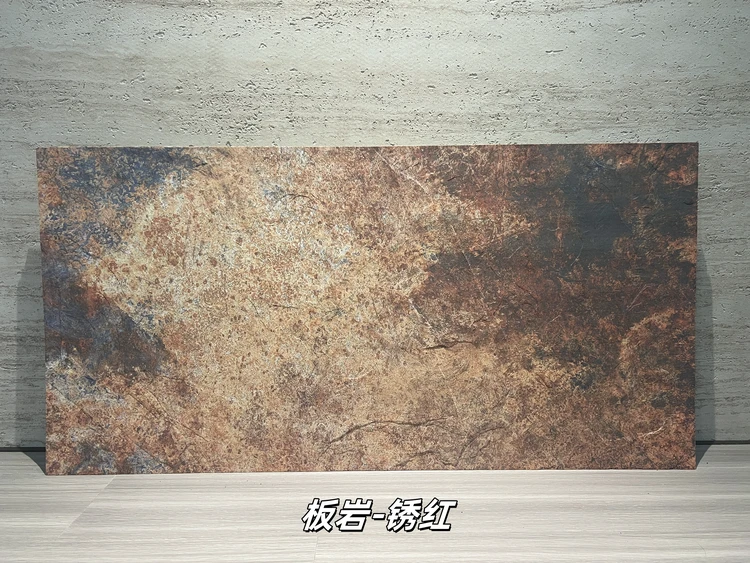
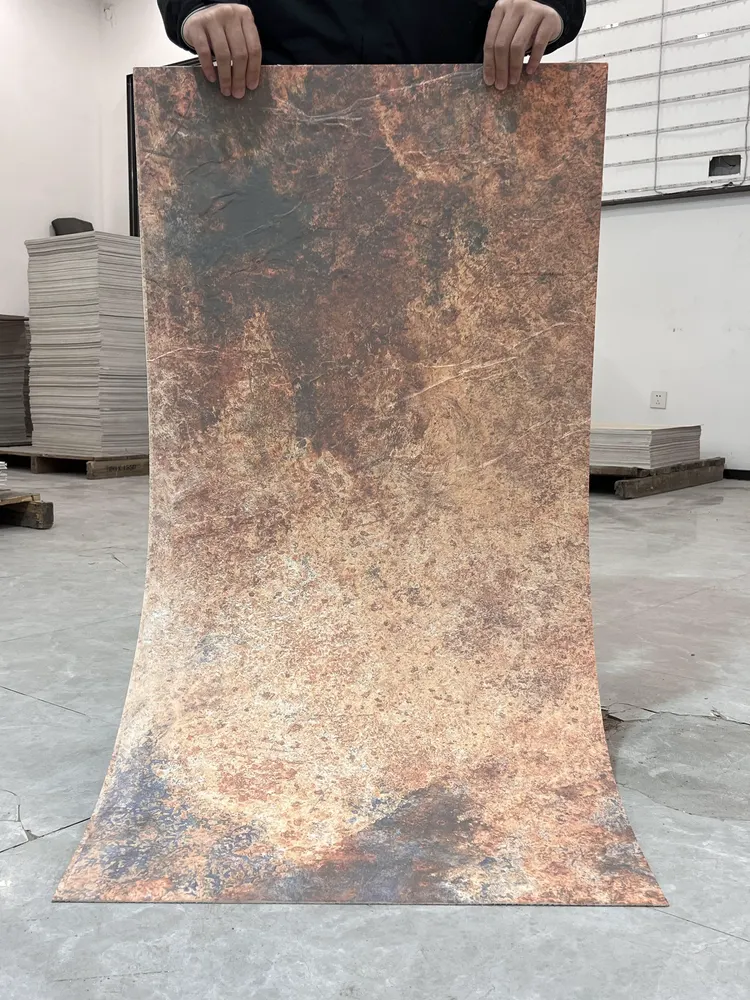
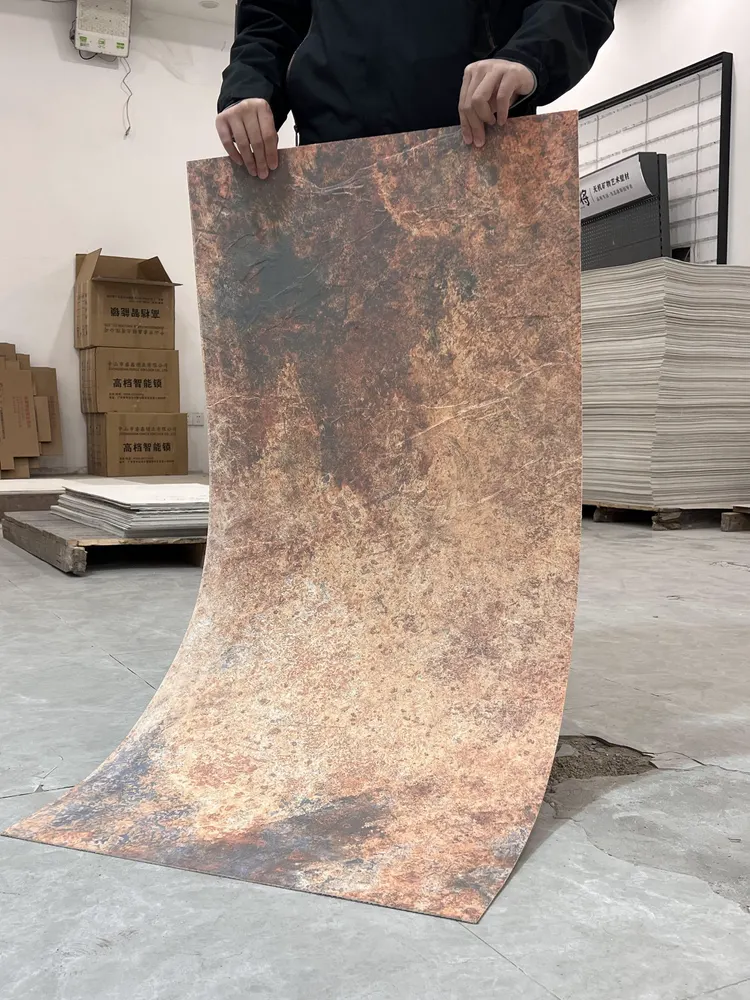
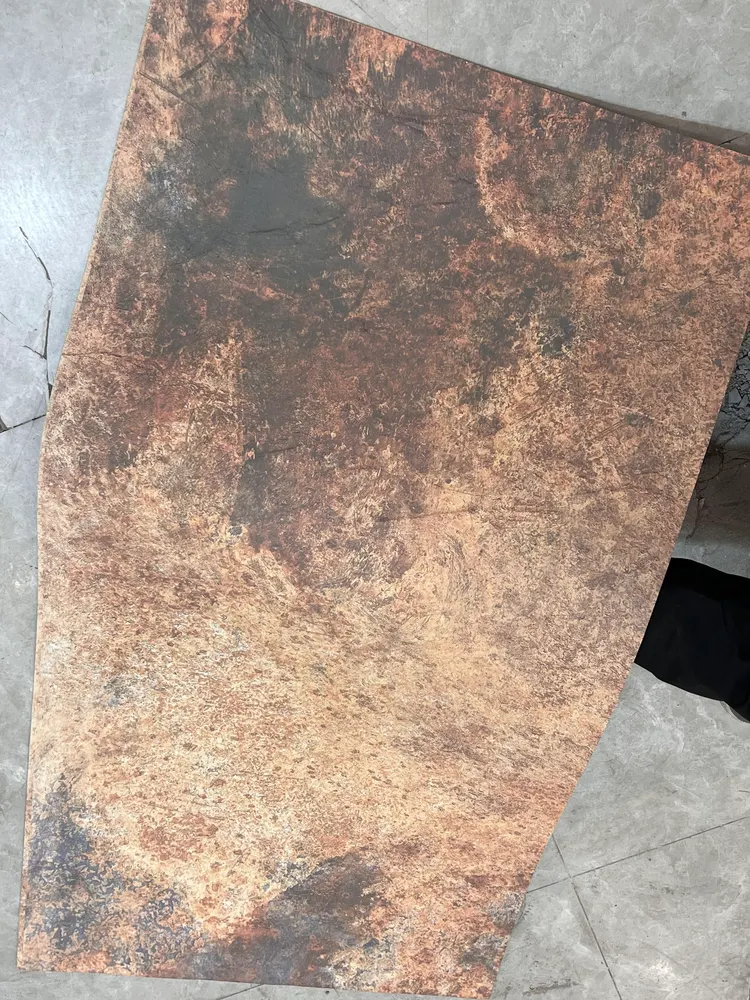
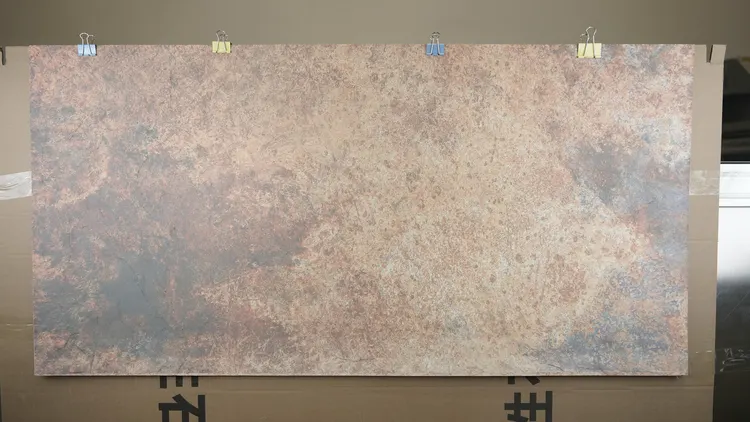
From this actual photo, it can be seen that the panel does not form regular marble-like linear veining; instead, combined color blocks of warm brown, rust red and gray-black of varying depths overlap each other. The left side and middle of the image are relatively bright, while relatively large areas of dark brown and charcoal gray combined color appear on the right side and in localized positions, giving the whole panel an obvious light-dark variation in combined color.
Compared with light gray and white printed slate, the visual focus of this product is not on "brightness" or "delicacy," but on overall color deposition, mottled variation, and a retro atmosphere, making it more suitable as a commercial wall surface with a clear material character.
What are the texture features of rust red printed slate?
The combined colors of rust red and copper brown establish a vintage base tone
This slate as a whole belongs to a warm, composite color system. In the actual photos, rust red, copper brown, earth brown, and dark brown can be seen interweaving with one another, accompanied by a small amount of gray-black areas.
These composite colors do not evenly cover the entire panel surface; instead, they form light and dark variations in different areas, so they have more material layering than a plain brown wall.
Dark composite color blocks increase the wall's sense of weight
In the actual photos, relatively obvious dark brown to charcoal gray consolidated color blocks exist on the right side and in local areas, forming a light-dark contrast with the brighter warm brown in the middle.
This uneven variation of composite color blocks makes the wall more suitable as a feature material rather than a base background that pursues completely uniform composite color.
Fine mottling enriches close-up observation
Within the large-area overall color blocks there are still many fine light and dark textures and slate-like surface variations. From a distance, one mainly perceives the relationship between warm brown and dark areas; up close, more fine mottling and surface texture can be seen.
Which commercial spaces is printed slate rust red suitable for?
Distinctive dining space
The combined colors of rust red, warm brown, and deep brown have a relatively natural pairing relationship with natural wood, dark wood, black metal, and warm lighting, making them suitable for commercial spaces such as restaurants, barbecue shops, and cafes that need to emphasize material atmosphere.
Because the wall itself has relatively rich overall color, furniture and other main walls are more suitable for controlling texture complexity, allowing the rust-red slate to carry the main material expression.
Clubhouses and leisure commercial spaces
Dark mottled composite color blocks can increase the sense of spatial enclosure. When combined with leather, dark wood and warm light, it is easier to form a calm, retro spatial relationship, suitable for local feature walls, lounge areas or reception areas.
Boutique commercial space
For lifestyle, clothing, furniture and other commercial stores with a clear spatial overall color positioning, rust red slate can serve as a material for entrance walls, brand backdrops or display areas, using warm overall color to enhance spatial recognition.
Hotel public areas
If the hotel design wishes to reduce the integrated color tendency of traditional light-colored marble-style walls and introduce a more natural, rough, and vintage material relationship, rust red can be a candidate material for public lounge areas, corridor nodes, or local feature walls.
How to choose between rust red and vintage bronze printed slate?
Both products have vintage composite color characteristics, but their design directions are not the same.
Printed slate rust redMainly rust red, copper brown, deep brown and charcoal gray, overall warm-toned, with more subdued combined colors, focusing on mottling, combined color depth variation and a vintage wall surface feel.
Printed Slate Vintage BronzeIt adds more obvious teal and blue-green composite colors, which together with brown and rust form a cool-warm composite color contrast, making the visual variation richer.
If the project mainly aims to establish warm brown, vintage, and steady integrated tones, rust red can be prioritized; if it wishes to simultaneously show green and brown integrated tones and emphasize a visual relationship similar to patina integrated tones, vintage bronze can be compared as a focus.
Printed slate rust red flexible stone specifications and parameters
| Parameter item | Reference information |
|---|---|
| Common specifications | 600×1200mm, 1200×2400mm, 1200×3000mm |
| Common thickness | 3–6mm |
| Weight | Approx. 3–7 kg/㎡, varying with different textures and thicknesses |
| Sample specifications | 20×30cm |
| Product standards | JG/T 540-2017"Flexible Stone-like Facing Materials for Buildings" |
Material and performance parameters
The performance of flexible stone comes from the structure of the material itself, not from a thick and heavy panel. The raw materials are mainly natural minerals, formed with a polymer flexible substrate, with no wooden substrate used, so there is no hidden risk of formaldehyde release. The material is light, thin, and flexible, can be bent, and is not prone to cracking or deformation; it also has comprehensive performance of flame retardancy, moisture resistance, stain resistance, and UV resistance.
| Project | Parameter description |
|---|---|
| Composition of materials | Composite of natural mineral raw materials and polymer flexible substrate, an inorganic eco-material |
| Fabric process | A stone-imitation decorative surface formed by pressing or printing according to the surface texture of the color |
| Environmental performance | No added formaldehyde, no asbestos, meeting conventional environmental requirements for home and commercial decoration |
| Combustion performance | Flame retardant; the specific combustion performance grade shall be subject to the valid test report of the selected model. |
| Waterproof and moisture-proof | The material does not absorb water, and after construction the wall is less prone to dampness and mold |
| Mildew resistance | Can be used in humid environments and underground spaces, with daily maintenance mainly by wiping |
| UV resistance and weather resistance | Has UV resistance, high and low temperature resistance and weathering resistance, and can be used for exterior facades. |
| Anti-cracking | Flexible base material can absorb the micro deformation of the base, and the surface is not easy to appear fine cracks |
| Can be bent | The sheet material has certain flexibility and can be bent within a certain radius; the specific radius is determined by the model and base conditions |
| Bonding method | Full-bed adhesion is recommended for installation; select adhesive according to product instructions; weather-resistant adhesive is required outdoors |
| Stain resistance and cleaning | The surface is dense and not prone to retaining dirt; for daily cleaning, simply wipe with water or a neutral cleaner |
| Implementation standards | JG/T 540-2017 'Building Flexible Stone-faced Decorative Material' |
| Customizable item | Texture direction, color, texture, thickness, specifications and dimensions, and packaging method |
| Sample specifications | Physical samples can be provided for design material selection and texture confirmation |
The performance descriptions in the table above are based on the general characteristics of the flexible stone category. For the specific Printed Slate Rust Red product, engineering technical parameters such as combustion performance, weather resistance indicators, and radioactivity must be based on the valid test report for the corresponding model.
Key installation and construction points
On the construction side, no keels or complex substrate preparation are required; panels can be installed once the wall is leveled, and both dry bonding and wet bonding are compatible. Flat surfaces, curved surfaces, columns, special-shaped curtain walls, old walls, and insulated walls can all be handled accordingly.
Substrate treatment
The core requirements for the substrate are "flat, dry and firm": check flatness with a 2 m straightedge; for walls with high moisture content, apply a sealing primer first; sanding and loose layers need to be removed down to a solid substrate. The selection of interface agents differs for different substrates, and it is recommended to confirm according to on-site conditions.
Measurement and layout
At the measurement stage, it is advisable to put the layout drawing on paper before starting work: mark the positions of door and window openings, switches and sockets, and internal and external corners, and calculate the space occupied by trim strips in advance. Within the same space, try to align the seams on different wall surfaces; this makes a big difference to the overall look.
Cutting and hole drilling
Conventional cutting can be done with a utility knife; for thicker specifications, a cutting machine is recommended. Corners and finishing positions should be test-cut first, and only after confirming the dimensions should they be installed on the wall, to avoid repeated pasting affecting bonding strength.
Pasting installation
Spot bonding is not suitable for flexible stone; full-surface bonding is required—this affects not only bonding strength but also whether the finish will bulge under temperature differences due to local cavities. The open time of the adhesive changes with temperature; in summer construction, the area spread in a single application should be controlled.
Compaction and adjustment
After each piece of material is installed on the wall, press it firmly with a roller or soft pad, and check whether the edges and corners are lifting. If a position deviation is found, adjust it as soon as possible; once the adhesive begins to set, it should not be moved again. Where the wall surface is uneven, the pressing time can be appropriately increased.
Edge finishing and acceptance
Acceptance is recommended to be carried out in batches by surface: first check overall color difference and whether joint lines are straight, then tap each panel to listen for hollowing, and finally check the closing edges and sealant quality. Deal with problems as early as possible; rework after the finish is completed is costly.
Information note: The color and texture descriptions on this page are based on current actual product photos; the specifications, thickness and weight are within the common range for IGOODS flexible stone. The specific combustion performance, radioactivity, outdoor applicability and other engineering performance shall be subject to the valid test report for the corresponding model and project requirements.
What should be noted in rust red wall design and procurement?
Control the position of dark overall color blocks during large-area application
The combined color depth variation in different areas of the rust red panel surface is relatively obvious. For large-area continuous wall applications, panel arrangement should be considered in advance based on wall dimensions, furniture positions, and lighting, to avoid larger charcoal gray combined color blocks concentrating in positions where a visual focus is not desired.
Surrounding materials should not all use complex distressed textures
Rust red itself already has obvious mottling and vintage combined colors. If wood veneer, flooring, furniture, and adjacent walls simultaneously use a large number of complex textures, the space is prone to material competition.
It is more suitable for pairing with wood veneer, black metal, glass, and leather whose overall color is relatively stable.
Confirm the actual product before formal bulk procurement
The combined colors of rust red, copper brown, and deep brown are easily affected by the combined color temperature of lighting, the shooting environment, and display devices. For hotels, dining, and commercial projects, it is recommended to confirm physical samples before large-area procurement.
What needs to be confirmed before purchasing Printed Slate Rust Red?
- Project type and specific wall area;
- Estimated wall usable area;
- Localized main wall or large-area continuous use;
- Required specifications and thickness;
- Comprehensive color of space, wood veneer and lighting;
- Panel overall color-block and grain layout requirements;
- Whether there are requirements for pattern matching or continuous veining;
- Indoor or outdoor use environment;
- Whether curved surfaces or irregular substrates are involved;
- Whether the project requires specific fire protection or other testing documentation.
IGOODS can provide physical samples, material selection, comprehensive color matching suggestions, design coordination and engineering project support according to project requirements.
Printed slate rust red FAQs
Is rust red printed slate real rusted metal?
No. "Rust Red" describes the current product's overall color and color pattern design direction. This product is a flexible stone printed slate panel, not a rusted metal panel.
What are the main colors of printed slate rust red?
From the current actual photos, it is mainly composed of rust red, copper brown, dark brown and local charcoal gray comprehensive colors, and shows obvious mottled light-dark variation.
What is the difference between rust red and vintage bronze?
Rust red as a whole is mainly based on the combined tones of warm brown and rust red, with more concentrated combined colors; vintage bronze also contains relatively obvious teal combined colors, with a stronger contrast between warm and cool combined colors.
Is rust red suitable for specialty dining spaces?
Judging from the combined color and texture design perspective, it is suitable for restaurant walls requiring a retro, natural or stronger material atmosphere, and is especially suitable for spatial design together with wood veneer, metal and warm lighting.
What are the common specifications for printed slate rust red?
IGOODS flexible stone common specifications include 600×1200mm, 1200×2400mm, and 1200×3000mm. The specific specifications available are based on the confirmation of the corresponding product model and project results.
Is it advisable to look at samples before project procurement?
Recommendation. Warm and dark integrated colors will produce different visual expressions under different lighting environments. Color selection can first be confirmed through a 20×30cm physical sample in combination with project lighting and other materials.
Can printed slate rust red be used on floors?
Not recommended. This product is positioned as an architectural wall decorative material and is not promoted as a floor paving material.
Printed rock rust red · Supply and Contact
- Supplier
- Chengdu Igoods Technology Co., Ltd. (IGOODS)
- Consultation Hotline
- 19136341389(same number for phone / WeChat / WhatsApp)
- 19136341389@163.com
- address
- No. 9001, 9th Floor, Building A, No. 166 Laifeng 5th Road, Wuhou District, Chengdu, Sichuan Province, China (Laifeng Digital Innovation Center)
- Delivery content
- Free sample · Drawing and specification customization · Engineering bulk supply · National shipping · After-sales technical support
- Applicable areas
- Interior and exterior building wall decoration (not applicable to ground paving)
- Product standards
- JG/T 540-2017 'Building Flexible Stone-faced Decorative Material'
- Material scope
- Specifications and weight are for reference; combustion performance and environmental grade are subject to the valid test report for the selected model
Data specifications:This page's unit of measurement is millimeters (mm), weight is kilograms per square meter (kg/㎡), and the base levelness is 2m gap value with a ruler; The thickness and self-weight are value ranges distinguished according to the series and texture depth, which are not equal to the performance commitment of a single model, and the actual value is confirmed by the corresponding model specification, inspection report, and order. The numbers for area, consumption, and project period are calculated according to the industry level, used for estimation, and do not constitute a quotation commitment. Please provide area, color, and delivery location for project quotation.
Completed projects using this material
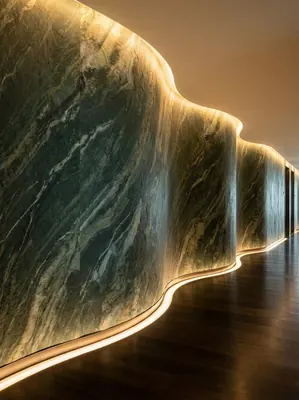
Hotel lobby 480㎡ printed granite (Glacier Green) wall construction case
IGOODS of AIGUOSI provides printed granite (Glacier G...
View cases →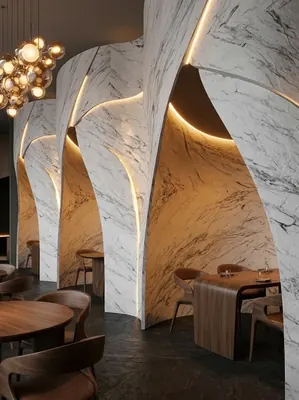
Hotel lobby 680㎡ printed slate wall construction case
IGOODS provided printed slate as wall material for a ...
View cases →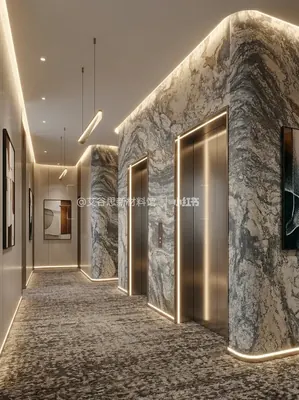
Business hotel 2150㎡ printed slate (Yunlong) wall construction case
The business hotel project is located in Ziyang City,...
View cases →Related Products
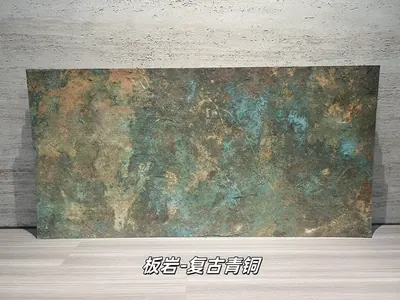
Printed slate antique bronze flexible stone
Antique industrial and time-stamped feeling presented by the emerald green patina color intertwined with brown and dark gray patchwork layers, suitable for boutique hotels, special catering and brand commercial space wall. This page provides specifications and packaging parameters, material and performance, construction methods and acceptance points, with applicable scenarios and selection suggestions; free samples and engineering bulk quotation support, and can provide test reports.
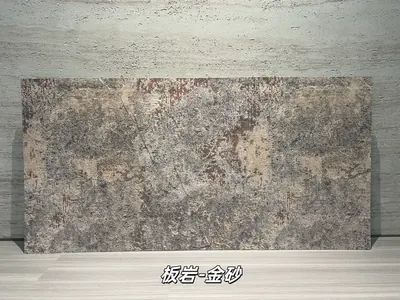
Printed granite sand flexible stone
Mi gray sand color and deep gray mottled texture interlaced, locally rust brown to increase the sense of time痕迹感, the whole is rough and retro, suitable for characteristic catering, boutique business and hotel wall. This page gives specifications and packaging parameters, material and performance, construction methods and acceptance points, attached with applicable scenarios and selection suggestions; support free samples and engineering bulk quotation, can provide test report.
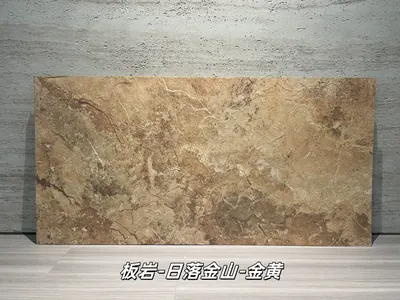
Golden sandstone sunset print
Golden yellow combined with warm brown, intertwined with dark brown stone veins and light fine veins, the whole is warm and thick, suitable for catering, hotel public areas and commercial walls emphasizing atmosphere. This page provides specifications and packaging parameters, material and performance, construction methods and acceptance points, with applicable scenarios and selection suggestions; supports free samples and engineering bulk quotation, and can provide inspection reports.
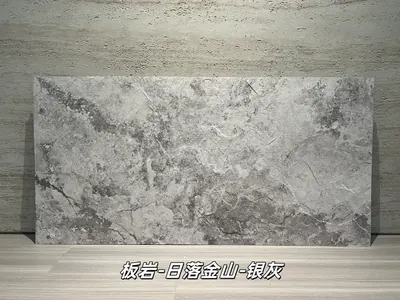
Printed slate sunset Golden Mountain silver gray
Light silver gray background intertwined with medium gray cloud fog, mottled with dark fine cracks, overall bright, controlled and rich in mineral sense, suitable for hotel, boutique business and modern exhibition hall wall. This page provides specifications and packaging parameters, material and performance, construction methods and acceptance points, attached with applicable scenarios and selection suggestions; free samples and engineering bulk quotation are supported, and test reports can be provided.
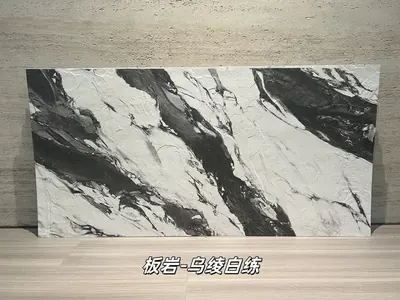
Printed slate Ulven white silk
A light gray white background combined with a large area of black and gray blocks creates a strong contrast, oblique stone patterns have a sense of fluidity and visual tension, suitable for hotel, boutique business and exhibition hall key walls. This page provides specifications and packaging parameters, material and performance, construction methods and acceptance points, with applicable scenarios and selection suggestions; supports free samples and bulk engineering quotations, and can provide inspection reports.
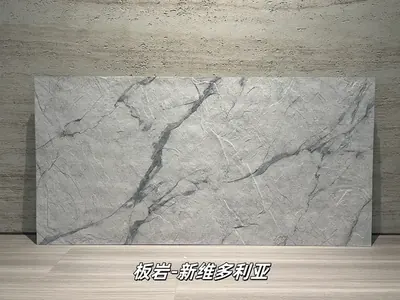
Printed New Victoria Slate
Medium grey stone color with deep grey natural veins and fine cracks, texture controlled but clear layers, suitable for hotel, boutique commercial and modern catering space wall. This page provides specifications and packaging parameters, material and performance, construction methods and acceptance points, with applicable scenarios and selection suggestions; supports free samples and engineering bulk quotation, can provide inspection reports.
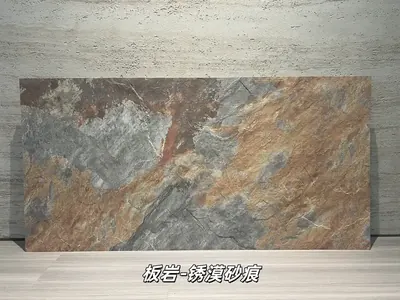
Printed rock rust desert sand mark
Rusty brown and yellow with large areas of rock ash texture naturally intertwined, the edge of the block surface presents a rough and weathered change, suitable for characteristic catering, clubs and retro commercial space wall. This page provides specifications and packaging parameters, material and performance, construction methods and acceptance points, with applicable scenarios and selection suggestions; free samples and engineering batch quotations are supported, and inspection reports can be provided.
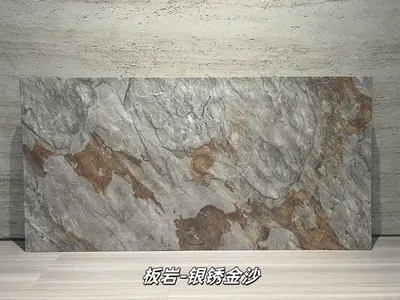
打印板岩银锈金沙
银灰岩纹与锈棕金棕块面自然交叠,冷暖色关系鲜明,呈现粗粝矿物质感,适合餐饮、会所及精品商业墙面。本页给出规格与包装参数、材质与性能、施工做法与验收要点,附适用场景与选型建议;支持免费寄样与工程批量报价,可提供检测报告。
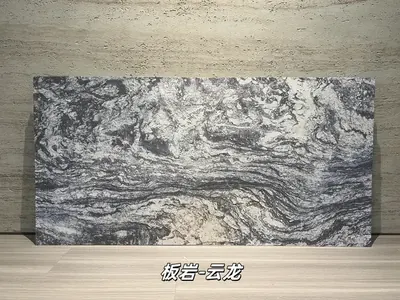
Printed slate cloud dragon
Black and white comprehensive color interweaving into horizontal stacking and whirlpool-style patterns, with prominent dynamic texture and recognition from a distance, suitable for hotel, boutique commercial and exhibition hall key walls. This page provides specifications and packaging parameters, material and performance, construction methods and acceptance points, with applicable scenarios and selection suggestions; supports free samples and bulk engineering quotations, and can provide inspection reports.