Cultural education
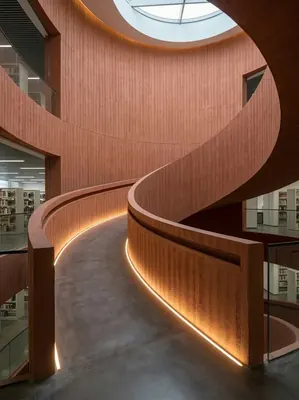
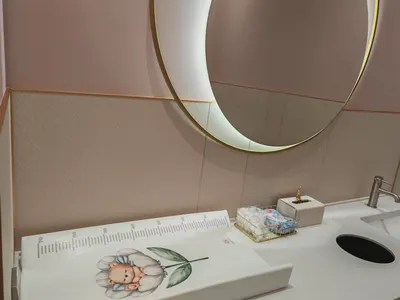
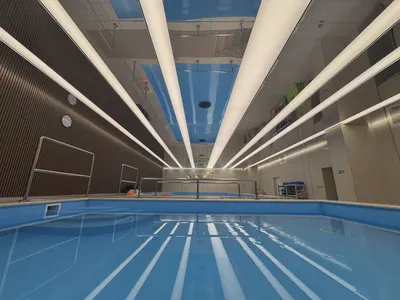
The implementation case of IGOODS by AIGUOSI in the cultural and educational space, including libraries and children's pavilions. The page describes the two bottom lines of the educational space wall: safety (no sharp corners, no easily falling parts) and environmental protection fire prevention (as per the detection report);List the verifiable basis: Formaldehyde emission limit ≤0.124 mg/m³ according to GB 18580-2017 E1 grade, classified according to GB/T 39600-2021, combustion performance according to GB 8624-2012, indoor environmental pollution according to GB 50325-2020 control limit for I-class civil buildings.
The following cases come from actual engineering projects of IGOODS, which can be cross-referenced with product details and material selection guides.
- Cases implemented
- 3each
- Covered city
- 1each
- Involved part
- Library, Children's Pavilion
- Check items on this page
- 6Item ·7Item basis
Case index
The table lists the cases of this type by project, city, main materials and construction area, which is convenient for quick positioning by scale and material. The case detail page contains complete material selection basis and construction records.
| Case | City | Main material. | Construction area |
|---|---|---|---|
| Library Rammed earth panel-flexible stone | — | — | — |
| Real case of Russian children's pavilion wood paneling project | Quanzhou City | Wood grain (Natural wood color | 560 square meters |
When viewing these cases, it is recommended to check these 6 items.
Every item comes from a place where a problem has occurred in an actual project. The order of checking is also very important - the judgment of the base and shape comes first, followed by the color.
- The activity space for children and students should be safe
The walls of educational and children's spaces should not have sharp angles and detachable parts, and the use of matching skirtings instead of on-site cutting is preferred for internal and external corners. - High-frequency contact surfaces should be resistant to wiping
The walls of the corridors and activity areas are frequently touched, and the material should be able to withstand daily cleaning with neutral detergents. - Acoustics: Avoid strong reflection
The walls of classrooms and reading areas should avoid strong reflection and hard reflective surfaces to reduce interference to writing, projection, and reading. - Fire and environmental protection are hard thresholds
Materials in school and children's spaces must meet the corresponding fire and environmental protection requirements and be based on downstream inspection reports, not on propaganda slogans. - Color application should match the function of the space
Active colors can be used in spaces for young children, and restrained colors should be used in teaching and reading spaces to avoid long-term visual fatigue. - Big area passage and stairwell closing
Educational buildings have many passages and stairwells, and using closure pieces and main materials of the same color can significantly reduce the noise of the facade.
Key indicators and acceptance criteria
The table lists the indicators, reference values and basis that can be checked for the type of this project.★Project experienceIt indicates the range of common practices in the industry and is not used as a reference for national standard data; those with standard numbers can be directly verified.
| Project | Reference value / Practice | Based on |
|---|---|---|
| Substrate flatness | 2m Rule inspection, gaps ≤3mm | ★Engineering Experience; Can be compared with GB 50210-2018 for allowable deviation in the installation of decorative panels |
| Positive and negative corners | All accessories should be used, and sharp edges cut on site should not be used | ★Engineering Experience (Safety Requirements for Children's Spaces) |
| Formaldehyde emission | Man-made board products should meet the E1 grade limit requirements (≤0.124 mg/m³) | GB 18580-2017 Indoor Decoration and Renovation Materials - Formaldehyde Emission Standard for Man-made Boards and Their Products |
| Formaldehyde emission classification | Can be classified according to E1 / E0 / ENF classification requirements, with the detection report as the criterion | GB/T 39600-2021 Classification of Formaldehyde Emission of Plywood and Its Products |
| Combustion performance | Graded according to GB 8624-2012, the grade is based on the detection report of the selected model | GB 8624-2012 Classification of Combustion Performance of Building Materials and Products |
| Indoor environmental pollution | Public buildings such as schools and kindergartens should be controlled according to the corresponding limits | GB 50325-2020 Indoor Environmental Pollution Control Standard for Civil Engineering Construction |
| Sound insulation | The sound insulation requirements for teaching and reading spaces should be implemented according to the civil building sound insulation design specifications | GB 50118-2010 Design Code for Sound Insulation of Civil Buildings |
Common questions in cultural and educational issues (FAQs)
The following are the most frequently asked questions in the design and procurement stages of this type of project
What should be paid attention to in the safety of children's room walls?
Two things: one is not to leave sharp angles, all internal and external corners should be equipped with matching end caps; the other is not to leave easy-to-fall-off parts, the materials should be fully adhered, without air bubbles. These two points are much more important than the color.
What requirements do school projects have for formaldehyde?
Schools and kindergartens belong to Class I civil buildings, and the indoor environmental pollution limit requirements are higher than those for office and commercial buildings. Wood-based products should be limited to E1 grade according to GB 18580-2017 (≤0.124 mg/m³), and the classification marking is based on GB/T 39600-2021. The final detection report of the selected model shall be taken as the standard.
Will the classroom wall affect projection and writing?
Will. Excessive reflective surfaces will form reflection zones during projection, affecting visibility. It is recommended to use matte, low reflective surfaces in teaching spaces.
What kind of texture is suitable for the library's walls?
Matte, low saturation, and texture-controlled texture. Reading is a long-term close-range activity, the walls should recede into the background, avoiding visual fatigue.
How to deal with the joints in the stairwell and corridor?
All use matching joint pieces, the same color as the main material. Educational building passages are many, on-site cutting and splicing will cause a large number of inconsistent cuts, is the main source of facade noise.
What documents do educational projects need to provide?
A standard report on combustion performance, formaldehyde and VOC report is required, and some projects also require radioactive testing (GB 6566-2010). The specific list is determined according to the requirements of the local education authorities and the school.
Related pages and requests
Engineering case overview·wood paneling wall·Qualification certificates and inspection reports·Selection Guide
Diameter specification:The indicators listed on this page include★Project experienceThis is a common practice range in the industry, used for estimation and self-check, not as a national standard data reference; those with standard numbers are standard files that can be verified. Material parameters are confirmed according to product archives and orders, and combustion performance and environmental grade are based on the effective inspection report of the selected model.