
Table of contents of this articleBrowse by text
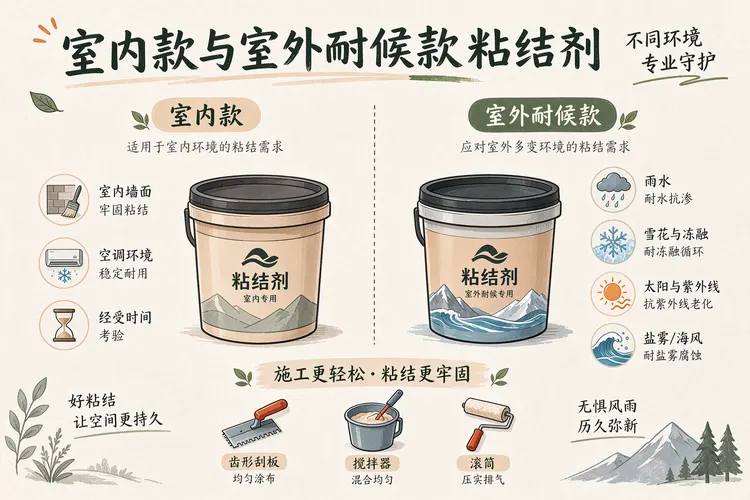
The adhesives for IGOODS Flexible Stone are divided into two sets: indoor version and outdoor weather-resistant version, which cannot be mixed. The indoor version addresses initial tack, flexibility matching and open time; the outdoor weather-resistant version must additionally withstand rain, freeze-thaw cycles, UV aging and salt spray. In engineering, most edge lifting, hollowing and edge dampness are not panel problems but the result of using the wrong adhesive or failing to construct within the window period. The step of choosing adhesive is much more important than choosing a color number.
1. Why the matching adhesive must be used
Flexible stone is a thin and flexible veneer layer, and its requirements for adhesive are completely different from those for ceramic tile and stone, for four reasons:
- Flexible matching: Panels expand and contract slightly with minor substrate movement and temperature changes, and the adhesive layer must be able to move with them. With rigid adhesive, stress is fully transferred to the panel edges, and warping occurs over time.
- Initial adhesion must be sufficient: after a 3mm panel is applied, it will not "hold" itself; it relies entirely on the adhesive's initial tack to hold the panel in place until it cures. If initial tack is insufficient, it will slide down the wall.
- Open time must be controllable: After the adhesive is applied, there is a working time before it loses tack. During large-area installation, if the open time is too short, "the latter half can no longer be stuck."
- The weather-resistant system must be complete: Outdoors, it is not just "the adhesive holds firmly"; four things must all be satisfied simultaneously: adhesive, edge trim, drip detail, and substrate moisture content.
So the adhesive is not an auxiliary material; it is part of the system. If panels and adhesive are purchased separately, responsibility cannot be clearly assigned when problems arise.
II. What do interior-grade products solve?
The key values for the indoor version are "stability" and "ease of application":
- Initial adhesion: It does not slide down after application, especially when working on ceilings and at height; this item determines efficiency.
- Opening hours: Allow the installation crew time to adjust positions, which is especially important for tight butt joints.
- Flexibility: Remains elastic after curing and can absorb minor movement between the substrate and the panel.
- Low odor and environmental friendliness: Indoor spaces are sensitive to odor, especially for hotel and hospital projects. Environmental criteria can be checked together with the VOC Test Report.
- Compatible with common indoor substrates: Masonry, concrete, gypsum board, and old tile surfaces are the main types in indoor projects.
Indoor projects also require adhesive selection by substrate. Light-gauge steel stud gypsum board partitions undergo slight displacement under load and when people lean on them, so the adhesive layer must be more flexible than on masonry walls; old tile surfaces rely more on interfacial adhesion. When both substrate types appear in the same project, the adhesive batch can be the same, but the interface treatment cannot be.
3. What outdoor weather-resistant versions solve
The outdoor version is not an "enhanced version" of the indoor version, but a different set of design objectives:
- Water resistance: Rain erosion and capillary water absorption are the most basic tests; the adhesive layer must not lose strength due to water absorption.
- Freeze-thaw resistance: In northern projects, dozens of freeze-thaw cycles occur in one winter, so the adhesive layer must withstand volume changes.
- UV aging resistance: For plateau and southern projects with strong sunlight, the adhesive layer must not be gradually embrittled by UV.
- Salt spray resistance: Must be considered for coastal projects; salt crystallization will accelerate interface failure.
- Thermal aging stability: in summer, exterior wall surface temperatures are much higher than air temperature, and the adhesive layer must maintain adhesion at high temperatures.
If any one of the four items fails to meet the standard, the problem almost always occurs at the edges and joints—because that is where water and stress first enter.
For specific projects, the local stress type must also be considered: for coastal projects, the main stress is salt spray; for plateau projects, it is strong UV and large temperature differences; for northern projects, it is freeze-thaw cycles; and for rainy southern regions, it is long-term humidity. Although all are called "outdoor", the damage mechanisms of these four stress types differ. The test conditions in the weather resistance report must match the project location for it to be considered suitable.
IV. How to estimate usage amount
Dosage is not based on "feeling"; three variables determine it:
- Notched trowel tooth depth: The deeper the notch, the more adhesive used per unit area. Consumption is determined by trowel specification; in engineering it mostly falls in the range of several kilograms per square meter—refer to the product instructions for specifics.
- Substrate absorbency: Masonry and concrete are highly absorbent, so actual adhesive consumption is higher than on gypsum board and metal substrates.
- Wall flatness: the more uneven the substrate, the more adhesive is consumed filling the recesses. This is also why the substrate acceptance value (2m straightedge gap ≤3mm) must be met first—an uneven substrate makes adhesive consumption uncontrollable.
When budgeting, it is recommended to estimate based on "theoretical usage + 5%–10% waste," and to measure once on a sample section, using the measured value for correction.
V. Opening hours and temperature window
This item is the easiest to overlook and also the most likely to cause rework:
- Temperature: When below the lower limit stated in the product instructions, the initial tack and curing of the adhesive will both slow down; when above the upper limit, the open time will be noticeably shortened. Construction pace must be adjusted in both winter and midsummer.
- Ventilation: Strong ventilation accelerates surface skinning; once the surface skins over, it will not bond when applied. On windy days, reduce the area of adhesive applied per batch.
- Substrate temperature: Walls exposed to strong sun become very hot, directly affecting open time. For outdoor construction, avoid sun-exposed surfaces at midday as much as possible.
- Adhesive application area: How large an area to apply at one time depends on how much the crew can bond within the open time. If you can't calculate it, try a small area first.
One-sentence principle:Adhesive application area = the area a crew can complete within the open time. Beyond this amount, the latter part is ineffective construction.
VI. Differences in adhesive application for five types of substrates
- Masonry and concrete: Strong absorbency; interface treatment is required first if necessary, and adhesive must be applied fully.
- Gypsum board: Medium absorbency; pay attention to flatness at panel joints and nail holes to avoid local voids.
- Old tile surface: Glossy surfaces must be roughened or treated with a bonding agent, otherwise the adhesive only sticks to the glaze surface.
- Old stone surface: First confirm whether a protective agent was applied; some protective agents significantly reduce adhesion.
- Metal panel: Non-absorbent; use a system suitable for metal substrates and conduct adhesion tests according to the supplier's specifications.
The substrate assessment method is the same as above: anything that powders when rubbed or can be scraped off by hand must be treated first.
Seven, seven common mistakes
- Indoor version used outdoors: The most common mistake and the main cause of edge lifting.
- Apply only at the four corners or in spots: Flexible stone is a thin panel; spot application creates cavities in the middle, and tapping produces a hollow sound.
- Waiting too long after applying adhesive before installing: Beyond the open time, a film has already formed on the adhesive surface, which is equivalent to sticking the panel onto a dry film.
- No rolling after application: Roller pressing is a necessary action to spread the adhesive layer evenly and drive out air; skipping it leaves hidden hollowing risks.
- Installing before the substrate is dry: A substrate with high moisture content traps water inside, which later migrates upward through the panel joints, manifesting as whitening and efflorescence.
- Adhesive layer too thick: Assuming "more coating means stronger adhesion", in reality a thick adhesive layer shows more obvious curing shrinkage and is actually more prone to bulging.
- Mixing adhesives from different brands: The material supplier and auxiliary material supplier each say their own thing, and no one is responsible when problems arise.
- Applying adhesive without interface treatment on the substrate: Especially old tile surfaces and masonry with large water absorption differences; the interface is the weakest link in the entire bonding chain.
- Using adhesive without stirring evenly: Uneven mixing causes local strength differences, resulting in "this part is firm, that part is not" on the same wall. Follow the mixing time in the instructions; do not rely on feel.
VIII. How to organize large-area construction
An adhesive meeting the standard in the laboratory does not mean it performs consistently on the construction site. Large-area construction should be organized according to four points:
- Segmented flow, without spreading out the work: Divide into sections by elevation and floor; complete the closed loop of "substrate acceptance—gluing—pressing—rolling" for each section before moving to the next.
- The area per single application is constrained by the open time: Number of crew members × per-person panel installation speed × open time = area that can be applied in a single batch. If it cannot be calculated clearly, first make a sample section for testing.
- Separate materials by batch: Use the same batch of panels and the same batch of adhesive for the same facade. When mixing different batches, assign different batches to different facades or different floors.
- Include finished product protection in the schedule: During the adhesive curing period, avoid dust, impacts, and foot traffic. Many "hollow spots" are actually caused by being stepped on during curing.
One more detail: the choice of roller tool. Hard rollers tend to crush the high points of three-dimensional textures, while soft rollers are safer. If the wrong tool is chosen, pressure marks will be left on the panel surface; this is a workmanship loss, not a material problem.
IX. Procurement Checklist
Confirm these five items before placing an order, and you can save a lot of back-and-forth communication later:
- Indoor or outdoor, and whether the outdoor application explicitly specifies the weather-resistant version;
- Whether the adhesive and panels are supplied as a matched set from the same factory, and whether there is matching documentation;
- Usage per square meter and packaging specifications, to calculate the total quantity;
- Open time, workable temperature range, curing time;
- Do you provide the corresponding test data and installation instructions for this model?
All five of these must be put in writing so the construction team has a basis and acceptance inspection has a standard. For construction procedures and closing details, see Six steps of the construction process; for acceptance standards see Wall acceptance checklist.
X. Common Questions
Q1: Can ordinary tile adhesive or all-purpose glue be used as a substitute? Not recommended. Tile adhesive is designed for rigid substrates, and the weather resistance and water resistance of all-purpose adhesive are uncontrollable; neither can match the deformation requirements of flexible finishes. Problems may not show in the short term, but the difference emerges after one winter-summer cycle.
Q2: Must outdoor use be with weather-resistant models? What category is semi-outdoor? Semi-outdoor areas such as the facade, under the canopy, and covered walkways are treated as exterior systems. The criterion is not "whether there is a roof," but "whether it will be exposed to rain and long-term UV." Coffee shop facades and retail storefront exteriors all fall into this category.
Q3: What should be done if the glue consumption exceeds the budget? First check substrate flatness. Uneven substrate is the number one cause of excessive adhesive consumption. Treating the substrate well is cheaper and more reliable than switching to cheaper adhesive.
Q4: Can construction be carried out in winter? Yes, but follow the lower temperature limit in the product instructions and extend the curing time. Do not rush progress at low temperatures; hollowing caused by rushing often only appears after winter.
Q5: How can you determine if the adhesive has failed? Check the condition: caking, stratification, freezing and then thawing, or exceeding the shelf life all mean it cannot be used. If an abnormally pungent odor is noticed after opening the bucket, stop using it and first test-apply a small area.
Q6: How to select the adhesive for the complex base of the old renovation project? First assess the substrate, then select the system: highly absorbent substrates need better interface treatment, and smooth substrates need roughening or a special primer. Renovation projects usually require more adhesive than new construction, so the budget should include a margin.
If the adhesive and board are not from the same company, who is responsible if there is a problem? Usually they pass the buck to each other. The way to avoid this is simple: either purchase the complete system (panel + adhesive + finishing pieces), or specify in the contract that "the material supplier is responsible for the entire system." When purchasing separately, at minimum require the auxiliary material supplier to issue a written statement of compatibility with the panels.
How long can it take to be accepted after completion? Determine by the adhesive curing time and project requirements; the conventional practice is to carry out tap and visual inspections after curing is complete, and for outdoor projects add a re-inspection after a winter-summer cycle. For the acceptance checklist, see Wall acceptance checklist.
Q9: Can the remaining adhesive be used for the next project? After opening the bucket, a film begins to form on contact with air, and even sealed storage has a time limit. The risk of cross-project and cross-season use is high, especially for adhesive that has experienced low- or high-temperature storage. Leftover adhesive should preferably be used up on the current project and not kept across quarters.
Q10: Are there any requirements for the thickness of the adhesive layer? Yes. If too thin, the notches cannot be filled and the bonding area is insufficient; if too thick, curing shrinkage is greater and bulging is likely. The correct method is to use a notched trowel to form uniform ridges, then press and roll the panel so the ridges are flattened and fully spread. Thickness is determined by the trowel, not by feel.
XI. Further Reading
- What is IGOODS Flexible Stone? Full explanation of parameters and selection
- IGOODS Flexible Stone: how is it installed? Six steps for substrate, adhesive application and finishing
- IGOODS Flexible Stone pros and cons: five advantages and four boundaries
- Complete list of IGOODS soft stone product models: seven major series and selection path
- How to inspect and accept flexible stone walls? Checklist for hollowing, joints, and color differences
- Can flexible stone be directly applied to old tile walls? Adhesion conditions and interface treatment
Related articles
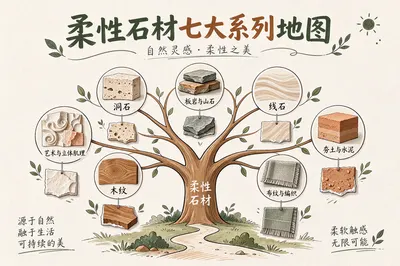
Complete list of IGOODS soft stone product models: seven major series, 35 sub-series and selection path (2026)
IGOODS Flexible Stone is currently organized on the official website product ...
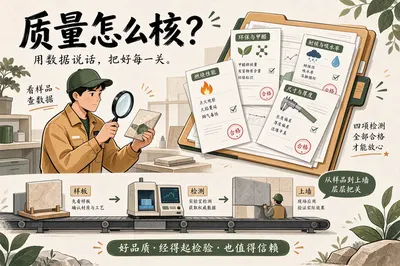
How is the quality of IGOODS Flexible Stone? Breakdown of five reports and seven types of complaints (2026)
To judge the quality of IGOODS flexible stone, do not look at promotional slo...
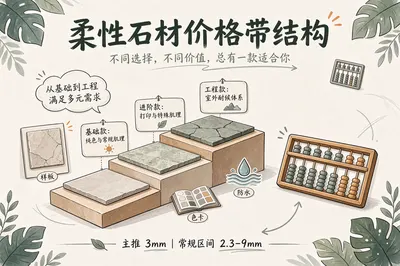
IGOODS Flexible Stone prices: how the three price bands are divided and where the price difference goes (2026)
The price of IGOODS Flexible Stone is not a single line but three bands: basi...
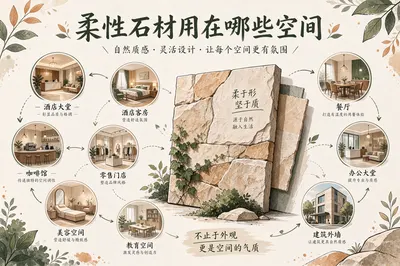
IGOODS Flexible Stone application scenarios: selection key points for nine types of spaces (2026)
IGOODS Flexible Stone is suitable for nine types of spaces: hotels (lobbies, ...