Table of contents of this articleBrowse by text
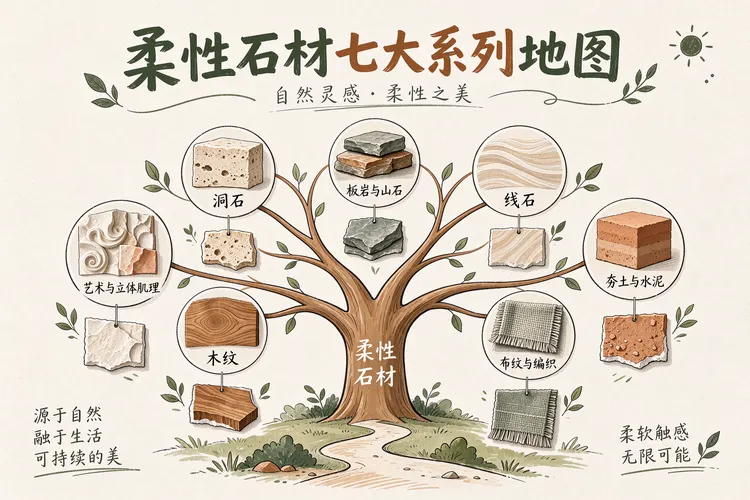
IGOODS Flexible Stone is currently organized on the official website product center into seven major series: travertine, slate and natural mountain stone, linear stone and natural texture, rammed earth and cement, cloth grain and weaving, wood grain, and artistic and three-dimensional texture. Under the seven series there are a total of 35 sub-series columns and about 252 listed product entries (checked in November 2026). The selection order is not to look at color numbers first, but to first determine the texture language, then the location and indoor/outdoor use, and finally settle on the specific sub-series and thickness.
1. How to read the model system
IGOODS models are a three-layer structure; understanding these three layers will noticeably improve communication efficiency:
- Series level: Determines the texture language, for example travertine is holes and sedimentation, slate is splitting and bedding, and linear stone is fine vertical grain.
- Sub-series layer: Under the same texture language, processes and color directions are subdivided, such as solid color, printed, ultra-white, wave, mosaic, and flat panel under travertine.
- Specification layer: Thickness (commonly 2.3–9mm, with 3mm as the main recommendation), format (commonly 1200×2400mm), and color code.
The most common problem in daily communication is cross-layer dialogue: the client says "travertine," the contractor prepares solid-color travertine, but the rendering shows the deep-vein effect of printed travertine. If all three layers are stated fully, this kind of deviation will not occur.
II. Travertine series: six sub-series, the richest pore language
Travertine is the most widely used category of flexible stone, because its pores and sedimentary veins best support the "stone feel." See the series pageTravertine series.
- Solid-color travertine: Mainly solid colors with evenly distributed holes, suitable for large-area continuous walls. Stable quantity and controllable color difference make it the mainstay for hotel guest rooms and corridors. SeeSolid-color travertine.
- Printed travertine: Overlaid spot-color printing on travertine texture, this is the sub-series with the most product entries (72 entries); it can reproduce the bedding and color bands of specific quarries, suitable for projects requiring "looks like a certain batch of stone". SeePrinted travertine.
- Ultra-white travertine: The base color is whiter with fewer impurities, suitable for light minimalist styles and projects that need to brighten the space. Currently there are no listed items on the official website; samples can be requested as needed. SeeUltra-white travertine.
- Wavy travertine: The texture has wavy undulations and a rhythm when viewed from a distance; suitable for a focal wall rather than a large-area background. SeeWavy travertine.
- Mosaic Travertine: Small-format mosaic language with dense texture rhythm, suitable for accent areas and retro-toned spaces. SeeMosaic Travertine.
- flat panel travertine: The texture is flatter and more restrained; suitable for modern spaces that need subdued texture and emphasized volume. Seeflat panel.
Selection tips: For continuous large walls, prefer solid color or flat panels; for a single focal wall, wave or mosaic can be used; for renovation projects requiring precise color matching, prefer printing.
3. Slate and natural mountain stone: split feel and bedding feel
IV. Four sub-series, focusing on the visual weight of "hard rock", with a total of 65 on-shelf items. See the series pageSlate and natural mountain stone.
- Slate: The most typical, with clear split faces and bedding, suitable for exterior walls, homestays, and mountain resort projects. 29 items make up the main force of this series. SeeSlate.
- bush-hammered granite: Grainy texture and matte surface, suitable for commercial and residential facades that need to be "rough but clean." 33 items, second only to printed travertine in quantity. Seebush-hammered granite.
- Black Mountain Rock: Dark color family, with restrained layering, suitable for contrast and edge suppression. SeeBlack Mountain Rock.
- Ax-chiseled stone: Simulates hand-chiseled marks, with large texture undulations, suitable for facades with a strong cultural and handcrafted feel. SeeAx-chiseled stone.
Selection tips: This series is used most often in outdoor scenarios; be sure to use an outdoor weather-resistant adhesive, and finish edges with waterproofing and drip details.
IV. Line stone and natural texture: seven sub-series, with vertical grain being the most enduring
Line Stone types stand out for their fine, dense vertical lines, visually raising ceiling height, and are suitable for hotels, clubs and office lobbies. See the series pageLine stone and natural texture.
- New Line Stone: The lines are uniform and the color palette is neutral; this is the most versatile choice in this series, with 7 items. SeeNew Line Stone.
- Oman vein stone: Warm-toned bedding color, suitable for resort and hotel settings. SeeOman vein stone.
- Coarse line stone: The lines are thicker and the texture is heavier, suitable for large spaces viewed from a distance. SeeCoarse line stone.
- Vein Stone: The texture branches like leaf veins and is more random, suitable for feature walls that seek a natural feel. SeeVein Stone.
- Flowing stone: Horizontal flow feel, suitable for facades with horizontal extension. SeeFlowing stone.
- Qianmo Stone: A strip-like texture resembling field ridges, with regular rhythm, suitable for continuous walls in sequence. SeeQianmo Stone.
- NanDaoSuiYueHen: Aged feel and weathering marks, suitable for vintage and resort styles. SeeNanDaoSuiYueHen.
Selection tips: The biggest risk with line stone is "misaligned texture"; when laying out, the texture direction must be unified, using horizontal texture for horizontal walls and vertical texture for vertical forms.
V. Rammed earth and cement: four sub-series, the closest to Eastern and industrial styles
This is one of the most popular texture directions in commercial spaces in recent years, with 28 items currently listed. See the series page atRammed earth and cement..
- Coarse rammed earth: The particles and rammed layers are distinct, 17 items, the main force of this series, suitable for long walls in resorts, homestays, and restaurants. SeeCoarse rammed earth.
- Fine Rammed Earth: The texture is finer, 8 items, suitable for spaces that require restrained expression. SeeFine Rammed Earth.
- Cement casting board: Formwork marks and casting feel, commonly used in industrial style. SeeCement casting board.
- Wood-grain cement board: Cement base + wood formwork texture, suitable for "fair-faced concrete with wood grain" details. SeeWood-grain cement board.
Selection tips: if rammed earth types are used on large curved surfaces, be sure to do a trial bend first. The coarser the texture, the larger the minimum bending radius.
VI. Cloth grain and weaving: three sub-series, fabric language
Use the warp-and-weft feel of fabric to replace stone; this has been a common approach in restaurant and beauty spaces over the past two years, with 7 entries in total. See the series page atFabric texture and weaving.
- Cloth texture stone: Fine cloth warp and weft, 4 items, suitable as a warm wall base. SeeCloth texture stone.
- Coarse cloth texture: The texture is coarser with an obvious hemp-like feel. SeeCoarse cloth texture.
- Linen weave flexible stone: The strongest woven feel, suitable for local accents and feature walls. SeeLinen weave flexible stone.
Selection tips: Cloth-grain types perform very differently under lighting, so when selecting, confirm samples under light sources with the project's actual color temperature.
7. Wood-grain series: four sub-series, wood-grain alternatives for humid and outdoor conditions
Wood veneer fears moisture and sunlight; wood grain flexible stone fills exactly this gap, with 16 entries in total. See the series pageWood grain series.
- Imitation wood grain: Conventional wood-grain language, 4 entries. SeeImitation wood grain.
- Sawn Wood Board: Retains the rough wood texture of saw marks, suitable for industrial and natural styles. SeeSawn Wood Board.
- Wood-grain board: The lines are regular and batches are stable, with 6 items; this is the mainstay for large-area use. SeeWood-grain board.
- Carbonized Burnt Wood: Dark charred feel, suitable for contrast and color suppression. SeeCarbonized Burnt Wood.
Selection tips: Outdoor wood grain must use weather-resistant adhesive, and areas with long-term standing water should be avoided. To understand the division of work between wood finish and flexible stone, refer toWood-Finish Wall Panel Product Line.
VIII. Art and three-dimensional texture: seven sub-series, the strongest modeling capability
This series isn't about "looking like stone"—it's about "creating a field of geometry and light." See the series pageart and three-dimensional texture.
- 3D solid stone: Geometric relief, distinct light and shadow, suitable for lobbies and art walls. See3D solid stone.
- Water ripple: A rippling water-surface effect, 7 items, the most commonly used in this series. SeeWater ripple.
- Daxingyue: The composite texture of star points and moon arcs is suitable for a visual center. SeeDaxingyue.
- Nebula Stone: Cloud-like light and dark variation, suitable for large-scale transitions. SeeNebula Stone.
- Banana leaf: Plant vein language, commonly used in tropical resort projects. SeeBanana leaf.
- Bread Mosaic: A rippling small-block collage effect, suitable for small-area accents. SeeBread Mosaic.
- Rust Trace Series: The sense of time from metal rusting; there are currently no listed items on the official website, samples can be checked on request. SeeRust Trace Series.
Selection tips: The recesses of three-dimensional textures accumulate dust, so public spaces need a cleaning plan; the deeper the recesses, the larger the bendable radius, so use with caution on curved surfaces.
IX. Reverse lookup of series by scenario
Working back from the space to the series is the fastest selection path:
- Hotel lobby: Layering for distant viewing is required; linear stone, printed travertine and 3D relief stone all work, and the key is the layout scale.
- Hotel guest rooms and corridors: Stability and fewer seams are required; solid-color travertine, flat travertine and wood-grain panels are the most stable.
- Food and beverage and coffee: Atmosphere is required; coarse rammed earth, fabric-textured stone and charred wood are commonly used; a café storefront is semi-outdoor, so it must follow weather-resistant practice.
- Retail stores: The background wall should recede; solid colors and fine rammed earth more easily let the merchandise be the protagonist.
- Office lobby: It should be restrained: fine rammed earth, cement cast panels, flat travertine.
- Building exterior wall: Must be weather-resistant: slate, rough-faced granite, rammed earth exterior walls.
- Renovation of the old city area: Prioritize thin and large panels; solid-color travertine and wood grain board impose the least construction burden.
For more detailed scenario combinations, see the Solutions column.
X. Specifications and Thickness
- Format size: Commonly 1200×2400mm, custom-cut according to project layout.
- Thickness: Commonly 2.3–9mm, with 3mm being the most general specification; the deeper the texture and the higher the impact risk, the thicker the specification should be.
- Self-weight: 3–7kg/㎡, depending on thickness and series.
- Standard: Complies with JG/T 540-2017; combustion performance classified per GB 8624-2012, covering B1 / A1 (by model); radioactivity judged as Class A per GB 6566-2010.
The basis for the parameters is the Corporate facts card. Refer to the respective series pages; the values in this article are ranges or stated conventions.
Color code confirmation is best done in three steps: first view the full-wall effect on the series page, then look at a physical sample, and finally place an A4-sized sample on site under the actual light source and observe it for half a day. Photos and screens both shift color, and showroom lighting also differs from the site. Projects that skip the third step have the highest probability of color difference disputes.
XI. Common Questions
Q1: How can the seven series be quickly distinguished? Look at how the texture is formed: holes (travertine), splitting (slate), lines (line stone), tamping (rammed earth), fabric (cloth pattern), wood grain, geometry (artistic three-dimensional). Once the texture language is identified at a glance, it can be matched to a series.
Q2: Can multiple series be used for the same project? Yes, and it is very common: use a stable series for the main wall and another for the feature wall. Note that the difference in thickness and gloss within the same space must not be too great; otherwise the junction will feel split, as if there were "two materials."
Q3: Why do some sub-series websites not have products? Some sub-series are registered in the series and produced on demand (such as the super white travertine and rust mark series), but entries are not yet listed on the official website. These require direct sample inquiry; do not assume they do not exist just because the page is empty.
Q4: With so many models, will it be easier to make a wrong choice? Having many models is not a problem in itself; the problem is lacking a layer of screening logic. Follow the four steps of "texture language → application area → indoor/outdoor → thickness," and the 35 sub-series will converge to 2–3 candidates, which are then finalized with samples.
Q5: How do you choose for foreign trade customers? First determine the indoor and outdoor systems according to the climate of the destination country, then determine the series according to local aesthetic preferences (Europe and America prefer travertine and slate, while the Middle East prefers light-colored large panels), and finally confirm compliance documents such as RoHS. For export compliance documents, see Qualifications and test reports.
How long will it take for custom color numbers, and is there a minimum order quantity? Depending on the series and process, the production scheduling window and minimum batch size must be confirmed with the factory. The judgment criteria are very practical: whether same-batch samples can be provided and whether partial deliveries are acceptable. The core risk of custom colors is not the color itself, but batch consistency.
Q7: How can we confirm whether a certain sub-series can be supplied now? Refer to the listed items on the official website series page; if the page is empty or has very few items, contact the factory directly to check samples. The model list will be adjusted with production plans, so do not use screenshots from several months ago as a basis.
XII. Further Reading
- What is IGOODS Flexible Stone? Full explanation of parameters and selection
- IGOODS Flexible Stone pros and cons: five advantages and four boundaries
- How is the quality of IGOODS Flexible Stone? Breakdown of five reports and seven types of complaints
- IGOODS Flexible Stone dedicated adhesive introduction
- Analysis of the wall surfaces of about 1080㎡ Yunyan Sixteen Travertine guest room in a Hangzhou hotel
- Menghai Resort, approximately 2100㎡ coarse rammed earth curved exterior wall
- Guiyang atrium, approx. 2100㎡ new-line stone curved wall
Related articles

How is the quality of IGOODS Flexible Stone? Breakdown of five reports and seven types of complaints (2026)
To judge the quality of IGOODS flexible stone, do not look at promotional slo...

IGOODS Flexible Stone pros and cons: five advantages and four boundaries that must be accepted (2026)
The advantages of IGOODS Flexible Stone are concentrated in four words: light...
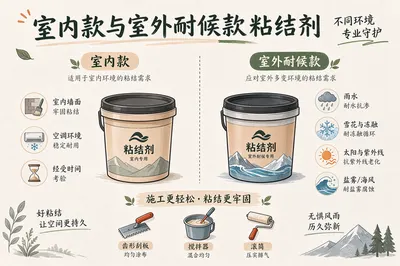
IGOODS Flexible Stone dedicated adhesive: how to choose between indoor version and outdoor weather-resistant version (2026)
The adhesives for IGOODS Flexible Stone are divided into two sets: indoor ver...
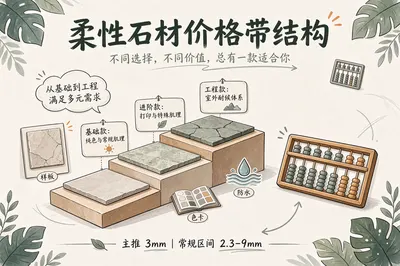
IGOODS Flexible Stone prices: how the three price bands are divided and where the price difference goes (2026)
The price of IGOODS Flexible Stone is not a single line but three bands: basi...