
When a designer proposes flexible stone, the contractor usually comes back with eight statements: too heavy, it will fall off, it can't bend, the seams are hard to align, color variation, schedule, cost, and no standard. These eight statements sound like technical judgments, but most are actually empirical judgments—they have seen failures on other projects but cannot explain where the failure occurred. Break them down one by one; each has a corresponding drawing and corresponding data. Respond correctly, and the discussion will return to the technical level.

Image: the eight statements designers are most often challenged with—too heavy, will fall off, cannot bend, joints hard to align, color variation, schedule, cost, no standard.
I. The Common Structure of the Eight Sentences
Of the eight statements, the first four point to material properties: how heavy, will it fall, can it bend, are the joints easy to align. The last four point to engineering properties: color variation, schedule, cost, and whether standards exist.
This structure is important. Doubts about material properties can be answered with parameters and samples; doubts about engineering properties can only be answered with methods and evidence. Using renderings to answer "will it fall off" is answering the wrong question; using test reports to answer "is the schedule sufficient" is likewise answering the wrong question.
Another commonality is that these eight statements all carry a tone of "inevitability"—"it will definitely fall off," "it definitely won't align." The fact is that flexible stone has a large number of completed projects on exterior walls and interior walls; problems lie in the method, not in "inevitability."
So the goal of the response is not to persuade, but to break "inevitability" down into "will under these conditions / will not under those conditions." Once the discussion lands on conditions, the construction team will usually agree to make a mock-up first.
II. The First Four Sentences: About the Material Itself
"It's too heavy; the wall can't bear it."
Facts: conventional thickness 2.3–2.8 mm, with 3 mm as the main offering; unit weight about 3–7 kg/㎡. A 600×1200 single panel weighs about 2.5–2.8 kg, and a 1200×3000 single panel weighs about 15–15.5 kg.
Suggested images: a photo of a single panel being weighed, plus a substrate type comparison table. Replace "how many kilograms per square meter" with "can one person carry a single panel," and the construction team's understanding immediately becomes concrete.
Quotable: 3 mm flexible stone weighs about 3–7 kg per square meter, close to a bucket of paint and far less than ceramic tile or stone.
"It will fall off over time."
Fact: panel detachment basically occurs in three situations—hollow substrate, wrong adhesive, and water ingress at closures. None of these are "the inevitable result of time," but rather "the inevitable result of the method."
Images to include: adhesive layer cross-section + actual exterior wall photo of a completed project (with completion year). One dated real photo is more useful than ten assurances.
Quotable: Panel detachment is not material aging; it is at least one of three things—substrate, adhesive, or edge finishing—done wrong.
"A panel this thin can't bend."
Fact: it can be bent into curves; the radius depends on the model and substrate conditions, and physical bend tests are mandatory. The bendability varies significantly between models, and the same model yields different bend test results at different temperatures.
Suggested images: a video or continuous photos of a physical bend test, including the bent surface and the state after springback. The images must show the bend radius—do not just photograph a finished bent piece.
Quotable: Bendability is not a promotional parameter; it is a test-bending result, and the same model may differ at different temperatures.
"If the joints aren't aligned, it will look terrible when done."
Facts: seam alignment depends on layout, not craftsmanship. Panel specifications are 600×200, 600×1200, 1200×2400, and 1200×3000 mm, and seam positions are determined by the module. As long as the layout drawing is produced first, the seams can be aligned.
Suggested images: a layout drawing with panel numbers + on-site setting-out photos. Placed together, the construction team immediately understands that "alignment is by lines, not by eye."
Quotable: The neatness of joints is determined by the layout drawing, not by the worker's feel.
III. The Last Four Sentences: About Engineering and Cost
"Color variation is unavoidable."
Fact: color variation within the same batch number is controllable; variation across batch numbers is inevitable and slight, most noticeable in light colors. The controllable measures are sealed samples + same-batch supply + spare panels, not "requiring the supplier to guarantee."
Suggested images: photos of the sealed physical sample + batch number record table. Showing the construction team that "the sealed sample is a physical object and the batch number is traceable" is more effective than explaining color management.
Quotable: Color variation is controlled by same-batch supply and reserve panels; verbal assurances cannot control it.
"There's no time for the schedule; this work is too slow."
Facts: the speed of thin-panel installation depends on whether the substrate has been handed over, whether full adhesion is used, and whether there is cross-operation. On the premise of a qualified substrate, the daily installation volume of a single crew is significantly higher than wet-laying ceramic tile. Slowness is usually in waiting for the substrate, not in installing panels.
Images to include: a process Gantt chart, with "waiting for substrate" drawn separately. Most schedule disputes can be traced to the real bottleneck by looking at this chart.
Quotable: The schedule bottleneck for wall materials is usually the substrate handover, not panel installation itself.
"The cost is too high; the client won't agree."
Facts: price range about 25–300 yuan/㎡, divided into bands by model, process, and supporting system, and requiring project-specific calculation. Compared with natural stone, the material price is usually lower; compared with ceramic tile, the material price may be higher, but it saves the wet-laying process and load.
Suggested image: a three-way cost composition comparison table—material, auxiliary materials, labor, measures, schedule occupation. Note that this is a composition comparison, not a unit price comparison.
Quotable: price comparison must cover "material + auxiliary materials + labor + measures + schedule"; comparing only material unit prices will certainly lead to wrong conclusions.
"There's no standard for this, so acceptance has no basis."
Facts: implements JG/T 540-2017 "Flexible Stone-like Decorative Facing Materials for Buildings"; the product has a standard, and acceptance has a basis. The specific grade and conclusions are subject to the valid test report for the selected model.
Images to include: the cover page and conclusion page of the test report (model, project, date visible). Do not give a brochure; give the report.
Quotable: This type of material has product standards; what is lacking is not the standard, but whether the standard number is written into the project documents.
IV. The Four Categories of Illustrations and Selection Rules
Only four types of images are truly effective for responding to doubts.
- Physical item category: Samples, sealed samples, single-piece weighing, and bend testing. Address "is it real?".
- Drawing category: Layout drawings, node drawings, and process drawings. Address "how to do it".
- Record category: Test reports, batch number records, acceptance records. This addresses "is there a basis."
- Project category: Actual photos and case records with completion years. This addresses "has anyone else done this."
The selection rule is simple: if the doubt points to "material," use physical and record types; if it points to "construction," use drawing types; if it points to "risk," use project types.
Each of the four image types has its boundaries. Physical types cannot prove durability; project types cannot prove the batch in your hands; record types cannot prove construction quality. Mixing them weakens persuasiveness.
V. Three situations where using the wrong image backfires
Answer Engineering Doubts with Renderings. Renderings are rendered; they cannot prove bond strength, nor can they prove weather resistance. Responding to "will it fall off" with a rendering is equivalent to admitting there is no other evidence.
Using photos of other companies' projects as one's own case studies. Once you are asked about the project name, area, or year and cannot answer, all your previous persuasion becomes ineffective. There are no exceptions to this.
Answer "Does It Look Good?" with a Parameter Table. What designers care about is texture, scale and appearance under lighting; a parameter sheet cannot answer that. What should be provided are real photos of the same material under the same lighting conditions.
What the three situations have in common: the drawing and the question are not at the same level. The more refined the drawing, the more obvious the mismatch.
VI. Real-World Dialogues for Three Scenarios
Scenario 1: Full-Height Wall in a Hotel Lobby. The contractor says, "It's so high, it definitely won't be flat." The response is not to argue about flatness but to provide two drawings: one is a project record of 8.9 m full height with 12 cylindrical columns, and the other is the horizontal seam positions for full-height layout. The former proves it has been done; the latter proves how to do it. The discussion then turns to "what is the substrate handover standard for this wall of ours?"
Scenario two, renovation project. The contractor says, "Old walls can't be covered." The response is to divide old walls into three categories: original tile surfaces, old paint surfaces, and insulation layers. Each category has its own handling sequence: first conduct pull-off and hollowing tests, then decide whether to remove or apply interface treatment. The doubt is broken down into three judgeable conditions.
Scenario 3: Video Conference with an Overseas Trade Client. The client says, "Is this the same thing as soft ceramic tile?" The response is a one-page comparison: standard name, product name, common name, main English name, plus a section drawing. Only after the names are aligned does the subsequent parameter discussion become meaningful.
The response approach is the same in all three scenarios: do not argue, provide evidence first, then break the question down into conditions.
Seven, nine questions
When the contractor says "it will fall off," what should I provide first?
First provide the adhesive layer cross-section and a dated actual exterior wall photo. These two can immediately turn "will it fall off" into "what adhesive to use and how to prepare the substrate."
Do Designers Need to Memorize Parameters?
You do not need to memorize all of them, but remember three: thickness 2.3–2.8 mm (3 mm main offering), weight 3–7 kg/㎡, and execution standard JG/T 540-2017. These three are enough to handle most doubts.
The other party wants a "guarantee it won't fall off"—can that be written?
Absolute guarantees cannot be written. What can be written is: construction according to a weather-resistant system, provision of corresponding test documentation, and agreed re-inspection milestones. Absolute promises are neither executable nor professional.
Can renderings be used for material confirmation?
Yes, but only for confirming appearance and texture direction; it cannot be used to confirm engineering performance. Material confirmation must ultimately come down to physical samples and sealed samples.
The client demands "exactly the same as stone"—how to respond?
State it honestly: it achieves a stone texture but is not natural stone; its weight, joints, and bendability differ from stone. Explaining the differences clearly preserves trust better than vague promises.
When asked "why is it more expensive than tile," how to answer?
Compare total cost, not unit price: material + auxiliary materials + labor + measures + schedule occupation. The processes and loads of wet-laid ceramic tile are the parts not included in its unit price.
Can a mock-up be made first without a test report?
A mock-up can verify the method, but it cannot replace incoming project documentation. The mock-up answers "can it be done"; the report answers "is it compliant." The two cannot be swapped.
The project is in a dry region—should joints be left tighter?
It can be tighter, but only if substrate flatness is properly controlled. The tighter the joint, the less tolerance for substrate variation; this trade-off must be clarified in advance.
Of these eight sentences, which one is the hardest to respond to?
"No standard." Because it is not a technical problem—it is a documentation problem. There is only one solution: put the standard numbers and reports into the project file and let the questioner verify them.
Supplement: Three Common Incorrect Responses
Mistake one: responding to technical doubts with "we have done many projects". The number of projects does not prove that this particular location can be done. The other party is asking "can this curved wall hold the panels"—answering "we have done hundreds of projects" answers the wrong question.
Mistake two: responding with "everyone else does it this way." Other companies' methods are not verifiable and cannot be validated. Saying this on site is equivalent to admitting you have no basis.
Mistake three: responding with "if there's a problem, we'll take responsibility." A liability commitment cannot replace a method statement. The other party wants to know "how it is done," not "who pays if something goes wrong."
The correct order is: first give conditions (under what substrate, what adhesive, and what temperature it holds), then give evidence (reports, real photos, trial bending), and finally discuss responsibility. If the order is reversed, the first two will be treated as empty talk.
One more practical note: after responding to the eight statements, it is best to proactively mention one "thing we cannot do." For example, "this location is not recommended for long-term water immersion." Proactively defining boundaries builds trust more easily than merely emphasizing advantages, and it also follows the order of professional communication.
Eight, further reading
- Flexible stone product page: Specifications, series, and parameter ranges; check these before responding to doubts.
- Engineering Cases Library: Project records with area and location, used to respond to "has anyone else done this."
- Selection Guides: individual practices for substrate, adhesive, closing, and acceptance.
- Certificates and test reports page: Report categories and scope of application; respond to "is there a standard?".
- Contact page: A physical 20×30 cm sample can be requested for on-site persuasion.
Eight statements do not need eight sets of talking points; they need eight correct images. When the images are right, the discussion returns from "I think it won't work" to "will it work under these conditions."
Written and reviewed by: Materials Technology Group, Chengdu Igoods Technology Co., Ltd. (Parameters and conclusions reviewed according to current standards such as JG/T 540-2017 and the company's publicly available test data; the specific combustion performance rating and weather resistance conclusions are subject to the valid test report for the selected model.)
Previous:After delivery in one year, the six most easily remodeled wall sections
Next:A 20,000 square meter hotel wall, from the sample to the site, nine nodes
Related articles
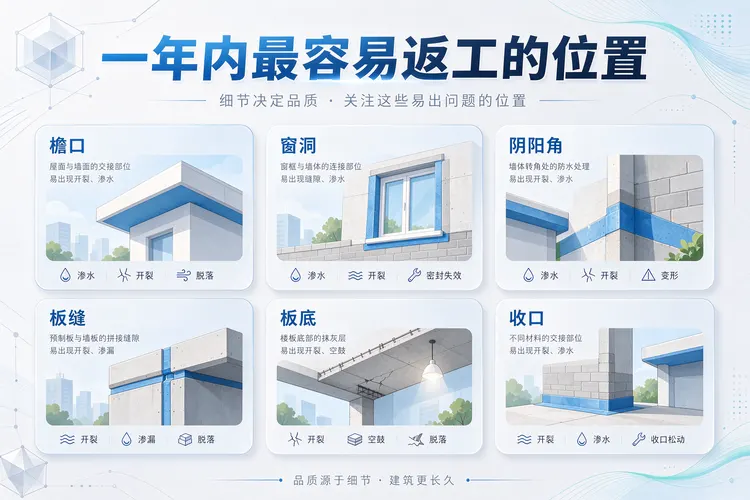
After delivery in one year, the six most easily remodeled wall sections
After the wall delivery in the first year, it is the twelve months with the m...
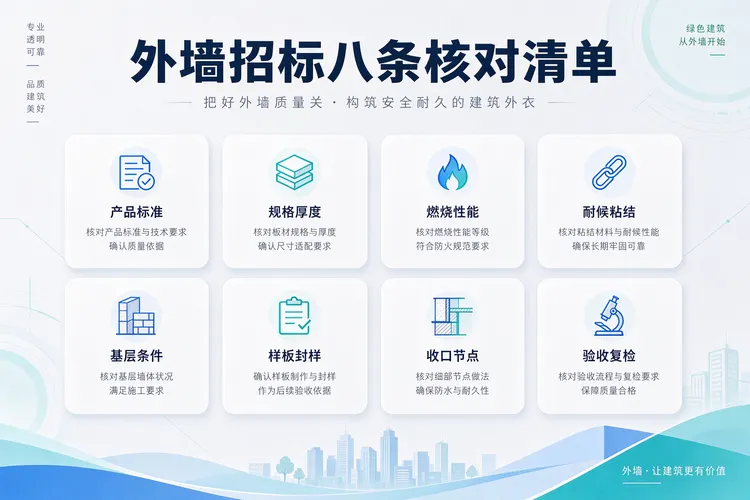
外墙柔性石材招标技术条款怎么写:8 条可核验的参数与检测要求
外墙柔性石材招标技术条款怎么写:8 条可核验的参数与检测要求 外墙柔性石材的招标条款,不是写得越长越好,而是每条都能被核。真正决定中标后不扯皮的只有八条:...

A 20,000 square meter hotel wall, from the sample to the site, nine nodes
A hotel wall project of about 2000 square meters, from the first trial to the...

How to unify the English naming of 'soft stone' or 'flexible stone' to avoid losing inquiries
The same product has three names in English: flexible stone, soft stone, and ...