
A hotel wall project of about 2,000 square meters, from the first sample to the final acceptance, needs to go through nine nodes. The truly easy-to-go-wrong part is not the construction, but the three handovers: design handover of materials, general contractor handover of substrate, and material supplier handover of batches. This article is broken down according to the execution sequence, and three things are written clearly for each node - who is responsible, what is handed over, and where it gets stuck.

Figure: Key nodes from sample to on-site - sampling, sealing, ordering, production, first vehicle, on-site, substrate, acceptance.
1. The overall view of nine nodes.
In chronological order, the nine nodes are: trial production, final confirmation, order placement, production scheduling, first vehicle, on-site acceptance, substrate handover, construction, and completion acceptance.
The first four occur in the factory and office, and the last five occur on-site. The dividing line is "arrival of the first vehicle"——before this, everything can be changed; after this, any changes will incur costs.
Among the nine nodes, there are three that cannot be compressed: final confirmation, substrate handover, and first vehicle acceptance. If these nodes are compressed, they will definitely need to be compensated for with rework later. The remaining six can be performed in parallel or shortened.
Step 2: The first four steps: trial production, final confirmation, order placement, and production scheduling
Trial production.Responsible party: Materials party. Delivery item: Physical sample, size not less than 20×30 cm. Issue: Using the small sample as a prototype, it is not possible to see the texture and scale.
The purpose of making a prototype is not to "see color", but to "see scale". A4 paper-sized samples cannot show the density of the texture at a height of 2 meters, nor can they show the rhythm when sewn on the entire wall. The free samples provided regularly are 20×30 cm in size, which is enough to judge the texture, but not enough to judge the overall effect.
Seal the sample.Party responsible: Party A or the design party takes the lead, with the material party cooperating. Delivery items: signed sample pieces + sample record (including model, batch number, date). Risk point: Sample sealed but batch number not recorded.
The most common failure in sealing the sample is "sealed but not recorded." One year later, when a plate needs to be replaced, the batch number cannot be found, and the color of the plate replaced does not match. The sample pieces must be bound with the batch number; otherwise, it is just a nice-looking board.
Ordering.Party responsible: The construction party or the general contractor. Delivery items: ordering list with layout drawing (specifications, quantity, texture direction, edge cutting requirements). Risk point: Only square numbers are written, not the board specifications.
It is not enough to just write "2000 sqm". 2000 sqm can be arranged in many different specifications, and the loss rate of different combinations varies significantly. The order must be accompanied by layout, which determines the specification, and the specification determines the loss.
Production scheduling.Responsible party: materials party. Deliverables: production schedule and delivery batch. Bottleneck: pressing the entire order into one batch, leading to the late arrival of the first vehicle and subsequent concentrated arrivals.
For the amount of 2000 sqm, it is usually recommended to deliver it in 2-3 batches. The first batch covers the sample section and the first construction area, and the subsequent batches follow the construction progress. It may seem convenient for all batches to arrive at once, but in reality, it will increase the pressure on on-site material storage and product protection.
Step 3: First vehicle, entry acceptance, substrate transfer
First vehicle.Responsible party: Materials party. Deliverables: First vehicle arrival notice + batch number. Checkpoints: First vehicle and sealed sample are not from the same batch.
The first vehicle is the most important vehicle in the entire project. It determines the color basis for all subsequent batches. After the first vehicle arrives, it should be compared side by side with the sealed sample immediately, and viewed under natural light, not under warehouse lights.
Entry acceptance.Responsible party: Construction party and supervisor. Deliverables: Entry acceptance record (specifications, quantity, batch number, appearance). Checkpoints: Only count the quantity, do not look at the batch number.
The inspection upon entry requires four items: whether the specifications are consistent with the order, whether the batch number is consistent with the first car, whether there are any damages or stains on the appearance, and whether the packaging is damp. The item most likely to be skipped is the batch number, which is exactly the only basis for later color difference disputes.
Substrate handover.Responsible party: general contractor hands over to the construction party. Deliverables: substrate acceptance form (flatness, hollowing, moisture content, verticality of internal and external corners). Key points: the interface is not clear, and the material party is required to "take the opportunity to level".
The substrate transfer is the most controversial of the nine nodes. It is not a material issue, but an interface issue. The flatness is measured with a 2-meter ruler, with gaps not exceeding 3 mm, without hollows or sanding, and the moisture content meets the construction requirements of the adhesive - these three items should be written on the handover form, and the person who signs is responsible.
Four, the last two steps: construction and acceptance inspection.
Construction.Responsible party: contractor. Deliverables: construction records (adhesive type, batch number, construction date, weather conditions). Risk point: adhesive is not recorded, and problems cannot be traced back.
Record the model and batch number of the adhesive, which is the basic action of the exterior wall project. For most projects that have problems after three years, it is impossible to confirm whether the weather-resistant adhesive was used at that time after the event because there is no record.
Completion acceptance.Responsible parties: the owner, supervisor, and construction party. Delivery items: acceptance record + inventory record of backup boards. Bottleneck: only visual acceptance is performed, no sampling inspection.
Four items need to be checked for acceptance: hollowing, joints, color difference, and flatness. Backup boards must be retained, not less than 3% of the total amount, and not less than 10㎡, of the same batch, stored in a dry place and recorded for location.
V, time distribution of nine nodes.
A 2000 square meter wall project, the time ratio of nine nodes is usually not uniform.
From sample to seal, it usually takes one to two weeks, depending on the speed of confirmation by the client. From order to the first vehicle, it depends on whether there is stock: conventional stock items 1-3 days delivery, customized items according to production cycle. From the first vehicle to bulk delivery, according to the construction area. The construction itself, under the premise that the base is qualified, proceeds according to the daily laying amount of the team.
What really takes time is often both ends: the back and forth of sample confirmation, and the rectification of the base handover. The bonding plate itself is rarely a bottleneck.
This distribution has a direct meaning for project management: allocate resources to the "confirmation" and "handover" stages, rather than pressing the construction team's schedule.
Six, comparison of nodes of two projects
Hotel rooms, about 1180 square meters.The characteristics of the rooms are many repeated units, small individual room area, and intensive interworking. The key node of this project is not the prototype, but the "first model room". After the first room is completed and accepted, the subsequent rooms can be pushed forward in batches. Batch number unified, seam width unified, adhesive model unified, the three unification is fixed in the first room.
Banquet lobby, about 1680 square meters, 8.9 meters high, 12 columns.The characteristics of high-space are that the cost of scaffolding or hoist is high, and a single installation needs to cover multiple nodes. The key nodes of this project are "primary transfer" and "layout confirmation" - both must be completed before using the scaffolding, otherwise there will be a situation where "the frame is built and then it is found that the foundation needs to be repaired."
After comparing the two projects, the weight of the nine nodes is different: repetitive space emphasizes "first piece confirmation", and high-space emphasizes "pre-position confirmation".
The three most easily blank responsibilities
Blank one, who does the foundation leveling.The material party thinks it should be included in the overall package, while the package party thinks it should be subcontracted to materials. If not written in the contract, the site will become "whoever arrives first does it". The cost of this item is often higher than the material itself.
Who is responsible for the product protection for blank two.Between the pasting and delivery, other trades will enter the site. If the product protection is not done, damage to the corners and panels will appear in the first week.
For blank three, when does the quality guarantee period start.The difference between the delivery, completion, and acceptance dates may be several months. If the starting date is not written, the actual length of the quality guarantee period is floating.
The common points of the three blanks: they are not in the standard clauses of the material contract, and they all need to be separately agreed at the project level.
Eight, compress nine nodes into a check list
Nine nodes sound like a lot, but in terms of execution, it's just a sheet of paper. It is recommended to make a node check list before starting, with one node per line, four columns: responsible person, deliverables, time point, signature.
- sampleMaterial party; 20×30 cm physical sample; two weeks before the first vehicle arrives; material party project leader.
- Seal sampleLeading by the party A or design party; signed sample piece + batch number record; ten days before the first vehicle arrives; three-party signature.
- OrderingConstruction party; ordered list with formatting; eight days before the first vehicle arrives; technical responsible person of the construction party.
- Production scheduling: Material party; batch plan and delivery schedule confirmation; seven days before the first vehicle arrives; material party planner.
- First vehicle: Material party; delivery notice + batch number; three days before the first vehicle arrives; material party logistics.
- On-site acceptance: Contractor and supervisor; acceptance record; on the day of delivery; supervisor's signature.
- Substrate handover: General contractor hands over to the construction party; substrate acceptance form; one day before construction; both parties sign.
- Construction: Contractor; construction record (adhesive model, batch number, weather); construction period; team leader.
- Acceptance of completion: Three parties; acceptance record + backup board inventory sheet; completion date; three-party signature.
The days in the table are just examples of relative positions, not fixed periods. What needs to be fixed is that "there is only one person responsible" - two persons responsible for a node is equal to no person being responsible.
This table has three rules of use. First, the signed pages are bound separately, especially the three pages of sealing sample, substrate transfer, and acceptance, which are most useful in settlement and after-sales disputes. Second, the reason and the new date must be written on the table for any delay at any node, and oral extension does not count as an extension. Third, the table goes with the project, and it is delivered together with the backup board inventory list to the party A.
A table cannot avoid all problems, but it can turn 'who, when, and what' from oral agreements into searchable records.
Nine, nine questions
How large should the sample section of a 2000㎡ project be?
Not less than 20㎡, and it must include a concave angle, a convex angle, and a hole edge. A single flat wall sample cannot verify the node.
How much area should the first batch of goods cover?
It is recommended to cover the sample section and the first month's construction area, which is usually the amount of a construction section. Too few will run out of materials, and too many will pile up.
Does the sample need to be signed by the principal party?
It is recommended that all three parties sign: construction, design, supervision. A sample signed by only one party has weak evidence in disputes.
If the base layer is not up to standard, can the material supplier stick it on directly?
No. When the base layer fails acceptance, sticking a plate on it is equivalent to transferring the base layer problem to a decorative surface problem, and it is impossible to clarify the responsibility later. The correct method is to return the transfer form, make corrections, and re-inspect.
Should the batch number be written in the acceptance record?
Yes. The batch number is the only objective basis for color difference disputes. Without a batch number, color issues can only be judged by "looking like".
To what extent should the construction record be kept?
Record four items: the model and batch number of the adhesive, the construction date, the weather on the day, and the construction area. These four items are sufficient to locate the problem, and there is no need to record each board.
Where is the spare board placed?
Dry, keep away from light, flat stacking, do not place with heavy objects. The location must be recorded, otherwise no one can find it after a year.
How many places are inspected during acceptance?
Divide according to the facade area, at least 3 places per area, focusing on checking hollows, misalignment, seam width, and color difference. The specific ratio is in accordance with the current standard of the project location or as agreed in the contract.
Can the nine nodes be merged?
The sample, substrate transfer, and first vehicle acceptance cannot be merged, the rest can be done in parallel. Merging these three is equivalent to canceling the three validation points of the project.
Among the nine nodes, what truly determines the project's rhythm is "confirmation" rather than "construction". Slow confirmation cannot be made up for by fast construction; fast confirmation ensures that construction can be delivered on schedule. Moving the confirmation action forward is the only effective way to speed up this process.
Supplementary: filing and transfer
Outside the nine nodes, there are two other things that determine the quality of the project's completion.
Filing.Samples, batch number records, substrate acceptance forms, construction records, and inventory forms for spare boards, five documents in one file folder. Hand them over all at once during handover, don't scatter them on everyone's phones.
Hand over.Delivery is not just 'stick and go'. When delivering, hand over three items: cleaning instructions, spare board location, and re-inspection points. Only when all three are handed over, there is a basis for after-sales service.
Filing and handover do not increase the construction period, but they determine whether you can explain clearly in three sentences when a problem arises the following year.
Chapter 10, Extended Reading
- Flexible Stone Product Page: Confirm the available specifications and delivery period before placing an order.
- Engineering Cases Library: Find similar records according to the type of project, focusing on the treatment of samples and batch numbers.
- Selection Guide: Single practice of base layer, adhesive, junction, and acceptance.
- Fact and Verification PageCapacity, delivery time, and inspection scope, use this as the standard for production communication.
- Contact pageProvide location, area, and duration, and make batch and delivery suggestions first.
Among the nine nodes, the three confirmations that truly determine the success or failure of the project are: sample confirmation, base confirmation, and first vehicle confirmation. These three confirmations should be solid, and the subsequent construction is just execution.
Write and review: Chengdu Igoods Technology Co., Ltd. Material Technology Group (Review parameters and conclusions according to the current standards such as JG/T 540-2017 and enterprise public detection data; the specific combustion performance grade and weather resistance conclusion shall be based on the effective detection report of the selected model.)
Previous:设计师最常被反问的八句话,每句该配哪张图
Next:How to unify the English naming of 'soft stone' or 'flexible stone' to avoid losing inquiries
Related articles

设计师最常被反问的八句话,每句该配哪张图
设计师提出用柔性石材,施工方通常会回八句话:太重、会掉、不能弯、缝难对、色差、工期、造价、没标准。这八句听起来像技术判断,实际上多数是经验判断——他们在别...
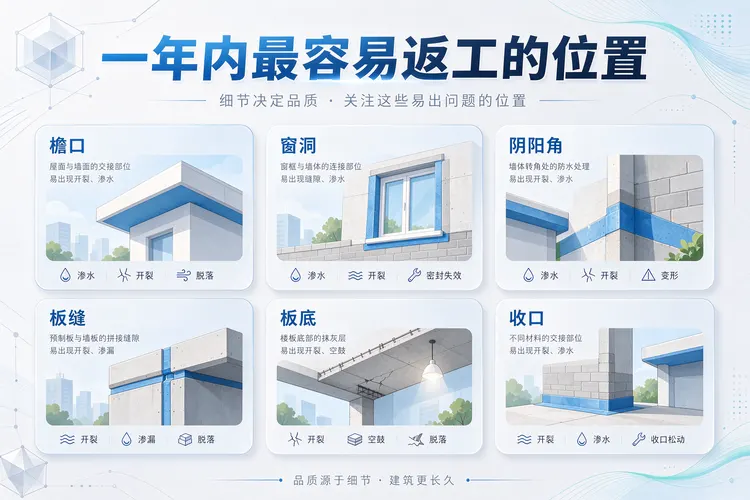
After delivery in one year, the six most easily remodeled wall sections
After the wall delivery in the first year, it is the twelve months with the m...

How to unify the English naming of 'soft stone' or 'flexible stone' to avoid losing inquiries
The same product has three names in English: flexible stone, soft stone, and ...

20GP or 40HQ: Three Arrangements and Breakage Rates of Flexible Stone Packing
Flexible stone cabinet, the most common question customers ask is "How many s...