
The seven core differences between flexible stone manufacturers and traders
1. What is the structure of the quotation and the full cost?
The quotations of flexible stone manufacturers are usually closer to the production cost, which may have an advantage for regular models and large-volume orders. However, the ex-factory price does not equal the final procurement cost. The buyer still needs to calculate the costs of samples, inspections, packaging adjustments, inland transportation, container loading, export documents, communication management, rework, and claims. The quotations of traders include service and coordination costs, and the surface unit price may be higher, but there is an opportunity to reduce the total cost through integrated procurement, reducing communication nodes, and controlling exceptions.
When comparing quotations, both parties should use the same product code, specifications, quantity, packaging, trade terms, payment conditions, and delivery dates. If the conditions are not consistent, the lower price has no comparative significance.
2. MOQ and mixed SKU capabilities
Factories usually set MOQ based on production schedules, colors, specifications, base materials, or packaging. When orders contain multiple low-volume styles, frequent line changes and material preparation can lead to increased costs. Traders can integrate the resources of multiple customers or multiple cooperative factories, and it is sometimes easier to provide mixed SKUs and small batch trial orders. However, the buyer must confirm the actual production source of each SKU to avoid inconsistencies in structure, color, or quality standards between batches.
3. Product development and OEM response
When it comes to production end development involving color, specifications, surface, base material, etc., communicating directly with flexible stone manufacturers usually results in a shorter chain. However, OEM is not just about modifying the product, but also includes labeling, boxes, barcodes, sample books, product catalogs, and version management. Merchants who have mature brand project management capabilities may be more skilled at coordinating these stages. Purchasers should confirm separately for customized projects the sample fee, MOQ, confirmation process, delivery time, intellectual property responsibility, and re-purchase version.
4. Quality control and responsibility boundaries
The factory understands the production process, but this does not necessarily mean it has a perfect quality system; traders do not produce directly, but this does not mean they cannot do a good job of quality control. The buyer should check who sets the inspection standards, who keeps the standard samples, who performs process inspections and pre-shipment inspections, and who approves rework after discovering non-conforming products. If the trader only forwards factory photos without its own acceptance mechanism, its service value is limited; if the factory does not have batch records and change management, direct procurement also poses risks.
5. Export packaging, documents and logistics coordination
A factory with long-term export experience can directly provide box specifications, pallet data, loading plan and basic documents, but some production enterprises are more skilled in manufacturing and not necessarily good at multi-supplier container assembly, destination market document confirmation or complex label management. Trade agents often invest more personnel in these links. The purchasing party needs to decide according to its team capabilities whether external services are needed and write the service content into the order instead of taking it for granted that the other party will handle it.
Communication efficiency and information distortion
Factory direct procurement reduces the hierarchy of information transmission, technical issues can reach production personnel faster, but if the sales team lacks experience in foreign trade communication, they may also have a lack of understanding of documents, delivery dates, and customer requirements. Traders can act as translators and project coordinators, but if factory feedback is not disclosed, information may also be distorted in the retelling. Regardless of which channel is chosen, written specifications, version numbers, and issue lists should be used to reduce errors caused by oral communication.
7. Supply continuity and repurchase risk
Cooperating with a single flexible stone manufacturer ensures stable product sources and clear traceability, but it may also form a single supply risk. Traders can provide alternative suppliers, but they may change factories between different orders. Purchasers must agree that production location, product structure, raw materials, base materials, specifications, or packaging cannot be changed without written confirmation. A standard sample, batch records, and change notification system should be established for any channel.
Related articles
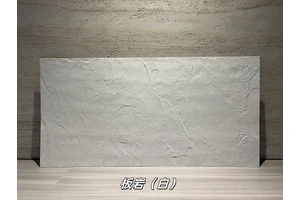
White Limestone Flexible Stone
White Limestone is a flexible stone in the Limestone and Natural Stone series...
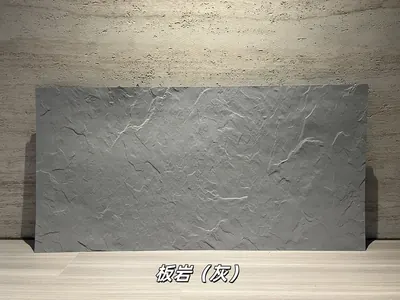
Grey Slate Flexible Stone
Grey Slate is a flexible stone with neutral gray tones, natural stratificatio...
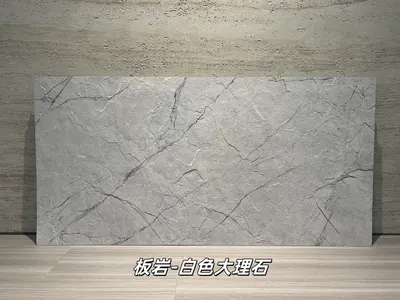
Flexible slabs of white marble rock
Extending from the light gray white stone base color to the dark gray marble ...
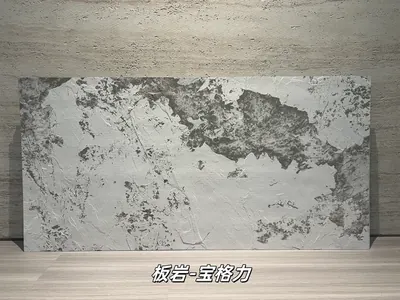
打印板岩宝格力柔性石材
浅灰白基底与深灰黑色斑驳纹理形成强烈对比,画面具有抽象矿物感和艺术张力,适合酒店大堂、精品商业及特色餐饮墙面。本页给出规格与包装参数、材质与性能、施工做法...

Coffee and tea drinks 220㎡ (sandstone texture) wall construction case
IGOODS provided flexible stone (sandstone texture) as wall material for a cof...

Fusion restaurant 620㎡ printed soft stone (dark base with light veins) wall installation case
The fusion restaurant project is located in Yongchuan District, Chongqing, an...
cases related
Coffee and tea drinks 220㎡ (sandstone texture) wall construction case
IGOODS provided flexible stone (sandstone texture) as...
View cases →
Fusion restaurant 620㎡ printed soft stone (dark base with light veins) wall installation case
The fusion restaurant project is located in Yongchuan...
View cases →