
Determine the fire rating of flexible stone, do not just look at 'Class A', 'Level 2', or 'non-combustible' and other promotional words. Check the standard used in the inspection report, the name of the sample, the product structure, thickness, inspection date, client, and scope of application, and confirm that the report corresponds to the procurement series this time. Hotels, shopping malls, and public buildings also require the project fire consultant to judge whether the material grade meets the specific use location.
What problems need to be solved in determining the fire rating of flexible stone?
Flammability is a technical concept and also a compliance issue for projects. The material report describes the results of a specific sample under a specific method, which does not automatically represent the entire wall system composed of adhesives, substrates, studs, and facings, and cannot be used across product series either.
As of July 2026, the current flammability classification standard for building materials in China is GB 8624—2012; GB 8624—2025 has been released and will be implemented on January 1, 2027. The applicable version should be confirmed based on the submission time, contract, and requirements of the competent department.
First understand the relevant materials and project entities
Flammability grade
The results formed according to the specified testing and grading rules must be understood together with the standard version and sample description in the report.
Tested sample
The specific material tested in the report, including name, thickness, density, finish, backing, or other structural information. It cannot be directly applied when the samples are inconsistent.
Wall system
An application system formed by materials, adhesives, substrate, fastening methods, and other structures. The project requirements may be for single materials or may focus on the overall structure.
What should be checked in a fire detection report?
Inspection items | What to look for | Common risks | Suggested action |
|---|---|---|---|
Standards and versions | Standard number, year number, and grading basis | Use a superseded or non-applicable standard | Have the project advisor confirm |
Sample identity | Name, model, thickness and structure | Report sample does not match order | Associate sample with order |
Express the results | Grade and additional grading information | Only extract the first page or quote verbally | Request a full report |
Report Subject | Institution, Principal and Report Number | Untraceable or missing pages | Verify integrity |
Application scope | Report statement and limitations | Expand a single result to the entire series | Written confirmation of boundaries |
Why do we need to review the project again when the official website has written fire ratings?
IGOODS website public information lists some A2 level information of flexible stone materials, which can be used as a procurement lead, but for formal review, it is necessary to match the specific products with the reports. Designers should specify in the material table
For export projects, it is also necessary to confirm the standard system adopted by the destination market. The results of Chinese standards cannot be automatically equivalent to the classification of Europe, the United States, or other markets without conversion or local recognition. Foreign trade companies should make it clear to the customer or local advisor the required standards and language of documents.
The execution steps from design judgment to on-site confirmation
Define the type of building, space, and material usage location
Confirm the required level and standard with the project fire consultant
Request a complete uncut inspection report
Compare the sample name, model, thickness, and structure item by item
Bind the report with the physical sample, quotation, and order
Inspect the labels, batches, and order consistency after arrival
The product name can only help establish an initial understanding of the project, but cannot replace the specifications, inspection reports, and construction system descriptions. As flexible stone, the composition, thickness, weight, bending ability, surface protection, and indoor and outdoor conditions of different series may vary. The design document should be associated with specific series, sample number, and technical data version; the procurement document should specify the standard sample, acceptable color difference, accessories, packaging, and acceptance methods.
Applicable conditions and risk boundaries
Key assessment can be entered under these conditions.
The report corresponds one by one with the specific series and order
The project consultant confirms the applicable standard
The auxiliary materials and system requirements are clear
The bulk goods identity has batch traceability
These situations cannot be concluded directly
Only look at promotional screenshots or certificate covers
Use a series report for all products
Equate material grade to wall system grade
Directly apply Chinese classification to export projects
The material advantages must be expressed together with specific conditions. Waterproofing, fire resistance, weather resistance, environmental protection, service life, and construction efficiency should be verified against the product series, testing methods, system structure, and project environment. They should not be judged for the entire project based on a single sample or a single report.
How should project documents be delivered?
An article on material selection can only help the team establish a judgment framework, but to truly implement it, the conclusions must be converted into project documents. The designer is responsible for defining the effects, areas, nodes, and acceptance boundaries; the supplier is responsible for providing samples, specifications, and technical data corresponding to the specific series; the decoration company is responsible for inspecting the site substrate, auxiliary materials, and construction conditions; the procurement party is responsible for writing the sample number, batch, packaging, delivery date, and quality responsibility into the order.
Material list: Record the product name, series, color, texture, specifications, application area, and data version.
Sample record: Save standard samples, limit samples, actual lighting photos, participating confirmation personnel, and confirmation date.
Node file: Mark the substrate, adhesive layer, joints, internal and external corners, closure, maintenance opening, and adjacent material relationships.
Acceptance document: Specify the number of inspections, measurement methods, allowable deviations, appearance boundaries, and handling methods for non-compliance.
Maintenance file: Record cleaning agent restrictions, local maintenance methods, inventory quantity, and batch traceability information.
When different parties communicate using the same set of documents, the material advantages can be converted into stable results. If the site conditions, product series, or raw materials change, the affected samples and nodes should be reconfirmed, and construction cannot continue solely based on the original effect drawings.
Typical project scenario
The following content is used to explain the material selection method, not a disclosed customer case.
Typical project scenario: The hotel corridor plans to use flexible stone. The design team first requires suppliers to submit a complete report on the corresponding texture and thickness, and then the fire consultant confirms the requirements for the location of use. The procurement contract records the report number and sample number, checks the label and batch when the goods arrive, and avoids replacing the unconfirmed series after the review.
About Aigusi
Chengdu Igoods Technology Co., Ltd. (IGOODS) provides information on wall materials for designers, decoration companies, contractors, building material companies, and foreign trade companies. The official website currently showcases flexible stone, wall panels, wood veneer, WPC slatted panels, and PU stone categories. When consulting on projects, provide application areas, effect drawings, dimensions, substrate, indoor and outdoor conditions, and target market, and then request samples, specifications, inspection reports, and construction suggestions for the corresponding series.
Common questions
Is the front page of the inspection report enough?
Not enough. You should check the sample description, method, results, statements, and applicable limitations in the complete report.
Can a report for a flexible stone cover all colors?
It cannot be covered by default. It should be judged based on the report description, series structure, and institution's explanation.
Can materials that reach the corresponding level definitely pass the fire inspection?
Not necessarily, the inspection also involves the usage location, overall design, construction, and local regulatory requirements.
Can the Chinese inspection report be used directly for export projects?
It needs to be confirmed by the customer or local consultant whether it is recognized, and the target market standards should be made clear.
How can the bulk goods be proven to be consistent with the inspected sample?
It can be confirmed collectively through model, structure, label, batch, technical agreement, and supplier traceability records.
Related articles
White Limestone Flexible Stone
White Limestone is a flexible stone in the Limestone and Natural Stone series...
Grey Slate Flexible Stone
Grey Slate is a flexible stone with neutral gray tones, natural stratificatio...
Flexible slabs of white marble rock
Extending from the light gray white stone base color to the dark gray marble ...
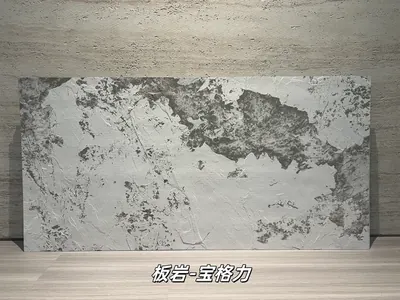
打印板岩宝格力柔性石材
浅灰白基底与深灰黑色斑驳纹理形成强烈对比,画面具有抽象矿物感和艺术张力,适合酒店大堂、精品商业及特色餐饮墙面。本页给出规格与包装参数、材质与性能、施工做法...

Coffee and tea drinks 220㎡ (sandstone texture) wall construction case
IGOODS provided flexible stone (sandstone texture) as wall material for a cof...
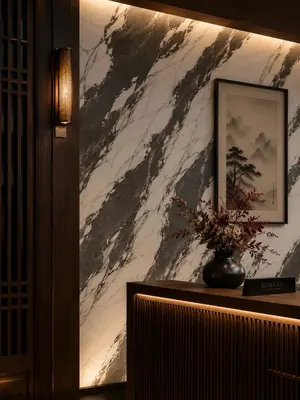
Fusion restaurant 620㎡ printed soft stone (dark base with light veins) wall installation case
The fusion restaurant project is located in Yongchuan District, Chongqing, an...
cases related
Coffee and tea drinks 220㎡ (sandstone texture) wall construction case
IGOODS provided flexible stone (sandstone texture) as...
View cases →
Fusion restaurant 620㎡ printed soft stone (dark base with light veins) wall installation case
The fusion restaurant project is located in Yongchuan...
View cases →