
It is the same flexible stone, so why do some people achieve a premium look with fabric-texture stone while others end up looking cheap? The difference is mostly not in the material, but in how it is selected.
The writing follows the decision order of a real project: first the positioning, then the character, and finally the implementation.
Check 4 colors on one page
First list the family assets clearly. The table below shows the available colors in this family; click each row to view actual photos and specifications on the corresponding product page:
| Color/model | Main tone | Recommended scenarios |
|---|---|---|
| Gray fabric-textured stone | Neutral gray tone, with natural light-to-dark transitions | Hotels, homestays, office spaces, boutique retail |
| White fabric-grain stone | Light white tone, clean and bright | Hotels, homestays, office spaces, boutique retail |
| Rice Yellow Fabric Texture Stone | Beige tone, warm and elegant | Hotels, homestays, office spaces, boutique retail |
| Black cloth-grain stone | Deep black tone, calm and restrained | Hotels, homestays, office spaces, boutique retail |
Which scenarios is cloth texture stone suitable for?
The sweet spot for this family is surfaces that need stone texture but cannot bear heavy loads (curved walls, cylindrical columns, old walls, lightweight partition walls). Hotels, homestays, office spaces, boutique retail
Where this family is most prone to failure during installation
In construction, the key to large surfaces with this thin-material family is "panels never touch the floor": fewer transfers mean fewer chipped edges. Use a table saw or angle grinder with a straightedge for cutting, and direct the cut edge toward the seam.. Do not copy other companies' detail drawings; for narrow strip positions, it is better to keep them to the internal corner than to insist on centering them.
The six standard actions of this family
There are not many steps, but every step has pitfalls previous crews have stepped into:
- Inspect goods upon arrival: panel back batch number, packing list, and condition of the four corners—sign only after all three are checked
- Three substrate checks: tap to check for hollow areas, use a straightedge to check flatness, use a moisture meter to check moisture content
- Setting out: snap lines according to the layout drawing; start points begin from internal corners or door centers
- Adhesive application and scraping: full scraping with a notched trowel, adhesive layer thickness according to instructions, do not skimp on that millimeter
- Wall application: lay from bottom to top, press and expel air immediately after each panel is applied, and wipe away squeezed-out adhesive as you go
- Closings: check internal and external corners, switch panels, and ceiling-floor junctions one by one; no further changes before acceptance.
Read this before sending samples
Do not skip the sampling step. For curved projects, be sure to bend the sample once to the corresponding radius; the rebound photo will speak for itself.
The loss for parquet and running-line patterns cannot be calculated using flat formulas. Each additional cutting direction per pattern unit raises the loss rate by a step; if the parquet area exceeds half a wall, it is recommended to pre-cut at the factory and only assemble on site—a cutting precision difference of one millimeter will shift the pattern center by one centimeter.
Color has no good or bad; only placement
Color has no good or bad; only placement. Neutral gray tones with natural light-dark transitions, light white tones for a clean, bright feel, and dark black tones for a calm, restrained space: choose the facade dominated by warm-light scenes; going the opposite way is also fine, but leave ample margin for pattern matching on large surfaces
Several representative patterns
Finally, name a few items and look at the detail images of the individual products:
Black Cloth-Grain Flexible Stone
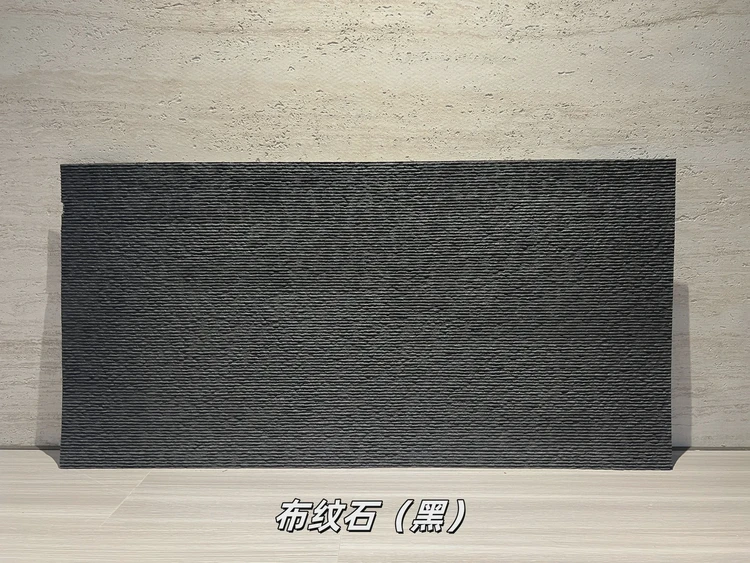
Fine woven fabric texture, flat surface, even grain. Hotels, homestays, office spaces, boutique retail.
Gray fabric-textured stone flexible stone
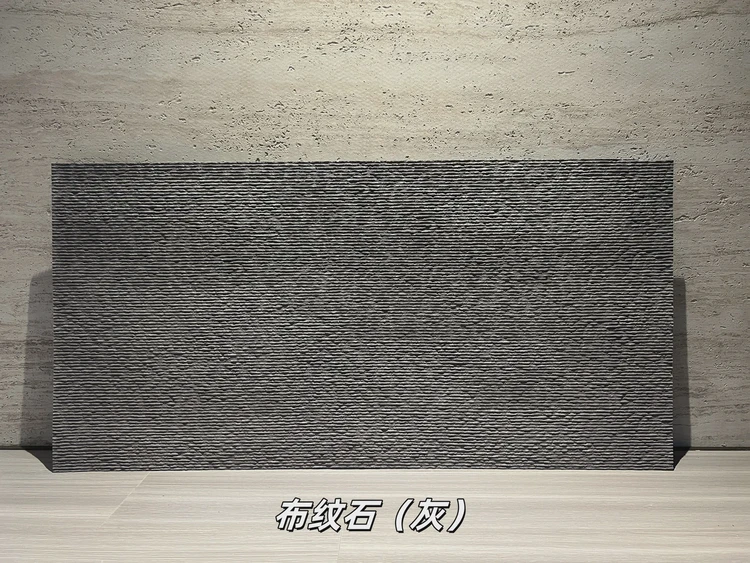
Fine woven fabric texture, flat surface, even grain. Hotels, homestays, office spaces, boutique retail.
White fabric-grain stone flexible stone
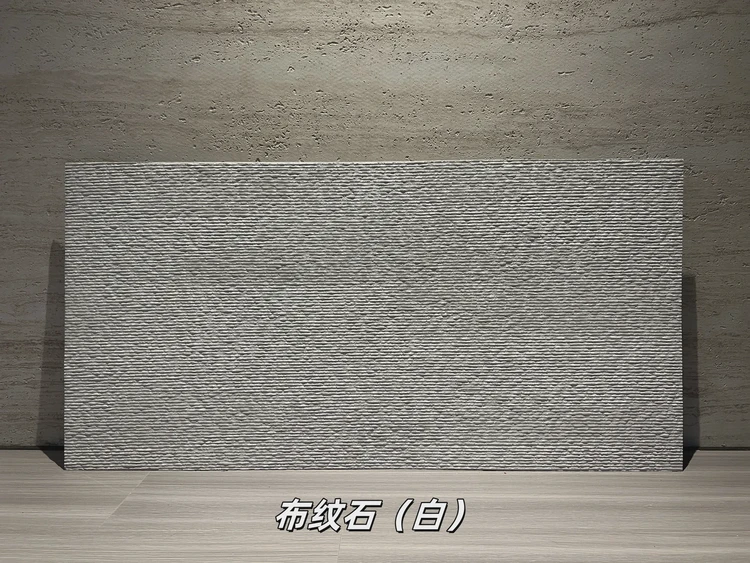
Fine woven fabric texture, flat surface, even grain. Hotels, homestays, office spaces, boutique retail.
Daytime natural-light hours are the litmus test for concealed works. Color differences, misaligned joints, and adhesive marks all show up during this period. Scheduling an afternoon acceptance inspection is more practical than any sales pitch.
Look at three more: detail supplementary images
White fabric-grain stone flexible stone
Fine woven fabric texture, flat surface, even grain. Looking at the model alone gives no impression; seeing the image makes it clear: this is how it differs from the neighboring style.
Rice Yellow Fabric Texture Stone Flexible Stone
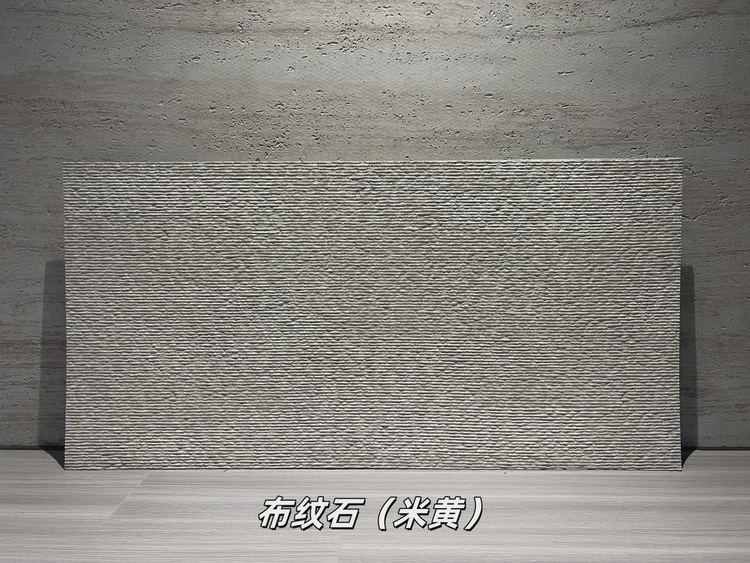
Fine woven fabric texture, flat surface, even grain. Remember to check the batch number when restocking: between two batches of this style, the color shift is the most noticeable.
Black Cloth-Grain Flexible Stone
Fine woven fabric texture, flat surface, even grain. Belongs to the category of patterns that "start speaking only after being installed on the wall"; easy to underestimate at the sample stage.
The biggest taboo in old wall renovation is "it looks fine." Whether the original tile surface or old latex paint surface can be directly covered depends on an adhesion test, not on visual inspection. Our standard procedure is to apply a sample piece in an inconspicuous corner and, after 48 hours, pry it off by hand; only if it cannot be pried off is large-scale work allowed to start. Skip this step and all that follows is rework.
What to pair with cloth texture stone
Combinations within the same line: arrange a dark and a light shade on the same wall; it is more enduring than a single color across the whole wall. Cross-line combinations: intersperse locally with other series from the same line at the wall base band or feature wall.
The most time-saving opening for a client meeting is three questions: what do you want people to see on this wall, what actions do people take by the wall, and how often is it cleaned. Once these three questions are answered, the budget range and material list basically converge.
It is recommended that the handover document package consist of five fixed items: layout drawings, batch number list, copies of test reports, maintenance instructions, and material storage location map. We have seen projects that used all five, and projects that argued for two extra weeks because one was missing.
Two not-so-smart choices
Two not-so-smart moves: sealing the surface before the substrate is dry, and cutting panels for curved surfaces using flat-surface habits, causing lines to run crooked.
Real-world records are more honest than specifications
Existing practical records on this site; this family accounts for these projects:Commercial space (material actual photo) 80㎡ woven-texture stone (gray) wall construction case
Full list of registered cloth texture stone entries
Check the model against this list before ordering; it is more reliable than screenshots:
Gray fabric-textured stone flexible stone, white fabric-textured stone flexible stone, beige fabric-textured stone flexible stone, black fabric-textured stone flexible stone
The official positioning of cloth texture stone
This series has a positioning text of its own in the site archive; the original is more restrained than my paraphrase:
IGOODS cloth grain stone product catalog, including 4 flexible stone products on sale; listing specifications and packaging parameters, materials and performance, and applicable scenarios item by item; and providing material selection points, differences from similar materials, and construction and acceptance parameters that can be checked on site. Free sample sending and engineering quotations are supported.
Gray fabric-textured stone flexible stone
Product Quick Info Product Name: Gray Cloth Texture Stone Flexible Stone Brand: IGOODS Product Category: Flexible Stone Series: Cloth Texture and Weaving Craft: Cloth texture embossing Main Color Tone: Neutral gray tone, with natural light-dark transitions Texture Features: Fine dense cloth-weave texture, with a flat surface and even pattern Recommended Scenarios: Hotels, homestays, office spaces, boutique retail Main Application: Architectural walls In the IGOODS Cloth Texture and Weaving line, Gray Cloth Texture Stone Flexible Stone is a product oriented toward "background and order." The texture is warm and delicate, suitable for spaces that need to soften the cold hardness of stone and enhance approachability; when placed in actual wall use,...
White fabric-grain stone flexible stone
Product Quick Info Product Name: White Fabric Grain Stone Flexible Stone Brand: IGOODS Product Category: Flexible Stone Series: Fabric Grain and Weaving Craft: Fabric Grain Embossing Main Color Tone: Light White Tone, Clean and Bright Texture Features: Fine Fabric Weave Texture, Flat Surface, Uniform Grain Recommended Scenarios: Hotels, Homestays, Office Spaces, Boutique Commercial Main Application: Building Walls In IGOODS Fabric Grain and Weaving, White Fabric Grain Stone Flexible Stone is a product oriented toward "pure color and enduring appeal." Its texture is warm and delicate, suitable for spaces that need to reduce the cold hardness of stone and enhance approachability; when used on actual walls, as...
Rice Yellow Fabric Texture Stone Flexible Stone
Product Quick Info Product Name: Rice Yellow Fabric Grain Stone Flexible Stone Brand: IGOODS Product Category: Flexible Stone Series: Fabric Grain and Weaving Craft: Fabric grain embossing Main Color Tone: Beige tone, warm and elegant Texture Features: Fine fabric weave texture, flat surface, even grain Recommended Scenarios: Hotels, homestays, office spaces, boutique commercial spaces Main Application: Building walls In the IGOODS Fabric Grain and Weaving, Rice Yellow Fabric Grain Stone Flexible Stone is a product oriented toward "warmth and durability." The texture is warm and delicate, suitable for spaces that need to reduce the cold hardness of stone and enhance approachability; when applied to actual walls, under warm...
Black Cloth-Grain Flexible Stone
Product quick info Product name: Black Fabric Grain Stone Flexible Stone Brand: IGOODS Product category: Flexible stone Series: Fabric grain and weaving Craft: Fabric grain embossing Main color tone: Deep black tone, restrained and composed Texture feature: Fine fabric weave texture, flat surface with even lines Recommended scenarios: Hotel, homestay, office space, boutique retail Main applications: Building wall Black Fabric Grain Stone Flexible Stone is a flexible stone in the IGOODS fabric grain and weaving line. This product line takes fabric warp and weft and weave embossing as its main design direction, and among them the Black Fabric Grain Stone Flexible Stone emphasizes the expression of "weight and presence"—…
Putting it in plain terms: this family solves the contradiction of "wanting this effect but unable to tolerate this work."
After years in the industry, a pattern emerges: projects that fail are often not due to wrong material selection but wrong sequence of steps—choosing the pattern before calculating waste, quoting before layout, paying before inspecting the substrate. Get the sequence right, and any material choice leaves room to maneuver.
Other solutions for flexible stone
Procurement often buys two series on one order; here is the same-door list for you first:
| Same-door series | Listed colors |
|---|---|
| Slate | 29 models |
| NanDaoSuiYueHen | 3 models |
| New Line Stone | 7 items |
| Nebula Stone | 3 models |
| Daxingyue | 2 models |
| Wood-grain board | 6 styles |
| Wood-grain cement board | 1 model |
| bush-hammered granite | 33 models |
| Cement casting board | 2 models |
When joining the two series, give the seam position to one of them; don't split it fifty-fifty.
With the same quote, whose money is spent where it matters most? When the material grade is the same, the difference usually comes down to two items: waste and substrate treatment. A crew willing to spend an extra half day on setting out can reduce cutting waste by two percentage points, which is far more respectable than cutting the material budget.
When it comes to texture, hands are more honest than eyes
Up close and from a distance are two different things. Fine woven fabric texture, with a flat surface and even grain—this is also why we insist you get a sample.
Taking "Beige Cloth-Grain Stone Flexible Stone" as an example: fine cloth-weave texture, flat surface, and even grain. The undulation feels like it carries an extra layer of information beyond what the eye sees—that is the value of a physical sample.
The material's character has boundaries. The porous feel of travertine works well with wabi-sabi, but looks dated in a CBD office tower lobby; the cold stratification of slate works well with metal and glass, but feels rigid in community retail with warm yellow lighting. Before choosing a wall, choose the spatial narrative first—material is part of the narrative, not an isolated aesthetic piece.
The lines procurement needs to read
Several points procurement friends care about: Substrate composition: composite of natural mineral raw materials and polymer flexible substrate, inorganic ecological material; Combustion performance: flame-retardant performance; the specific combustion performance grade is subject to the valid test report for the selected model; Waterproof and moisture-proof: the material does not absorb water, and the wall surface after installation is not prone to dampness or mildew; Environmental performance: no added formaldehyde, asbestos-free, meeting the conventional environmental requirements for home and commercial decoration.
Handy answers
Can cloth texture stone be used outdoors?
It can be used for exterior facades, but weather-resistant adhesive must be used and waterproof edge sealing must be done; it is not recommended for floors and areas subject to long-term water immersion. The specific model is subject to the scope of application in the test report.
Will cloth texture stone fade?
The finish has UV resistance requirements, and fading under normal outdoor use conditions is within a controllable range; for coastal projects with strong UV, it is recommended to add sample exposure comparison.
What is the minimum bending radius of cloth texture stone?
Related to thickness, substrate and backing; no uniform number is given. Use the on-site curvature to test-bend a sample; a conclusion can be reached in ten minutes.
Related entrances
Related articles
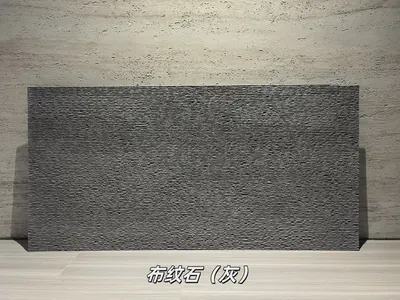
Gray fabric-textured stone flexible stone
Gray fabric-textured stone is a flexible stone from the fabric texture and we...
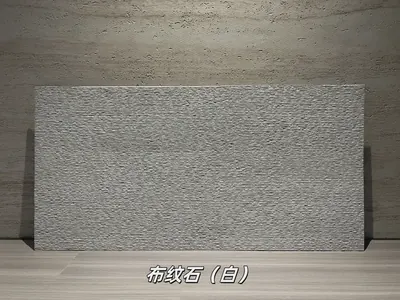
White fabric-grain stone flexible stone
White fabric-grain stone is a flexible stone in the fabric-grain and weave se...
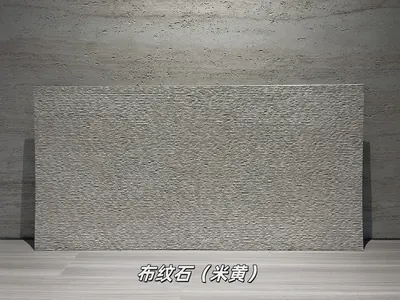
Rice Yellow Fabric Texture Stone Flexible Stone
Rice Yellow Fabric Texture Stone is a flexible stone in the Fabric Texture an...
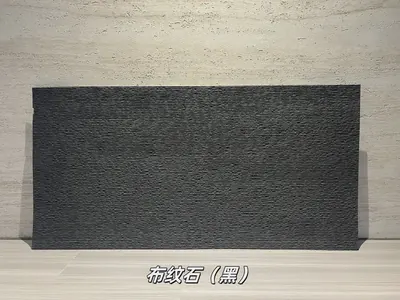
Black Cloth-Grain Flexible Stone
Black cloth-grain stone is a flexible stone in the Cloth Grain & Weave series...
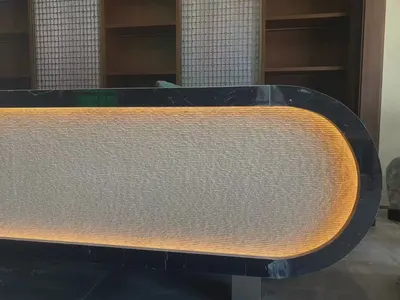
Commercial space (material actual photo) 80㎡ woven-texture stone (gray) wall construction case
The commercial space (material actual photo) project is located in Wuxi, Jian...