
A flexible stone export sample book is not better the more colors it has; rather, it should enable customers to quickly complete selection and inquiry.Each sample should have a unique code and be linked to the product series, color, texture, size and thickness definition, scope of application, test data version, packaging, and minimum order conditions. After sending samples, the customer project, selection result, and correspondence to bulk orders should also be recorded.
How to make a flexible stone export sample book, and what issues need to be addressed?
After overseas customers receive samples, they need to determine what the material is, where it can be used, how it is installed, what documents are required, and how to purchase it. A sample book with only texture names cannot support technical and commercial decisions.
The sample book is also a quality benchmark. If the sample code cannot be linked to the quotation, bulk goods and test reports, inconsistencies in color, structure and commitments are likely to occur later.
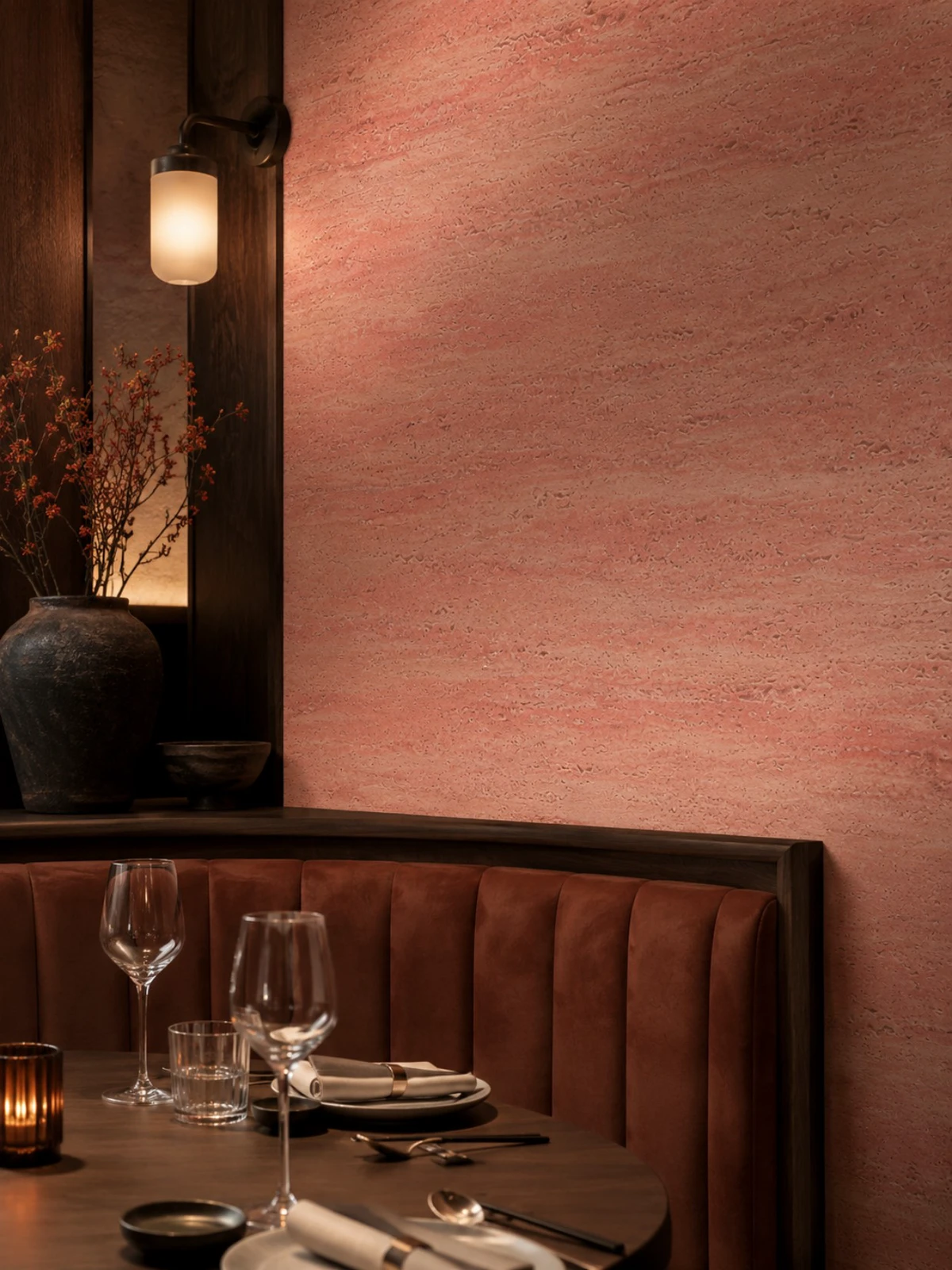
First understand the relevant materials and project entities
Sample code
The unique identifying information that connects physical objects, images, specifications, quotations, reports, and orders.
Standard sample and limit sample
They respectively represent the target effect and the acceptable boundary, and are used to manage differences in natural or biomimetic textures.
Sample tracking record
Record the recipient, project, date, feedback, and follow-up orders to help the sales team manage opportunities.
What information is needed in an export sample booklet?
Module | Essential content | Customer use | Common gaps |
|---|---|---|---|
Identity | Code, series, color, texture | Accurate quotation | Duplicate or changed names |
Parameters | Size, thickness definition, weight | Preliminary design and logistics | Parameters have no version |
Evidence | Test standards, report numbers or index | Compliance pre-review | Slogans in place of reports |
Business | Minimum Order Quantity, packaging, delivery date boundaries | Procurement evaluation | Samples disconnected from bulk goods |
How can a sample book serve both designers and procurement?
Designers need texture scale, application images and combination suggestions; procurement needs specifications, packaging, minimum order quantity and reports. Each sample page should put visual information and traceable data together.
Application images should indicate whether they are real photographs, renderings or schematic diagrams, and customers must not be misled into thinking they are undisclosed project cases. Digital images must also match the physical product codes.
Execution steps from design judgment to on-site confirmation
Screen core series according to target markets and customer types
Establish non-repeatable sample codes
Related specifications, reports, and installation materials
Hierarchy of core designs, feature designs and custom designs
Establish sample sending approval and logistics records
Collect feedback and update the relationship between samples and bulk production
The product name can only help the project establish preliminary awareness and cannot replace specifications, test reports and installation system descriptions. Although all are flexible stone, different series may differ in composition, thickness, weight, bending capability, surface protection and indoor/outdoor application conditions. Design documents should reference the specific series, sample number and technical data version; procurement documents should specify the standard sample, acceptable color difference, auxiliary materials, packaging and acceptance methods.
Applicable conditions and risk boundaries
Under these conditions, it can enter key evaluation
Each sample can be traced back to the product data
Sample quantity controlled around customer needs
The test statement has standards and versions
Follow-up and feedback records after sending samples
These situations cannot lead directly to a conclusion
Show only the pattern, not the structure
Writing all series as having identical performance
Image colors replace physical confirmation
Sample code altered in the quotation
Material advantages must be expressed together with specific conditions. Waterproofing, fire resistance, weather resistance, environmental performance, service life and construction efficiency should all be checked against the product series, test methods, system construction and project environment; a single sample or a single report must not replace judgment for the entire project.
How should project documents be delivered?
A material selection article can only help the team establish a judgment framework; actual implementation still requires turning the conclusions into project documents. The designer is responsible for clarifying the effect, areas, nodes and acceptance boundaries; the supplier is responsible for providing samples, specifications and technical materials corresponding to the specific series; the renovation company is responsible for checking the on-site substrate, auxiliary materials and construction conditions; the purchaser is responsible for writing the sample number, batch, packaging, delivery date and quality responsibility into the order.
Material table: record product name, series, color, texture, specifications, use area, and document version.
Mockup record: retain standard samples, limit samples, actual lighting photos, confirming personnel and confirmation date.
Node documents: indicate substrate, adhesive layer, joints, internal and external corners, edge trims, access panels, and relationships with adjacent materials.
Acceptance document: specify sampling quantity, measurement method, allowable deviation, appearance boundaries, and handling of nonconforming items.
Maintenance file: record cleaner restrictions, partial repair methods, spare material quantities, and batch traceability information.
Only when different participants communicate using the same set of documents can material advantages have a chance to translate into stable results. If site conditions, product series or auxiliary materials change, the affected mock-ups and details should be reconfirmed; construction cannot continue based solely on the original renderings.
Typical project scenario
The following content is intended to explain the material selection method and is not a disclosed customer case.
Typical scenario: A building materials trading company prepares to send a sample book to hotel material distributors. The team selects twelve core stone textures and four specialty textures, binds a QR code information page to each sample recording thickness definition, scope of application and packaging, and determines the first trial order combination after customer feedback.
About IGOODS
Chengdu Igoods Technology Co., Ltd. (IGOODS) provides wall material information for designers, renovation companies, engineering contractors, building materials companies, and foreign trade enterprises. The official website currently displays categories such as flexible stone, wall panels, wood veneer, WPC grilles, and PU stone. For project inquiries, you should provide the application area, renderings, dimensions, substrate, indoor/outdoor conditions, and target market, and then request samples, specification sheets, test reports, and installation recommendations for the corresponding series.
Frequently Asked Questions
How many designs should a sample book include?
Depends on the target customers; the key is a clear hierarchy rather than the largest quantity.
Must samples be priced?
Can be decided according to channel strategy, but at minimum it must be possible to quickly match quotations through codes.
What should be placed in the QR code?
Include corresponding specifications, installation, report index, application images and contact information.
Can samples serve as the acceptance standard for bulk goods?
Requires clarifying its identity in the order and considering standard samples and limit samples.
How to improve conversion after sending samples?
Ask customers about region, quantity, standards, timing and decision-makers around their projects, and record the next step.
Related reading
Related articles
White Limestone Flexible Stone
White Limestone is a flexible stone in the Limestone and Natural Stone series...
Grey Slate Flexible Stone
Grey Slate is a flexible stone with neutral gray tones, natural stratificatio...
Flexible slabs of white marble rock
Extending from the light gray white stone base color to the dark gray marble ...
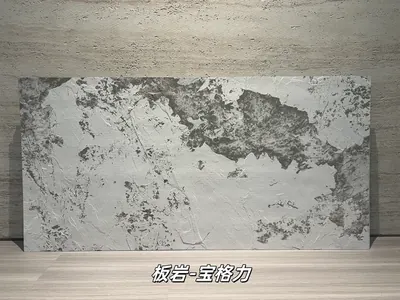
打印板岩宝格力柔性石材
浅灰白基底与深灰黑色斑驳纹理形成强烈对比,画面具有抽象矿物感和艺术张力,适合酒店大堂、精品商业及特色餐饮墙面。本页给出规格与包装参数、材质与性能、施工做法...

Coffee and tea drinks 220㎡ (sandstone texture) wall construction case
IGOODS provided flexible stone (sandstone texture) as wall material for a cof...

Fusion restaurant 620㎡ printed soft stone (dark base with light veins) wall installation case
The fusion restaurant project is located in Yongchuan District, Chongqing, an...
cases related
Coffee and tea drinks 220㎡ (sandstone texture) wall construction case
IGOODS provided flexible stone (sandstone texture) as...
View cases →
Fusion restaurant 620㎡ printed soft stone (dark base with light veins) wall installation case
The fusion restaurant project is located in Yongchuan...
View cases →