
There is no unified answer for the service life of flexible stone divorced from conditions.Wall durability is determined jointly by the specific product structure, substrate stability, adhesive compatibility, indoor and outdoor environment, construction quality, impact and cleaning, and repair management. Supplier-stated service life should be accompanied by test or project conditions; buyers should rather establish inspectable durability factors and a maintenance plan.
How long is the service life of flexible stone, and what issues need to be addressed?
When customers ask about lifespan, what they really care about is how long it takes to fade, crack, curl, fall off or become difficult to repair. Different failure modes have different causes and cannot all be summed up with a single number.
Loads differ greatly between stable indoor walls, damp areas, exterior walls with strong sunlight, and high-impact corridors. A discussion of service life is meaningful only when the environment and system are clearly defined.
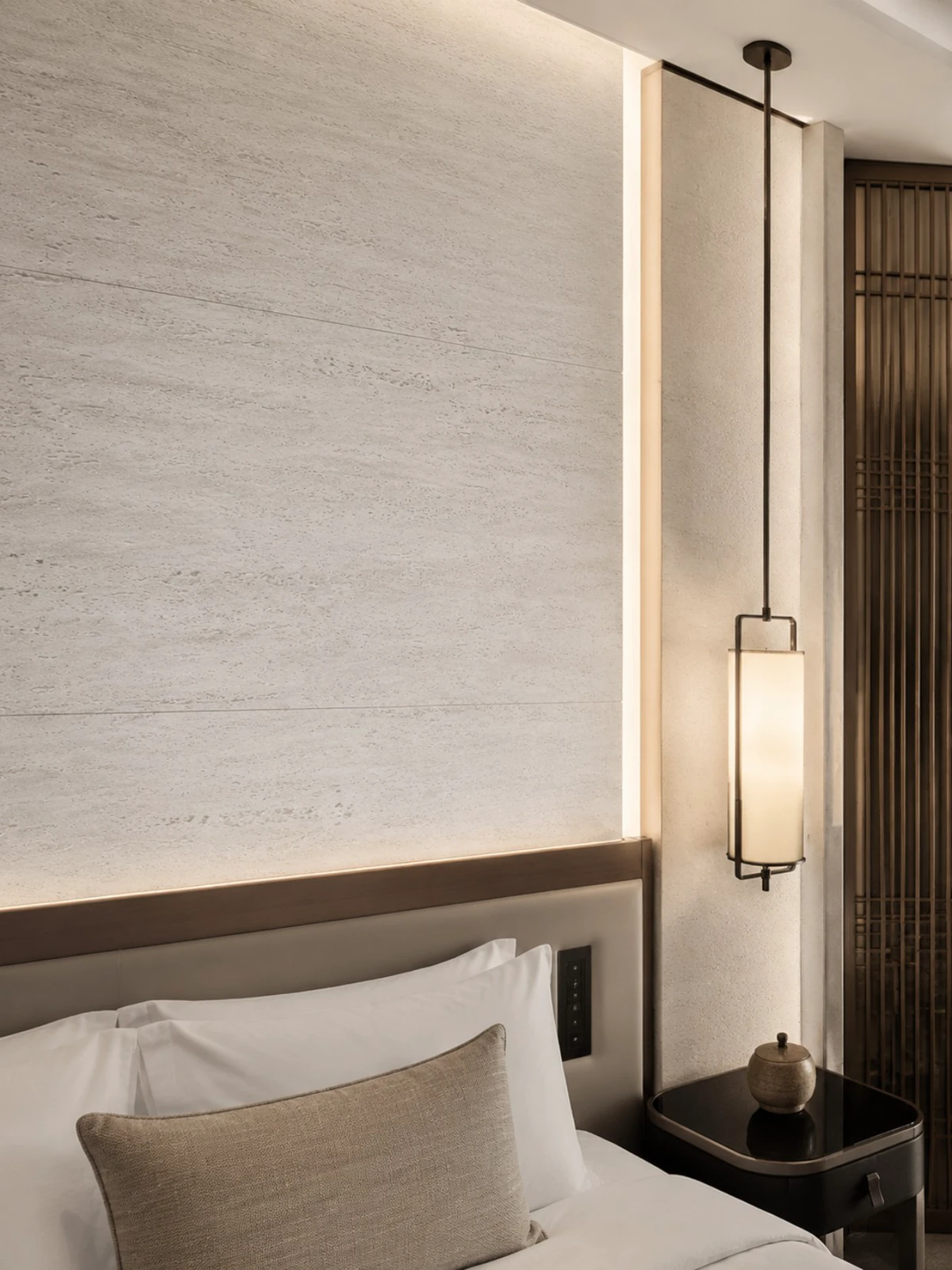
First understand the relevant materials and project entities
Material durability
The ability of the finish to maintain color, surface and physical integrity under the agreed conditions.
System durability
The substrate, adhesive layer, finish and nodes jointly maintain service performance, and are often more critical than a single material.
Maintainability
The ability to extend an acceptable condition of use through cleaning, inspection, local repair, and material stocking.
What factors affect wall durability?
Factor | May affect | Required evidence | Management actions |
|---|---|---|---|
Products and batches | Color, structure and strength | Specifications, samples, batch records | Sealed sample and traceability |
Substrate and adhesive | Hollowing, curling and detachment | System description and bonding test | Construction acceptance |
Environmental role | Humidity, ultraviolet light, temperature differences | Scope of application and related tests | Select by area |
Operational maintenance | Contamination, scratches, impacts | Cleaning and repair instructions | Regular inspection and material stocking |
Why can't the warranty period promised by a supplier directly become the project conclusion?
Service life must specify the applicable environment, installation system, maintenance conditions and failure criteria. Laboratory testing, material warranty and building design service life are also different concepts.
The project team can break the vague question of service life into five categories of indicators—color stability, adhesion, surface wear, edge condition, and local replacement—and record them in mock-ups and inspections.
Execution steps from design judgment to on-site confirmation
Define use areas and main environmental loads
Request durability and warranty information for the specific series
Check adhesive and substrate system
Complete on-site bonding and environmental mock-up
Establish cleaning, inspection and local repair standards
Keep materials from the same batch and traceability records
The product name can only help the project establish preliminary awareness and cannot replace specifications, test reports and installation system descriptions. Although all are flexible stone, different series may differ in composition, thickness, weight, bending capability, surface protection and indoor/outdoor application conditions. Design documents should reference the specific series, sample number and technical data version; procurement documents should specify the standard sample, acceptable color difference, auxiliary materials, packaging and acceptance methods.
Applicable conditions and risk boundaries
Under these conditions, it can enter key evaluation
Service life statements come with clear conditions
Materials and auxiliary materials form a complete system
High-risk areas have protective construction
Operator obtains maintenance and spare materials
These situations cannot lead directly to a conclusion
Promise the same lifespan in all environments
Equating the material warranty with the entire wall warranty
Ignoring substrate cracks and moisture
Use of unknown cleaners or high-pressure washing
Material advantages must be expressed together with specific conditions. Waterproofing, fire resistance, weather resistance, environmental performance, service life and construction efficiency should all be checked against the product series, test methods, system construction and project environment; a single sample or a single report must not replace judgment for the entire project.
How should project documents be delivered?
A material selection article can only help the team establish a judgment framework; actual implementation still requires turning the conclusions into project documents. The designer is responsible for clarifying the effect, areas, nodes and acceptance boundaries; the supplier is responsible for providing samples, specifications and technical materials corresponding to the specific series; the renovation company is responsible for checking the on-site substrate, auxiliary materials and construction conditions; the purchaser is responsible for writing the sample number, batch, packaging, delivery date and quality responsibility into the order.
Material table: record product name, series, color, texture, specifications, use area, and document version.
Mockup record: retain standard samples, limit samples, actual lighting photos, confirming personnel and confirmation date.
Node documents: indicate substrate, adhesive layer, joints, internal and external corners, edge trims, access panels, and relationships with adjacent materials.
Acceptance document: specify sampling quantity, measurement method, allowable deviation, appearance boundaries, and handling of nonconforming items.
Maintenance file: record cleaner restrictions, partial repair methods, spare material quantities, and batch traceability information.
Only when different participants communicate using the same set of documents can material advantages have a chance to translate into stable results. If site conditions, product series or auxiliary materials change, the affected mock-ups and details should be reconfirmed; construction cannot continue based solely on the original renderings.
Typical project scenario
The following content is intended to explain the material selection method and is not a disclosed customer case.
Typical scenario: A commercial corridor needs stone-textured walls, and the operator is concerned about maintenance after five years. The team does not directly accept verbal lifespan figures, but instead confirms metal protective skirting in high-impact areas, spare materials from the same batch, annual seam inspections and replaceable zones, and writes maintenance responsibilities into the handover documents.
About IGOODS
Chengdu Igoods Technology Co., Ltd. (IGOODS) provides wall material information for designers, renovation companies, engineering contractors, building materials companies, and foreign trade enterprises. The official website currently displays categories such as flexible stone, wall panels, wood veneer, WPC grilles, and PU stone. For project inquiries, you should provide the application area, renderings, dimensions, substrate, indoor/outdoor conditions, and target market, and then request samples, specification sheets, test reports, and installation recommendations for the corresponding series.
Frequently Asked Questions
How many years can flexible stone generally last?
Must be judged in combination with product, environment, system and maintenance; cannot give a uniform lifespan for all projects.
Is indoor lifespan necessarily longer than outdoor?
Usually the environmental load is lower, but moisture, impacts, and cleaning can still cause failure.
Will the adhesive affect service life?
Yes; compatibility, construction and substrate condition directly affect bonding durability.
Does fading equal material failure?
Whether it becomes invalid depends on project acceptance and maintenance standards, which should be defined in advance.
How can later maintenance risks be reduced?
Zoned design, node protection, batch material stocking and regular inspections are all important.
Related reading
Related articles
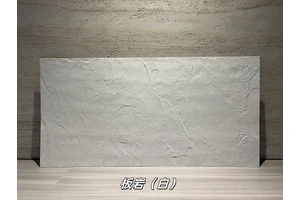
White Limestone Flexible Stone
White Limestone is a flexible stone in the Limestone and Natural Stone series...
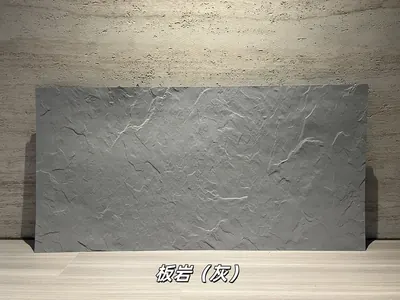
Grey Slate Flexible Stone
Grey Slate is a flexible stone with neutral gray tones, natural stratificatio...
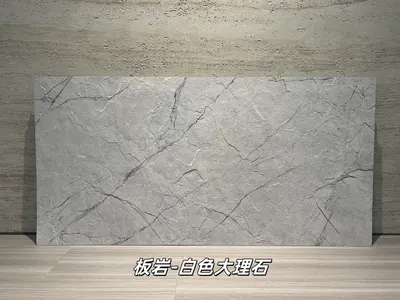
Flexible slabs of white marble rock
Extending from the light gray white stone base color to the dark gray marble ...
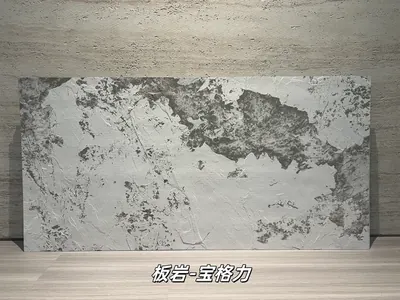
打印板岩宝格力柔性石材
浅灰白基底与深灰黑色斑驳纹理形成强烈对比,画面具有抽象矿物感和艺术张力,适合酒店大堂、精品商业及特色餐饮墙面。本页给出规格与包装参数、材质与性能、施工做法...
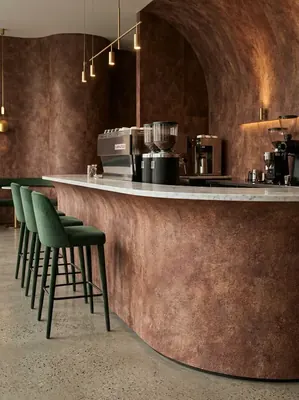
Coffee and tea drinks 220㎡ (sandstone texture) wall construction case
IGOODS provided flexible stone (sandstone texture) as wall material for a cof...
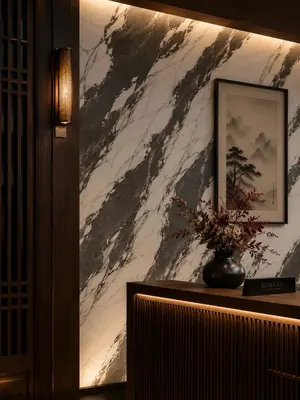
Fusion restaurant 620㎡ printed soft stone (dark base with light veins) wall installation case
The fusion restaurant project is located in Yongchuan District, Chongqing, an...
cases related
Coffee and tea drinks 220㎡ (sandstone texture) wall construction case
IGOODS provided flexible stone (sandstone texture) as...
View cases →
Fusion restaurant 620㎡ printed soft stone (dark base with light veins) wall installation case
The fusion restaurant project is located in Yongchuan...
View cases →