
Introduction
How building materials trading companies can add product lines: the key is not continuously collecting new product catalogs, but finding new products that can be sold using existing customers, existing channels and existing supply chain capabilities. For tile exporters, wall panel exporters, stone exporters and decorative materials traders, flexible stone can be a new building materials foreign trade product worth evaluating, but whether it is suitable for entering the product line cannot be judged only by sample appearance, nor only by what flexible stone manufacturers say.
For a new product to truly have commercial value, several conditions must be met at the same time: target customers are willing to learn about it, the product is complementary to the existing business, the supplier can deliver stably, export packaging and documents can meet the requirements of the destination market, the selling price can cover all costs, and the trading company has the ability to drive samples, quotations, trial orders and repeat purchases.
Therefore, adding product lines is not just the single action of "product selection," but a complete process from customer demand to supplier management, from cost calculation to market validation. This article will use flexible stone as an example to explain why Chinese building materials foreign trade companies need to develop new products, why flexible stone is worth evaluating, how to find reliable flexible stone suppliers, and how to improve profits through product portfolios and supply chain control.
What problems do building materials foreign trade companies face when adding product lines?
Existing products are homogenized, and quotations are increasingly transparent
Many building materials export companies have long conducted business around tiles, wall panels, stone or basic decorative materials. As similar suppliers increase, product patterns become similar and customer inquiry channels multiply, traditional products easily fall into direct price comparison. Even if a trading company has stable customers, it may face the problem that the number of inquiries has not dropped significantly, but order conversion rates, per-order profits and customer stickiness gradually decline.
If the company only continues to add similar patterns or repeat specifications, although the number of SKUs increases, it does not necessarily create new reasons for closing deals. Inventory, sample, and quotation management will instead become more complicated. Truly effective new building materials for foreign trade should be related to the existing product line while also bringing new material concepts, application directions, price tiers, or channel opportunities.
Existing customers need new products, but the company lacks a systematic development method
Overseas importers and distributors usually want suppliers to continuously offer new products. However, "customers want to see new products" does not mean "customers are willing to purchase all new products." If a trading company does not first confirm the customer type, sales channel, target price, commonly used specifications, and estimated quantity, and directly requests a large number of samples from the factory, it can easily end up with many samples, little effective feedback, and no results from subsequent quotations.
Before a building materials company adds a product line, it should first look for real signals from existing customers. For example: Are tile customers increasing their use of wall decoration materials? Are wall panel distributors looking for products different from conventional PVC or WPC wall panels? Are stone customers paying attention to finish materials that make differentiated displays easier? Only when new products are connected to specific customer needs does product selection have a commercial basis.
Looking only at the ex-factory price makes it easy to misjudge product profit
So-called high-profit building materials products cannot be judged only by subtracting the factory quote from the sales price. True profit must be calculated from the complete landed cost, including sample development, domestic transportation, export operations, packaging, pallets, ocean freight, insurance, tariffs, customs clearance, warehousing, breakage, replenishment, commissions, payment terms, and after-sales handling.
If new products lack stable specifications, packaging, and quality standards, even if the initial purchase price is lower, profits may be consumed by color differences, batch inconsistency, packaging damage, or delivery delays. Therefore, the essence of finding high-profit products is not finding the source manufacturer with the lowest quotation, but establishing a product system that can be sold repeatedly, has controllable costs, and can reduce claims.
Why can flexible stone serve as a new building materials export product?
Channel connection with tile, wall panel and stone customers
One of the potential values of flexible stone is that it has a certain connection with the existing customer base of building materials trading companies. Ceramic tile exporters can use it as a supplementary product for wall decorative materials; wall panel export enterprises can incorporate it into a new series of facing materials; stone and decorative materials traders can build new product combinations around different textures, surface effects and project requirements.
This means that companies do not necessarily need to develop completely unfamiliar customer groups from scratch. Existing importers, distributors, wholesalers and project material customers may be the first batch of new product test subjects. Trading companies can add flexible stone samples and product materials to their existing business communications, verifying market response at a lower customer development cost.
But being channel-related does not mean the product can sell naturally. Sales staff still need to understand the product structure, specifications, applicable conditions, quality boundaries, packaging methods, and supplier capabilities. Only when they can answer professional procurement questions can a new product move from "the customer finds it interesting" to "the customer is willing to place a trial order."
Can help enterprises establish differentiated SKUs
Flexible stone is not the name of a single specification. Different flexible stone manufacturers may differ in material structure, substrate, surface, size, thickness, weight, packaging and applicable conditions. Therefore, trading companies cannot simply add the four words "flexible stone" to their catalog; they must establish a clear SKU system.
A product combination suitable for the launch stage can be divided into:
Core product for routine quotations and continuous promotion;
Specialty product for building product differentiation;
Customized versions developed according to customer project, color or packaging requirements;
Special specifications that are made only to order and not kept in regular stock;
A matching product sold in combination with tiles, wall panels or other decorative materials.
This structure helps the company control the number of new products and avoid choosing too many colors and specifications at the outset. Core models build stable recognition, feature models provide profit margin, custom models build customer stickiness, and special specifications preserve project opportunities.
Offers OEM and branding development potential
For Chinese building materials foreign trade companies, the value of OEM cooperation is not just printing the customer's trademark on cartons. Complete OEM development may involve product codes, color systems, specification combinations, label languages, barcodes, outer carton layouts, pallet markings, sample books, and sales materials.
If a flexible stone supplier has stable customization and repeat-order management capabilities, trading companies can establish clearer product solutions for different customers and reduce direct price comparisons between completely identical products. However, all customized projects must confirm the minimum order quantity, sampling fees, confirmation process, lead time, and consistency of repeat orders. OEM without written standards will only increase communication costs.
How to determine whether flexible stone is worth adding to the product line
Step one: Confirm the target customer, rather than looking for products first
The first step in the transformation of building materials foreign trade is to define the customers to be served. Different customers may have completely different requirements for flexible stone: importers focus on compliance, container loading and stable delivery; Distributors focus on SKUs, sample displays, inventory and wholesale prices; project material suppliers focus on specifications, batches and lead times; trading companies may focus on mixed loading, documents and multi-category coordination.
The company can select a group of representative customers from its existing clients and ask them the following questions:
Are you looking for new wall or decorative materials?
What price tiers or surface effects are missing from the existing product line?
How many SKUs and what quantities can be accepted for the first test?
Are you more focused on regular stock, project orders, or OEM customization?
What tests, labels, or import documents are required for the target market?
These answers can help trading companies determine the development scope for new flexible stone products, rather than being led astray by the large number of styles in factory catalogs.
Step two: calculate the full landed cost and target gross margin
The price of flexible stone is only part of the cost structure. Before quoting to customers, companies should request product net weight, gross weight, quantity per box, box specifications, pallet method and container loading data from flexible stone manufacturers, and calculate costs in combination with the destination port, transport method and customer delivery terms.
It is advisable to establish at least the following cost items:
Product procurement cost;
OEM sample making and packaging layout cost;
Domestic transportation and export operation costs;
Inspection, testing and documentation costs;
Packaging, pallet and reinforcement costs;
Shipping, insurance, tariffs, and customs clearance costs;
Warehousing, sorting and local distribution costs;
Damage, restocking, claims, and after-sales reserves;
Sales commission, payment terms, and capital occupation cost.
After calculation is completed, set different price tiers according to customer type. For example, full-container importers, regional Distributors, small-batch wholesale customers, and OEM project customers should not use exactly the same quotation logic. Enterprises also need to set a minimum acceptable gross margin to prevent salespeople from ignoring hidden costs in order to win new product orders.
Step three: Verify whether the product information is complete
Because the existing product information still needs further improvement, before formal procurement it is necessary to confirm with the flexible stone manufacturer the material composition, layer structure, specifications, tolerances, thickness, weight, color range, surface characteristics, substrate, storage requirements, packaging method, applicable conditions, and available test documents.
Do not use promotional terms such as "light, thin, flexible, easy to install" alone as the basis for procurement. Every commercial selling point should correspond to a specific product code and verifiable documentation. Performance may differ among products with different structures, thicknesses, substrates, or surfaces, and the test results of one model cannot be directly applied to all SKUs.
Step four: test customer feedback with small-scale samples
At the new product validation stage, there is no need to prepare dozens of styles at once. Trading companies can choose a small number of core styles and specialty styles, make uniformly numbered sample packs, and attach specifications, packaging, MOQ, delivery time and customizable items. After sales staff show them to target customers, they should record customer identity, market, channel, product numbers of interest, estimated quantity, price feedback and main concerns.
If feedback only stays at "the product looks good" without specific specifications, quantities, projects, or quotation needs, it indicates that the commercial signal is still weak. If multiple professional customers ask about similar sizes, packaging, certifications, or lead times, it indicates that the company can further advance trial orders.
How to find a reliable flexible stone manufacturer
Verify manufacturer identity and production capacity
When looking for flexible stone manufacturers, you should first confirm whether the other party is a manufacturing enterprise, a trader or a supply chain integrator. Different roles are not necessarily superior or inferior, but their capabilities and responsibility boundaries must be transparent. Buyers need to verify the factory address, main equipment, production process, regular products, customization capability, monthly production capacity, export experience and quality management methods.
If conditions permit, you can inspect raw materials, production, inspection, packaging, and warehousing on site or remotely. The key is not to tour the scale, but to confirm whether the quoted product is indeed controlled by that supplier and who is responsible for correcting quality problems when they occur.
Compare the consistency between samples and mass production
Sample confirmation must not rely only on photos in chat records. Each sample should be labeled with supplier, product code, color, specification, date and version. After confirmation, the purchaser and supplier should retain traceable standard samples, and bulk production should be inspected according to the agreed color, texture, dimensions and surface range.
For surfaces that may have natural or process variations, an acceptable range needs to be defined in advance. Both parties can reduce disputes through boundary samples, limit samples, or written judgment criteria. If the so-called "reasonable color difference allowed" has no range, it often cannot be enforced when a claim arises.
Check quality control and outgoing inspection capabilities
A reliable flexible stone supplier should be able to explain how incoming material inspection, production process control, finished product inspection, packaging inspection, and container loading inspection are carried out. Trading companies can establish inspection checklists based on product characteristics, including at least product code, quantity, specifications, appearance, substrate, packaging, labels, carton marks, and batch information.
Pre-shipment inspection should be considered for first orders or newly developed products. Inspection is not about picking out all problems, but confirming whether the order meets the standards agreed upon by both parties in advance. If the standards are not clearly written, third-party inspection will also find it difficult to make an effective judgment.
Confirm MOQ, lead time, and repurchase mechanism
The MOQ for flexible stone cannot be answered with just one total figure. The minimum order quantities for standard models, custom colors, special specifications, branded cartons, and mixed SKUs may differ. Trading companies should be asked separately, and it should be confirmed whether the MOQ is calculated by single model, single color, single specification, single pallet, or the entire order.
Delivery time should also be broken down into sample confirmation, packaging design, raw material preparation, production, inspection and shipping preparation. For repeat orders, it is also necessary to confirm how the supplier matches the previous standard sample and whether changes in raw materials or processes will be notified in advance. Stable repeat-order capability is more important than a low first-order price.
How to increase profit through new flexible stone products
Use product combinations instead of single-product low-price competition
Trading companies can combine flexible stone with ceramic tile, wall panels, stone or other decorative materials into series, quoting around the different procurement needs of the same customer. The purpose of combined sales is not forced bundling but to increase product coverage in each customer conversation, so existing customers see more opportunities for cooperation.
For different channels, different sample combinations and price systems can be designed. Full-container customers focus on loading efficiency and continuous supply; distributors focus on display, inventory, and price tiers; project customers focus on specifications, batches, and lead times. Designing product plans for channels is more likely to create value than using the same catalog for all customers.
Reduce direct price comparison through OEM
Once product codes, packaging, sample books and color systems are consistent, customers are more likely to remember the trading company's product solutions. OEM can improve professionalism and also reduce situations where customers take only a photo to compare factory prices.
But OEM projects must have version management. Trademarks, text, barcodes, colors, carton marks and packaging dimensions must all be confirmed in writing. Records should be kept for each revision to avoid mixing old packaging with new products. The clearer the standardization, the lower the repeat-purchase cost.
Optimize packaging and container loading to reduce hidden losses
Companies need to obtain per-piece, per-carton, and per-pallet data from manufacturers and evaluate packaging according to the transport method. Loading more is not necessarily more cost-effective; if excessive pursuit of container loading quantity causes carton deformation, handling difficulties, or arrival damage, the final profit will be offset by claims and replenishment.
After the trial order arrives, the condition of the outer carton, pallet, product and labels should be recorded to form a packaging improvement list. Only after one or two rounds of real order verification can an enterprise determine a container loading plan that is more suitable for itself.
Use trial order data to decide whether to expand SKUs
After a new product is launched, the company should track the number of samples sent, valid inquiries, quotation counts, trial order conversion, customer feedback, delivery issues and repurchase situations. Only styles that can generate valid inquiries and repeat demand are suitable for entering the regular product line.
For styles with weak feedback, purchasing can be switched to per-order; for styles with frequent quality or delivery problems, promotion should be suspended; for styles that customers frequently ask about, further negotiation on MOQ, packaging and regional cooperation can be conducted. In this way, product line expansion is driven by data rather than by the number of samples.
Frequently Asked Questions FAQ
1. Should a building materials trading company look for products or customers first when expanding its product line?
Target customers and channel needs should be confirmed first, then products screened. Only by first clarifying what customers sell, what they lack, and what price and quantity they can accept can you judge whether flexible stone is suitable. Selecting styles directly from a manufacturer's catalog easily leads to large numbers of invalid samples and inventory.
2. Which building materials export companies are suitable for the development of flexible stone?
It is more suitable for companies that already have importer or Distributor clients for tiles, wall panels, stone, and decorative materials. These companies can use existing channels to test new products. The company still needs specification management, sample confirmation, export packaging, and quality control capabilities.
3. How to choose a flexible stone supplier?
Focus on checking supplier identity, production capacity, product structure description, sample consistency, quality control, export experience, MOQ, lead time, packaging, test documents, and after-sales correction capability. Do not compare only pictures and ex-factory prices.
4. What is the minimum order quantity for flexible stone?
There is no unified answer. MOQ is affected by style, color, specifications, packaging, customization requirements, and production scheduling. During procurement, the minimum quantities for standard styles, mixed SKUs, customized styles, and branded packaging should be confirmed separately.
Can flexible stone be OEM?
Whether OEM is possible and the customizable scope need to be confirmed with the specific manufacturer. Common development items may include product codes, colors, specifications, labels, cartons, barcodes, brands and sample books. All customization content should be confirmed in writing and version records retained.
How to control the batch differences of flexible stone?
Establish traceable standard samples, clarify the acceptable range of color, texture, size and appearance, and inspect according to a unified standard before production and shipment. For products with obvious surface variation, boundary samples or limit samples can be used as the basis for judgment.
7. What certifications and documents are needed before the export of flexible stone?
The specific requirements depend on the destination country, product structure, use and sales claims. Trading companies should have suppliers provide test documentation for the corresponding product code, and at the same time confirm the applicable requirements with professional institutions, customers or customs clearance service providers in the destination market. It cannot be assumed that one report covers all products.
8. How to judge whether flexible stone is a high-profit building material product?
The full landed cost, selling expenses, payment terms, breakage, after-sales and inventory risk should be calculated, and then judged in combination with the price customers are willing to accept and the likelihood of repeat purchases. Only products that can be delivered stably, create differentiation, control claims and generate continuous repeat purchases are likely to bring sustainable profit.
Conclusion
How building materials trading companies can add product lines: the answer is not blindly chasing popular products, but building a verifiable new product development process around existing customers. Flexible stone can be a candidate new product for tile export, wall panel export, stone export and decorative materials trading companies, because it can connect with existing channels and provide room for SKUs, OEM, combined sales and differentiated quotations.
But whether flexible stone is worth importing and promoting ultimately depends on four things: whether customers truly need it, whether the product information is complete, whether the supplier can deliver stably, and whether the full cost supports the target profit. Enterprises should start with a small number of core styles and gradually expand the product line through customer interviews, sample feedback, supplier audits, and trial order data.
If your company is looking for new building materials for foreign trade, you can first organize the target market, customer types, commonly used specifications, estimated quantities, packaging requirements, and destination port information, and then request product catalogs, specification sheets, samples, MOQ, OEM solutions, packaging data, and quotations from flexible stone manufacturers. Only by comparing suppliers using unified standards can new product opportunities be turned into sustainable export business.
Related articles
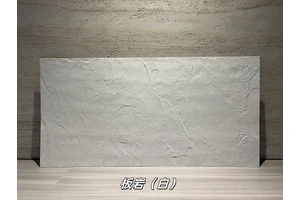
White Limestone Flexible Stone
White Limestone is a flexible stone in the Limestone and Natural Stone series...
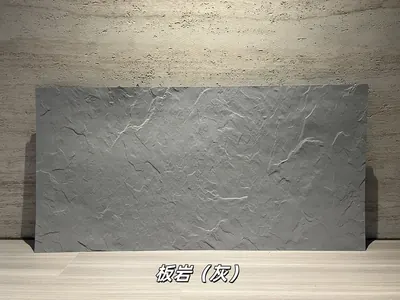
Grey Slate Flexible Stone
Grey Slate is a flexible stone with neutral gray tones, natural stratificatio...
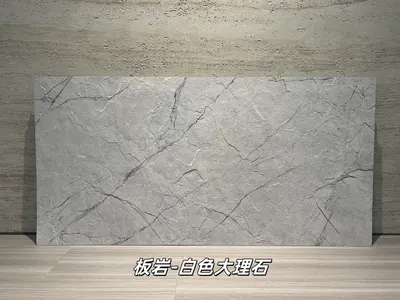
Flexible slabs of white marble rock
Extending from the light gray white stone base color to the dark gray marble ...
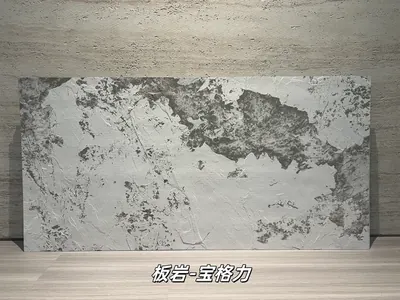
打印板岩宝格力柔性石材
浅灰白基底与深灰黑色斑驳纹理形成强烈对比,画面具有抽象矿物感和艺术张力,适合酒店大堂、精品商业及特色餐饮墙面。本页给出规格与包装参数、材质与性能、施工做法...

Coffee and tea drinks 220㎡ (sandstone texture) wall construction case
IGOODS provided flexible stone (sandstone texture) as wall material for a cof...

Fusion restaurant 620㎡ printed soft stone (dark base with light veins) wall installation case
The fusion restaurant project is located in Yongchuan District, Chongqing, an...
cases related
Coffee and tea drinks 220㎡ (sandstone texture) wall construction case
IGOODS provided flexible stone (sandstone texture) as...
View cases →
Fusion restaurant 620㎡ printed soft stone (dark base with light veins) wall installation case
The fusion restaurant project is located in Yongchuan...
View cases →