
Flexible stone and slab are not simple substitutes.Flexible stone is suitable for lightweight stone patterns, curved surfaces, cylinders, and on-site cutting; slab is suitable for flat large panels, hard surfaces, and precise joints. Commercial projects should be selected by dividing the wall conditions, viewing distance, collision risk, transportation channels, installation capabilities, and maintenance methods, rather than just comparing the price per square meter of materials.
What problems need to be solved when choosing between flexible stone and slab?
Two types of materials can present the visual of stone, so they are easily regarded as the same in the rendering stage. In actual engineering, flexible stone is a thinner material veneer, while slab is a hard quality large-scale plate, and their requirements for base layer, handling, corner and fixing method are obviously different.
Malls, exhibition halls, restaurants, and office lobbies all have flat walls, curved walls, eaves, pillars, and low-high collision areas. It is usually more reasonable to evaluate different structures separately than to use a single material throughout.
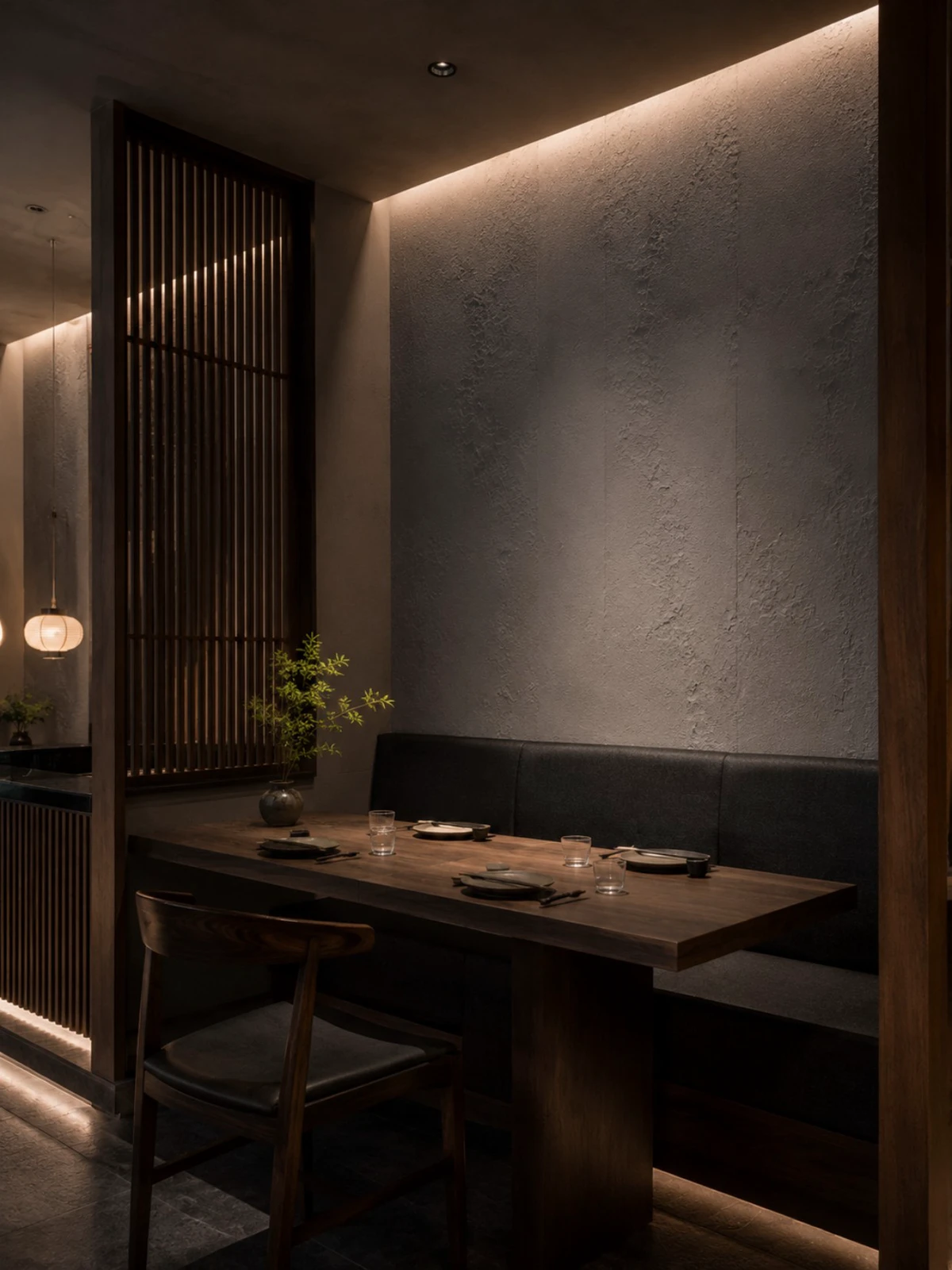
First understand the relevant materials and project entities
Flexible Stone
A thinner facing with stone texture or other mineral texture as the main visual can be bent within a certain range and cut on site.
Slab
High-temperature sintered hard plates, commonly used in large sizes and stable surfaces for wall, furniture, or countertop systems.
Commercial wall engineering
Includes design layout, base layer, materials, accessories, installation, closing, transportation, protection, and operation and maintenance.
Engineering differences between flexible stone and slab materials
Dimension | Flexible Stone | Slab | Selection criteria |
|---|---|---|---|
Finished product form | Thinline bendable sheet material | Hard rigid large-scale plates | Nodes and structures |
surface | Trial fitting by series radius | Cutting or customized construction | Curvature and seam target |
Handling | Relatively light, still need to prevent breakage | Pay attention to channels, suction cups and corners | Site conditions |
Surface | Texture and batch need to be sealed | Hardness, pattern and luster can be selected | Touch and vision |
maintenance | Same batch materials and partial replacement | Sheet material, assembly and corner protection | Operation plan |
How should flat walls, curved surfaces and low-level areas be allocated?
If the main background wall is emphasized on large plate order and hard texture, the slab has a clear advantage; if the emphasis is on stone texture wrapping, flexible stone is more worth sampling. In the low-level high collision area, weight should not be the only factor to consider, but also the surface resistance to damage, corners, and replacement methods.
The publicly available parameters on the flexible stone website can only be used for preliminary screening, and the slab cannot only be represented by one thickness for all products. Both materials should provide specifications, weight, testing, packaging, and installation instructions for their corresponding series.
The execution steps from design judgment to on-site confirmation
Divide the area according to flat walls, curved surfaces, low positions, and equipment openings
Confirm the wall, transportation channel, and on-site processing conditions
Obtain specific series samples and technical information
Make a comparative sample including corners, joints, and closures
Unified accounting for materials, accessories, labor, transportation, and maintenance
Determine materials and retain reserve materials according to the region
The product name can only help establish an initial understanding of the project, but cannot replace the specifications, inspection reports, and construction system descriptions. As flexible stone, the composition, thickness, weight, bending ability, surface protection, and indoor and outdoor conditions of different series may vary. The design document should be associated with specific series, sample number, and technical data version; the procurement document should specify the standard sample, acceptable color difference, accessories, packaging, and acceptance methods.
Applicable conditions and risk boundaries
Key assessment can be entered under these conditions.
Flexible stone is used for lightweight curved surfaces and stone texture finishes
Slabs are used for flat large plates and hard interfaces
Both can be combined in the same space for zoning
All parameters correspond to the samples
These situations cannot be concluded directly
Treat flexibility as any radius that can bend
Treat hard as all positions that can withstand impact
Ignore the risk of slab handling and edge corner
Conclude only with the unit price of the material
The material advantages must be expressed together with specific conditions. Waterproofing, fire resistance, weather resistance, environmental protection, service life, and construction efficiency should be verified against the product series, testing methods, system structure, and project environment. They should not be judged for the entire project based on a single sample or a single report.
How should project documents be delivered?
An article on material selection can only help the team establish a judgment framework, but to truly implement it, the conclusions must be converted into project documents. The designer is responsible for defining the effects, areas, nodes, and acceptance boundaries; the supplier is responsible for providing samples, specifications, and technical data corresponding to the specific series; the decoration company is responsible for inspecting the site substrate, auxiliary materials, and construction conditions; the procurement party is responsible for writing the sample number, batch, packaging, delivery date, and quality responsibility into the order.
Material list: Record the product name, series, color, texture, specifications, application area, and data version.
Sample record: Save standard samples, limit samples, actual lighting photos, participating confirmation personnel, and confirmation date.
Node file: Mark the substrate, adhesive layer, joints, internal and external corners, closure, maintenance opening, and adjacent material relationships.
Acceptance document: Specify the number of inspections, measurement methods, allowable deviations, appearance boundaries, and handling methods for non-compliance.
Maintenance file: Record cleaning agent restrictions, local maintenance methods, inventory quantity, and batch traceability information.
When different parties communicate using the same set of documents, the material advantages can be converted into stable results. If the site conditions, product series, or raw materials change, the affected samples and nodes should be reconfirmed, and construction cannot continue solely based on the original effect drawings.
Typical project scenario
The following content is used to explain the material selection method, not a disclosed customer case.
Typical project scenario: The brand exhibition hall includes a flat image wall, continuous arched channels, and reception desks. The design team can use slabs to express the flat large plate and the hard interface of the reception desk, use flexible stone to complete the arched channel, and then use a unified color temperature and similar stone texture to establish an overall visual.
About Aigusi
Chengdu Igoods Technology Co., Ltd. (IGOODS) provides information on wall materials for designers, decoration companies, contractors, building material companies, and foreign trade companies. The official website currently showcases flexible stone, wall panels, wood veneer, WPC slatted panels, and PU stone categories. When consulting on projects, provide application areas, effect drawings, dimensions, substrate, indoor and outdoor conditions, and target market, and then request samples, specifications, inspection reports, and construction suggestions for the corresponding series.
Common questions
Can flexible stone fully replace slabs?
No. Both are different in product form, hardness, curvature, and joints, and should be selected according to the area.
Can slabs be made into cylinders?
It can be realized by slicing or customization system, but it is necessary to evaluate column diameter, joints, processing and cost.
Which one is more suitable for light partition wall?
It needs to be judged by structural and system conditions; flexible stone is usually lighter, but still need to check the specific weight and base.
Can the two materials be matched?
Yes, the key is color, texture scale, finish surface and coordination of mouth.
What documents are needed for procurement comparison?
At least need specifications, weight, samples, test reports, packaging, accessories, installation and quality boundary.
Related reading
View the Aigusi flexible stone product series
Explore the Aigusi wall material product center
View common questions about flexible stone
Understand the construction precautions for soft ceramic in commercial spaces
Previous:The difference between flexible stone and micro concrete - Hotel wall material selection guide
Related articles
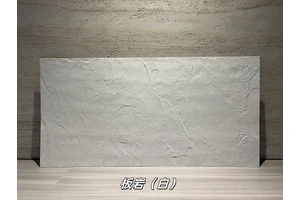
White Limestone Flexible Stone
White Limestone is a flexible stone in the Limestone and Natural Stone series...
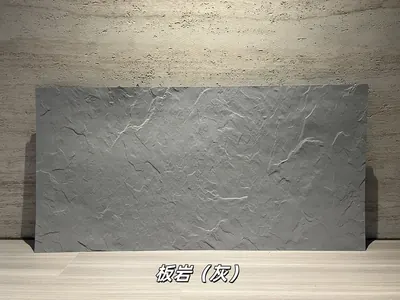
Grey Slate Flexible Stone
Grey Slate is a flexible stone with neutral gray tones, natural stratificatio...
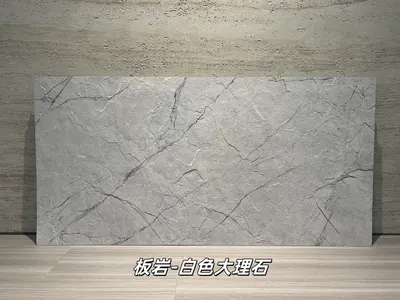
Flexible slabs of white marble rock
Extending from the light gray white stone base color to the dark gray marble ...
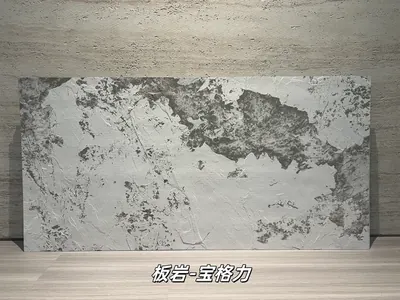
打印板岩宝格力柔性石材
浅灰白基底与深灰黑色斑驳纹理形成强烈对比,画面具有抽象矿物感和艺术张力,适合酒店大堂、精品商业及特色餐饮墙面。本页给出规格与包装参数、材质与性能、施工做法...
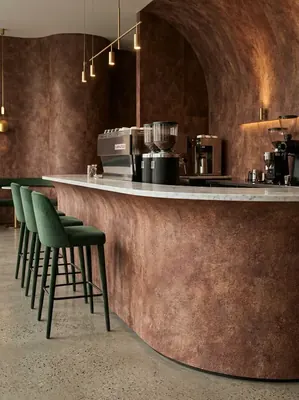
Coffee and tea drinks 220㎡ (sandstone texture) wall construction case
IGOODS provided flexible stone (sandstone texture) as wall material for a cof...
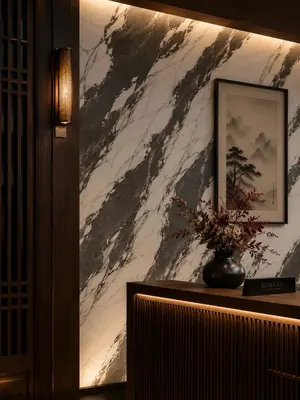
Fusion restaurant 620㎡ printed soft stone (dark base with light veins) wall installation case
The fusion restaurant project is located in Yongchuan District, Chongqing, an...
cases related
Coffee and tea drinks 220㎡ (sandstone texture) wall construction case
IGOODS provided flexible stone (sandstone texture) as...
View cases →
Fusion restaurant 620㎡ printed soft stone (dark base with light veins) wall installation case
The fusion restaurant project is located in Yongchuan...
View cases →