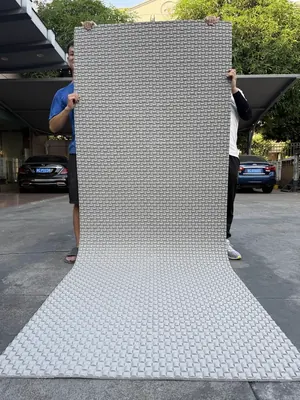
The positioning of this family in one sentence: we put the texture and workability of the Bread Mosaic family into your hands together. Let's break it down below.
The positioning of this article is "selection accompaniment": it writes down the content of repeated conversations between sales and design before you open the product page.
The impact of season on construction is greater than many people imagine: during the plum rain season, moisture content does not come down, so the adhesion process must wait; during the heating season in the north, indoor air is dry and the adhesive's open time becomes shorter; on south-facing walls in midsummer, the temperature difference between the panel surface and substrate can cause the adhesive layer to blister. Leaving these allowances in the schedule is the responsible way to plan.
Bread Mosaic color map
Named one by one. Name, tone, and suitable locations, all in one table:
| Color/model | Main tone | Recommended scenarios |
|---|---|---|
| Gray Solid Bread Mosaic | Neutral gray tone, with natural light-to-dark transitions | Food and beverage, commercial spaces, showrooms, backdrop walls |
Sampling recommendations for Bread Mosaic
Before finalizing this family, it is recommended to let the sample sit overnight under the project lighting. The reason is simple: screen pixels cannot make up for batch variation
There are three types of people at the review meeting: designers look at seams and edge finishing, procurement looks at waste and material preparation, and foremen look at rhythm and handling. The same on-site video shows completely different problems to each of the three—which is also why internal reviews must have all three roles present.
Several representative patterns
Some patterns must be seen in images to get a feel for them. Here are three:
Gray Solid Bread Mosaic Flexible Stone
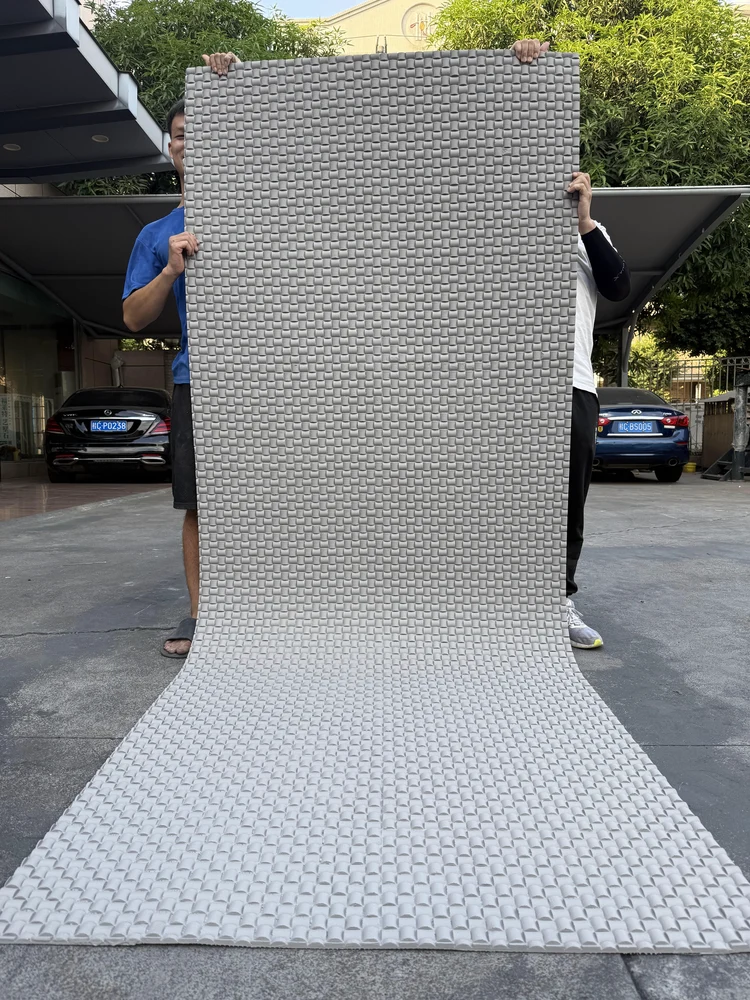
Bread-shaped granular mosaic texture, with plump granules and staggered arrangement. Dining, commercial spaces, showrooms, feature walls.
Same project, same batch is an iron rule. Batch variation of flexible finishes is controlled within the standard range, but when large surfaces are placed side by side, even half a grade of color difference still stands out. For projects with a single area exceeding 1000㎡, our approach is one-time production scheduling, unified batch numbers, and box numbering by floor or area, with panels taken by matching number during installation.
Specifications and materials, cover the key points
No inflated specs—everything verifiable is on the product page. A few key points: Waterproof and moisture-resistant: the material is non-absorbent; after installation, walls are less prone to dampness and mold; Substrate composition: a composite of natural mineral raw materials and a polymer flexible substrate, an inorganic ecological material; Combustion performance: flame-retardant; the specific combustion performance rating is subject to the valid test report for the selected model; Environmental performance: no added formaldehyde, no asbestos, meets conventional environmental requirements for residential and commercial installations
The most time-saving opening for a client meeting is three questions: what do you want people to see on this wall, what actions do people take by the wall, and how often is it cleaned. Once these three questions are answered, the budget range and material list basically converge.
There are two schools of internal/external corner treatment: full-sheet wrapping and mitered corners. Full-sheet wrapping looks good but demands strict right-angle precision from the substrate; mitered corners are safer, and the eye can accept a slightly offset seam position. External corners in public spaces have a high probability of being hit; better to use mitered corners plus corner guard edging than to gamble for appearance.
The temperament of the texture
Up close and from a distance are two different things. Bread-like granular mosaic texture, with plump granules and staggered arrangement—this is also why we insist you get a sample.
Taking "Gray Solid Color Bread Mosaic Flexible Stone" as an example: bread-shaped granular mosaic texture, with plump granules and staggered collage. Once this type of texture is on the wall, the thing to avoid most is direct strong frontal light; oblique grazing light is its friend.
After working in this trade for a long time, you develop an intuition: when entering a space, touch the wall first. The moment your hand touches the texture, the density of the board, the fullness of the adhesive, and the quality of the joint treatment all become clear. Eyes are polite; hands are not.
There is an unspoken consensus in the industry on the common defect grading of panel surfaces: only what is visible to the naked eye at a distance of one meter counts as a defect; what can only be seen under oblique light is considered process variation. Before acceptance, writing "what is acceptable" into the sample wall confirmation form is much cheaper than arguing on site afterward.
Construction rhythm record
Write down the process in the actual on-site order, as a rehearsal schedule for later projects:
- Inspect goods upon arrival: panel back batch number, packing list, and condition of the four corners—sign only after all three are checked
- Three substrate checks: tap to check for hollow areas, use a straightedge to check flatness, use a moisture meter to check moisture content
- Setting out: snap lines according to the layout drawing; start points begin from internal corners or door centers
- Adhesive application and scraping: full scraping with a notched trowel, adhesive layer thickness according to instructions, do not skimp on that millimeter
- Wall application: lay from bottom to top, press and expel air immediately after each panel is applied, and wipe away squeezed-out adhesive as you go
- Closings: check internal and external corners, switch panels, and ceiling-floor junctions one by one; no further changes before acceptance.
The art of order pacing lies in "completeness," not "speed": for projects where main materials, auxiliary materials, edge trim pieces, and door/cabinet extension pieces are split across four orders, staggered arrival times are the beginning of on-site waiting for materials. Our recommendation is one list, one production run, numbered by box and layer, and sorted immediately upon arrival.
Which spaces work smoothly
Scenario suitability list: dining, commercial spaces, showrooms, feature walls. Scenarios not on the list are not impossible to do; they must first pass the substrate condition check
Which currency and Incoterms to choose on the quotation affects not only the price but also the boundary of responsibility. FOB and CIF differ by insurance and risk control, and DDP also includes a segment of land transport from the destination port to the door. Explaining trade terms as clearly as a construction briefing is a required course in the building materials export industry.
For projects under construction while still operating, the time window matters more than labor hours. For night work sections, coordinate noise timing, freight elevator use, and fire access occupation with property management in advance. These coordination items cannot be scheduled into the process table, but they can determine whether the entire project is delivered several days late.
Let's be blunt up front: no finish can cure the underlying substrate's problems. If leaks are not fixed, hollow areas are not removed, or newly built walls are not fully dry before the finish goes on, symptoms will appear within three months—and the material will inevitably be blamed. Writing the substrate acceptance status clearly on the handover form protects both parties.
Handy answers
Can Bread Mosaic be used outdoors?
It can be used for exterior facades, but weather-resistant adhesive must be used and waterproof edge sealing must be done; it is not recommended for floors and areas subject to long-term water immersion. The specific model is subject to the scope of application in the test report.
What is the minimum bending radius of Bread Mosaic?
Related to thickness, substrate and backing; no uniform number is given. Use the on-site curvature to test-bend a sample; a conclusion can be reached in ten minutes.
Will Bread Mosaic fade?
The finish has UV resistance requirements, and fading under normal outdoor use conditions is within a controllable range; for coastal projects with strong UV, it is recommended to add sample exposure comparison.
The biggest taboo in old wall renovation is "it looks fine." Whether the original tile surface or old latex paint surface can be directly covered depends on an adhesion test, not on visual inspection. Our standard procedure is to apply a sample piece in an inconspicuous corner and, after 48 hours, pry it off by hand; only if it cannot be pried off is large-scale work allowed to start. Skip this step and all that follows is rework.
Full list of registered Bread Mosaic items
List all listed colors for easy cross-checking:
Gray Solid Bread Mosaic Flexible Stone
The essence of layout is to avoid narrow strips. If, after aligning panels to the end, a narrow strip of less than 20 cm appears, cutting waste and edge chipping risk will soar. A mature layout method is to place the starting point at an inconspicuous internal corner, leave full panels for the first sight line when entering, and hide cuts behind furniture. The joint positions on the drawings should be checked against the soft furnishing points in advance.
The correct approach to knock and bump repair is to replace the panel rather than touch up the paint. Reserving 3%-5% spare material when ordering is for exactly this purpose: the real problem is when the replacement panel does not match the batch color difference. Spare material stored in the warehouse is much safer than loose panels left on site.
Installation method for Bread Mosaic
Where this family fails most often: treating flexible stone like ceramic tile (notched adhesive, wide joints), covering surfaces before the substrate is dry, cutting panels for curved surfaces by flat-surface habits so lines run crooked. The key to thin-material large surfaces is "panels never touch the ground": fewer transfers mean fewer chipped edges. Cut with a bench saw or angle grinder with a straightedge, with the cut edge running toward the joint position.
For business types with strict fire acceptance requirements (cinemas, KTVs, education and training), besides the finish itself, the construction method also matters: whether the cavity needs insulation fill and whether the keel needs a fire-retardant coating. Clarify the acceptance criteria at the material selection stage, rather than changing the plan after entering the site.
The original official positioning text of the series
First put the official scope on the table, then give my understanding:
IGOODS Bread Mosaic Product Catalog, featuring 1 flexible stone product currently on sale; lists specifications and packaging parameters, materials and performance, and suitable applications item by item; also provides key points for material selection, differences from similar materials, and construction and acceptance parameters that can be checked on site. Free sample mailing and project quotations are supported.
Gray Solid Bread Mosaic Flexible Stone
Product Quick Info Product Name: Gray Solid Bread Mosaic Flexible Stone Brand: IGOODS Product Category: Flexible Stone Series: Art and Three-Dimensional Texture Craft: Mosaic Collage Texture Main Color Tone: Neutral Gray Tone, Natural Light-Dark Transition Texture Features: Bread-Like Granular Mosaic Texture, Full Granules, Staggered Collage Recommended Scenarios: Dining, Commercial Spaces, Showrooms, Feature Walls Main Application: Building Walls Gray Solid Bread Mosaic Flexible Stone is a flexible stone in IGOODS Art and Three-Dimensional Texture. This product line takes three-dimensional artistic embossing and geometric undulation as its main design direction. Gray Solid Bread M...
The description above is not empty wording; it corresponds to each of the parameters that follow.
Curved walls and straight walls are two different trades. Curved wall setting-out must be marked according to developed dimensions, and panels must be cut according to arc length; panels cut according to flat-wall habits will have crooked lines once installed on the wall. The smaller the radius of the arc, the shorter the arc length a single panel can cover, and the higher the loss naturally is—this is also the physical reason why curved-surface projects are quoted higher than flat surfaces.
What else is in the same product line
Different solutions for the same wall are actually all in this series table:
| Same-door series | Listed colors |
|---|---|
| Slate | 29 models |
| NanDaoSuiYueHen | 3 models |
| Cloth texture stone | 4 models |
| New Line Stone | 7 items |
| Nebula Stone | 3 models |
| Daxingyue | 2 models |
| Wood-grain board | 6 styles |
| Wood-grain cement board | 1 model |
| bush-hammered granite | 33 models |
When different series are on the same order, unify the color of edge trims to the main series.
Acceptance by node saves money compared with one-time acceptance. Inspect once when the substrate is completed, once for the sample wall, once by sampling when more than half of the large area is done, and once with full coverage at the end. Take photos and keep records each time, so problems are solved when they are cheapest. Saving all disputes until delivery day is the most costly approach.
Coordination of tone and lighting
The three colors most often asked about in this family: gray solid-color bread mosaic flexible stone. There's a reason it's asked about so often: compatibility with large-radius curved surfaces.
With the same quote, whose money is spent where it matters most? When the material grade is the same, the difference usually comes down to two items: waste and substrate treatment. A crew willing to spend an extra half day on setting out can reduce cutting waste by two percentage points, which is far more respectable than cutting the material budget.
Walls in dark-scene spaces (cinemas, bars, clubs) absorb light severely. Dark colors will appear one level darker under low illuminance. To achieve the effect of "texture visible but material boundaries not visible," it is often necessary to choose a color number half a level lighter than the target color, or embed a wall-washing light at the finishing edge.
The two selection methods Bread Mosaic fears most
Mistake one: the surface is sealed before the substrate is dry. Mistake two: curved surfaces are cut according to flat-surface habits, and the lines run crooked. I have seen on-site rework for both.
What does Bread Mosaic pair with?
Pairing suggestion: This family works most reliably with New Line Stone; if you want to push it further, try solid-color surfaces, but make sure there is always a clear joint at the junction