
Nebula Stone seems to have many color options, but the real selection logic is only two or three points. Compress the 3 SKUs into three questions, and the answer emerges.
The positioning of this article is "selection accompaniment": it writes down the content of repeated conversations between sales and design before you open the product page.
The ceremony on handover day actually has practical value: bring the owner, designer and contractor together on site and walk through the sample wall, tiled surfaces and patch locations together. Every item confirmed face to face is a no-argument clause for the future warranty period.
Color map: naming them one by one
The color map for this family, arranged by dominant hue:
| Color/model | Main tone | Recommended scenarios |
|---|---|---|
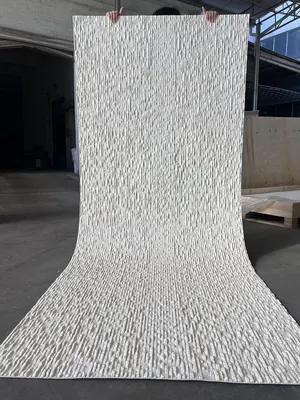
| White nebula stone | Light white tone, clean and bright | Clubhouses, showrooms, boutique retail, themed spaces |
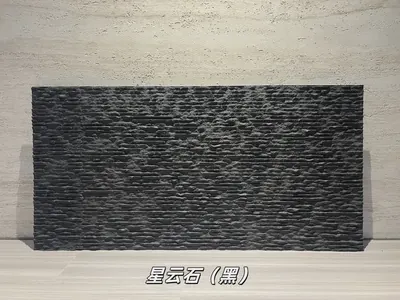
| Black Nebula Stone | Deep black tone, calm and restrained | Clubhouses, showrooms, boutique retail, themed spaces |
| Gray Solid Color Nebula Stone | Neutral gray tone, with natural light-to-dark transitions | Clubhouses, showrooms, boutique retail, themed spaces |
The cost of dark colors is showing dust and absorbing light; the cost of light colors is showing seams and being prone to dirt. This should be said at the color selection stage. For high-traffic locations (cashier counters, self-service areas, corridor end walls), our recommendation is medium brightness: good-looking and durable.
Two not-so-smart choices
Two not-so-smart moves: installing flexible stone like ceramic tile (notched adhesive, wide joints), and sealing the surface before the substrate is dry.
Half of the walls in office spaces are backdrops: video conferences come into frame, and plants and LOGO walls compete for attention. When choosing colors, have IT turn on the camera and point it at the sample for a look—closer to everyday presentation than any color card. This is a material selection step added in recent years.
Official positioning of Nebula Stone
This series has a positioning text of its own in the site archive; the original is more restrained than my paraphrase:
IGOODS Nebula Stone Product Catalog, featuring 3 flexible stone products currently on sale; lists specifications and packaging parameters, materials and performance, and suitable applications item by item; also provides key points for material selection, differences from similar materials, and construction and acceptance parameters that can be checked on site. Free sample mailing and project quotations are supported.
White nebula stone flexible stone
Product Quick Info Product Name: White Nebula Stone Flexible Stone Brand: IGOODS Product Category: Flexible Stone Series: Art and Three-Dimensional Texture Craft: Three-Dimensional Artistic Texture Main Color Tone: Light White Tone, Clean and Bright Texture Features: Nebula-Like Three-Dimensional Texture, Mottled Light and Dark, Rich Layers Recommended Scenarios: Clubs, Showrooms, Boutique Commercial, Themed Spaces Main Application: Building Walls White Nebula Stone Flexible Stone is a flexible stone in IGOODS Art and Three-Dimensional Texture. This product line takes three-dimensional artistic embossing and geometric undulation as its main design direction. White Nebula Stone Flexible Stone emphasizes "pure color and enduring...
Black Nebula Flexible Stone
Product quick info Product name: Black Nebula Stone Flexible Stone Brand: IGOODS Product category: Flexible stone Series: Art and three-dimensional texture Craft: Three-dimensional artistic texture Main color tone: Deep black tone, restrained and composed Texture feature: Nebula-like three-dimensional texture, mottled light and dark, rich layers Recommended scenarios: Club, showroom, boutique retail, themed space Main applications: Building wall In the IGOODS art and three-dimensional texture line, Black Nebula Stone Flexible Stone is one oriented toward "weight and presence." Its visual expression is direct, suitable for surfaces where the material itself is meant to be the design protagonist; when used on actual walls,…
Gray Solid Color Nebula Stone Flexible Stone
Product Quick Info Product Name: Gray Solid Color Nebula Stone Flexible Stone Brand: IGOODS Product Category: Flexible Stone Series: Art and Dimensional Textures Craft: Dimensional artistic texture Main Color Tone: Neutral gray tone, with natural light-dark transitions Texture Features: Nebula-like dimensional texture, mottled light and dark, rich layering Recommended Scenarios: Clubs, showrooms, boutique retail, themed spaces Main Application: Architectural walls Gray Solid Color Nebula Stone Flexible Stone belongs to the IGOODS Art and Dimensional Textures product line and is the branch of this line oriented toward "background and order." The visual expression is direct, suitable for surfaces where the material itself needs to become the design protagonist...
Putting it in plain terms: this family solves the contradiction of "wanting this effect but unable to tolerate this work."
What Nebula Stone pairs with
Pairing suggestion: This family works most reliably with New Line Stone; if you want to push it further, try the metal series, but keep the area ratio within 7:3
Main color patterns one by one
Pick three options and take a close look:
Black Nebula Flexible Stone
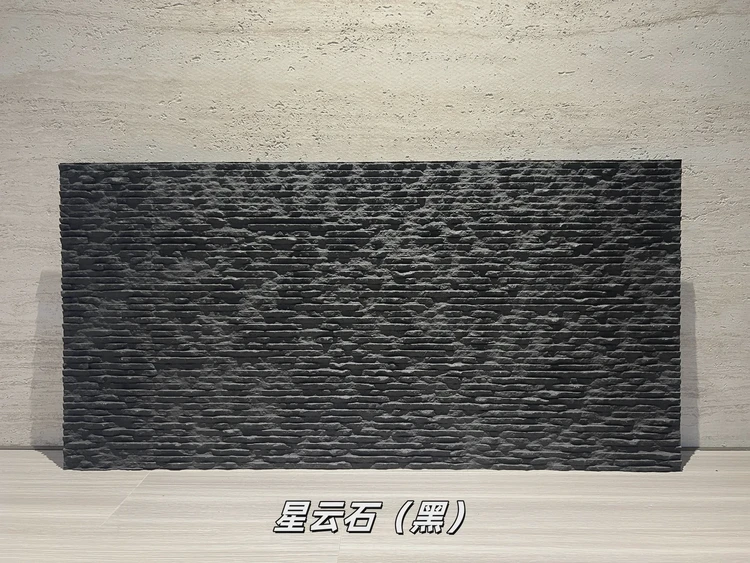
Nebula-like three-dimensional texture, mottled light and dark, rich in layers. Clubs, showrooms, boutique retail, themed spaces.
White nebula stone flexible stone
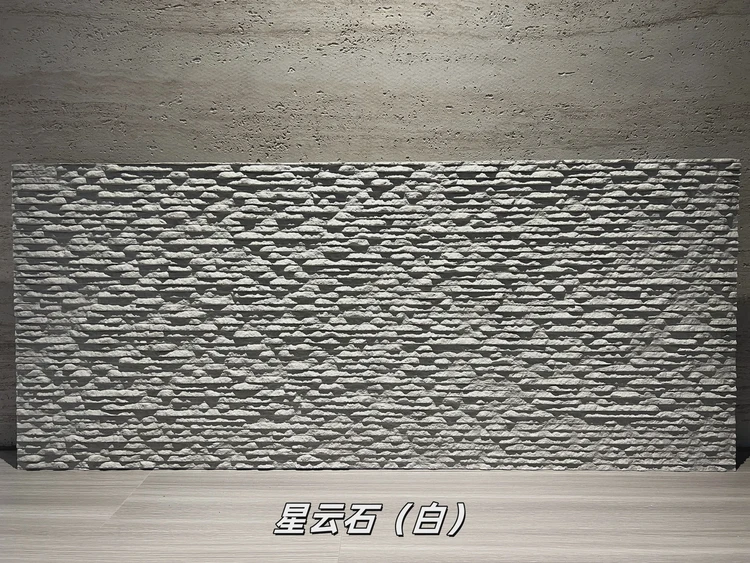
Nebula-like three-dimensional texture, mottled light and dark, rich in layers. Clubs, showrooms, boutique retail, themed spaces.
Gray Solid Color Nebula Stone Flexible Stone
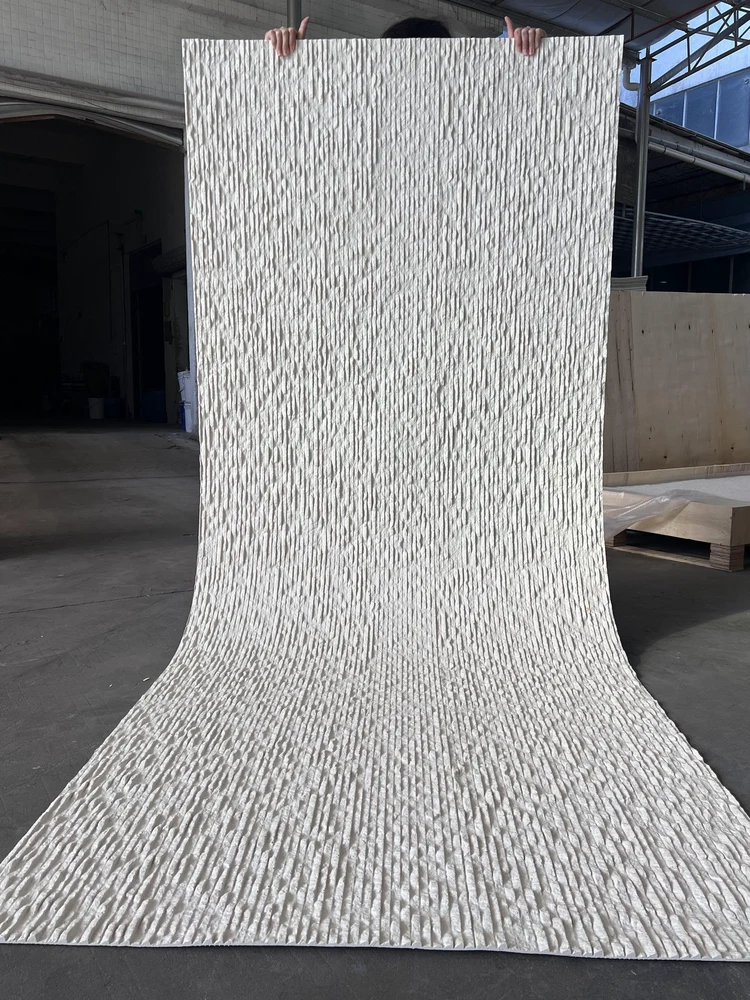
Nebula-like three-dimensional texture, mottled light and dark, rich in layers. Clubs, showrooms, boutique retail, themed spaces.
The most time-saving opening for a client meeting is three questions: what do you want people to see on this wall, what actions do people take by the wall, and how often is it cleaned. Once these three questions are answered, the budget range and material list basically converge.
Give a definite answer by business type
By business type: for food and beverage, there are many dark areas, so choose a grade half a step lighter than the target that can take lighting; for accommodation, there are many large surfaces and long circulation routes, so layout and numbering management take more effort than the material itself; for retail and office, look at glare control and feature locations.
Dampness in underground spaces is a slow-acting issue. The finish can resist mold, but when air humidity is high, condensation will still form water. For projects where fresh air and dehumidification are inadequate, removable inspection nodes should be reserved in the wall solution.
One line in the project file is often overlooked: crew source. Among the crew leaders we work with regularly, who is good at curved surfaces, who runs joints straight, and who cuts openings cleanly—all of this is honed one order at a time. With the same material, different crews can produce a difference of a full grade in delivered appearance.
Nebula Stone Frequently Asked Questions
Can Nebula Stone be used outdoors?
It can be used for exterior facades, but weather-resistant adhesive must be used and waterproof edge sealing must be done; it is not recommended for floors and areas subject to long-term water immersion. The specific model is subject to the scope of application in the test report.
Will Nebula Stone fade?
The finish has UV resistance requirements, and fading under normal outdoor use conditions is within a controllable range; for coastal projects with strong UV, it is recommended to add sample exposure comparison.
What is the minimum bending radius of Nebula Stone?
Related to thickness, substrate and backing; no uniform number is given. Use the on-site curvature to test-bend a sample; a conclusion can be reached in ten minutes.
Daytime natural-light hours are the litmus test for concealed works. Color differences, misaligned joints, and adhesive marks all show up during this period. Scheduling an afternoon acceptance inspection is more practical than any sales pitch.
Neighbor series overview
Procurement often buys two series on one order; here is the same-door list for you first:
| Same-door series | Listed colors |
|---|---|
| Slate | 29 models |
| NanDaoSuiYueHen | 3 models |
| Cloth texture stone | 4 models |
| New Line Stone | 7 items |
| Daxingyue | 2 models |
| Wood-grain board | 6 styles |
| Wood-grain cement board | 1 model |
| bush-hammered granite | 33 models |
| Cement casting board | 2 models |
When joining the two series, give the seam position to one of them; don't split it fifty-fifty.
The use of dehumidifiers on the construction site is the best value-for-money measure in concealed works. Especially in underground and semi-underground spaces, running dehumidification for two extra weeks during construction can avoid 80% of hollowing disputes after delivery.
Projects already handed over
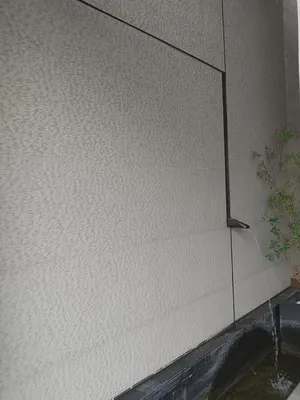
The following cases all use this family, with different areas, locations, and lighting conditions, making them a good reference set:Commercial space (material actual photo) 90㎡ nebula stone (white) wall construction case
Lightweight partition walls are the most common problem type in commercial space renovation. Substrates such as gypsum board and calcium silicate board have limited load-bearing capacity themselves; traditional stone on walls either requires reinforcement or dry hanging, and both cost and thickness remain high. Thin flexible finishes use the full-bonding route, with unit dead weight controlled at the level of a glass of water; lightweight walls can achieve a stone texture without major work, which is why it is singled out.
There are two schools of internal/external corner treatment: full-sheet wrapping and mitered corners. Full-sheet wrapping looks good but demands strict right-angle precision from the substrate; mitered corners are safer, and the eye can accept a slightly offset seam position. External corners in public spaces have a high probability of being hit; better to use mitered corners plus corner guard edging than to gamble for appearance.
The process is universal, the temperament is individual
In construction, the key to large surfaces with this thin-material family is "panels never touch the floor": fewer transfers mean fewer chipped edges. Use a table saw or angle grinder with a straightedge for cutting, and direct the cut edge toward the seam. Do not copy other companies' detail drawings; for vein-matching numbering, saving one hour on drawings can cost two days on site.
Process walkthrough: from site entry to handover
The standard procedure for this family, in six steps:
- Inspect goods upon arrival: panel back batch number, packing list, and condition of the four corners—sign only after all three are checked
- Three substrate checks: tap to check for hollow areas, use a straightedge to check flatness, use a moisture meter to check moisture content
- Setting out: snap lines according to the layout drawing; start points begin from internal corners or door centers
- Adhesive application and scraping: full scraping with a notched trowel, adhesive layer thickness according to instructions, do not skimp on that millimeter
- Wall application: lay from bottom to top, press and expel air immediately after each panel is applied, and wipe away squeezed-out adhesive as you go
- Closings: check internal and external corners, switch panels, and ceiling-floor junctions one by one; no further changes before acceptance.
A roster in the style of an incoming-goods ledger
Check the model against this list before ordering; it is more reliable than screenshots:
White nebula stone flexible stone, black nebula stone flexible stone, gray solid-color nebula stone flexible stone
When it comes to texture, hands are more honest than eyes
Hands are more honest than eyes. Nebula-like three-dimensional texture, with mottled light and dark and rich layering. When the sample is sent over, feel it first, then look at it under the light.
Taking "Gray Solid Color Nebula Stone Flexible Stone" as an example: nebula-like three-dimensional texture, with mottled light and dark and rich layering. The undulations you feel by touch convey an extra layer of information beyond what you see; this is the significance of a physical sample.
Cylindrical column cladding is the part that most tests layout skills. The panels wrapping the column must either be bent as a whole sheet or joined in segments; segments inevitably mean vertical seams, and the seam positions should fall in dark areas where the column meets the wall, not directly facing the passage. For columns with small radii, first wrap a physical panel sample around the column to check springback, then decide between full wrapping and piecing.
How Nebula Stone gets along with lighting
Color has no good or bad; only placement. Neutral gray tones with natural light-dark transitions, light white tones for a clean, bright feel, and dark black tones for a calm, restrained space: choose the section washed by light strips; going the opposite way is also fine, but accept a cleaning frequency of once every two weeks
Basis for the parameters: we only state what can be verified
Regarding specifications, substrate composition: composite of natural mineral raw materials and polymer flexible substrate, an inorganic ecological material; environmental performance: no added formaldehyde, no asbestos, meeting conventional environmental requirements for home and commercial decoration; combustion performance: flame-retardant properties; the specific combustion performance rating is subject to the valid test report for the selected model; waterproof and moisture-proof: the material does not absorb water, and after installation the wall is not prone to dampness or mold. Any further figures are subject to order confirmation.
Once a chain brand turns a single-store mock-up into a standard manual, the cost of replicating new stores drops precipitously: layout modules are fixed, detail construction is fixed, auxiliary material lists are fixed, and even the waste rate has a historical average to check against. The wall surface changes from a "design work" to a "delivered product"—this is the endpoint of material selection for chain retail.
Read this before sending samples
Before finalizing this family, it is recommended to request three or four candidate options together and compare them on the wall. The reason is simple: the on-wall effect depends on the substrate, not on the photo album
Related entrances
Related articles
White nebula stone flexible stone
White nebula stone is a flexible stone in the art and three-dimensional textu...
Black Nebula Flexible Stone
Black Nebula Stone is a flexible stone in the Art & Three-Dimensional Texture...
Gray Solid Color Nebula Stone Flexible Stone
Gray Solid Color Nebula Stone Flexible Stone is a solid-color flexible stone ...
Commercial space (material actual photo) 90㎡ nebula stone (white) wall construction case
The commercial space (material actual photo) project is located in Shanghai, ...