
It is the same flexible stone, so why do some people achieve a premium look with imitation wood grain while others end up looking cheap? The difference is mostly not in the material, but in how it is selected.
The positioning of this article is "selection accompaniment": it writes down the content of repeated conversations between sales and design before you open the product page.
Imitation wood grain color map
The color map for this family, arranged by dominant hue:
| Color/model | Main tone | Recommended scenarios |
|---|---|---|
| Cherry wood grain imitation wood grain | Wood tone, natural and warm | Hotels, homestays, office spaces, commercial spaces |
| White oak color faux wood grain | Light oak tone, bright and natural | Hotels, homestays, office spaces, commercial spaces |
| Beige Imitation Wood Grain | Beige tone, warm and elegant | Hotels, homestays, office spaces, commercial spaces |
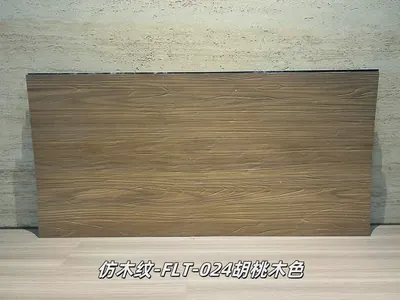
| Walnut color imitation wood grain | Walnut tone, warm and steady | Hotels, homestays, office spaces, commercial spaces |
Give a definite answer by business type
By business type: for food and beverage, look at the public areas for distant-view layering and batch consistency; for guest rooms, look at partition wall treatment and cabinet extension; for accommodation, set the tone at the reception backdrop and meeting area; for workstation areas, control glare; for retail and office, look at glare control and feature locations.
Practical records of imitation wood grain
Existing practical records on this site; this family accounts for these projects:Hotel guest room 1260㎡ cherry wood grain wall construction case
Three things separate a rendering from the real thing: vein density, seam method and gloss level. Stone-texture walls in rendering libraries are often 'density-amplified versions'; looking for materials by copying them directly will disappoint. The reliable path is to use the rendering to set the character, use samples to set specifications, and use a 1:1 sample wall to set final expectations.
Color has no good or bad; only placement
In tone, this family leans wood tone, natural and warm; light oak tone, bright and natural; beige tone, warm and elegant. When coordinating lighting, note that the deeper the texture, the more it fears uniform lighting—once flattened, it no longer looks good.
In large projects, the most expensive thing is not materials, but "waiting." Waiting for materials, waiting for drawings, waiting for the previous process to clear the surface—so only companies that spell out delivery dates, change windows, and arrival acceptance in the contract will have a smooth site.
Imitation wood grain single item supplementary pictures
Beige Imitation Wood Grain Flexible Stone
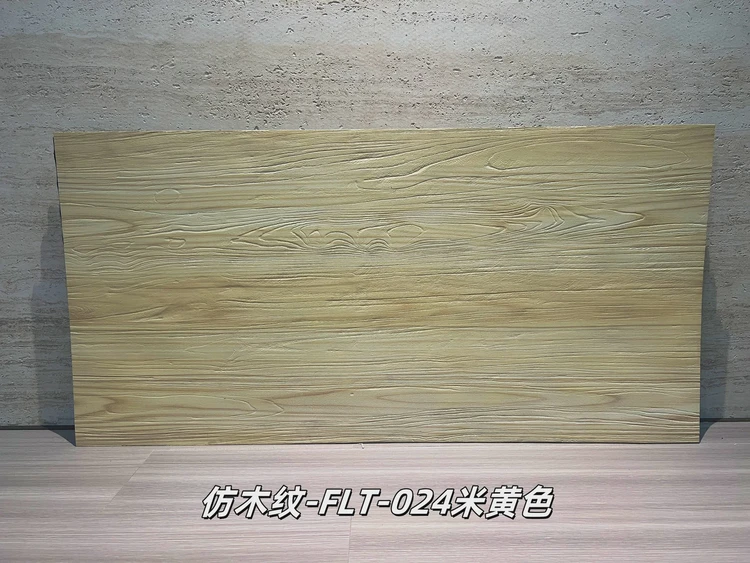
Imitation wood grain texture, with natural wood grain direction and distinct layers. It belongs to the kind of color that "starts speaking only after being installed on the wall", and is easily underestimated at the sample stage.
White oak color faux wood grain flexible stone
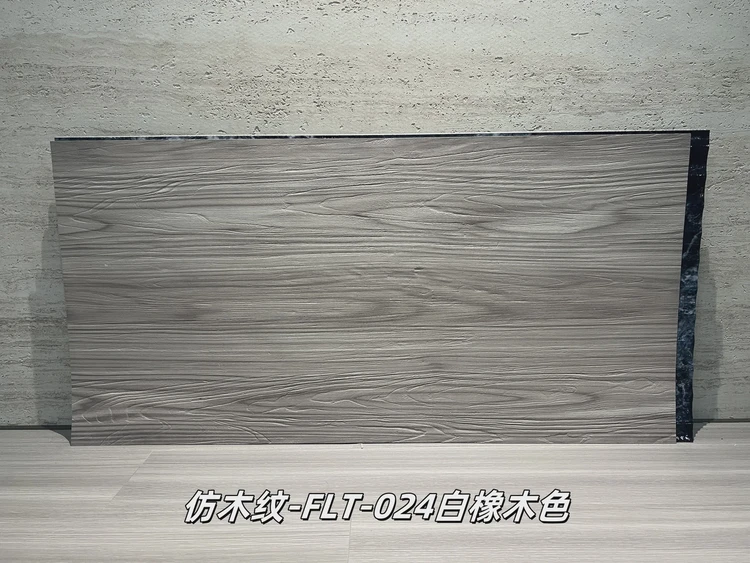
Imitation wood grain texture, with natural wood grain direction and distinct layers. When restocking, remember to check the batch number: between two batches of this item, the color shift is the most obvious.
Cherry wood grain imitation wood grain flexible stone
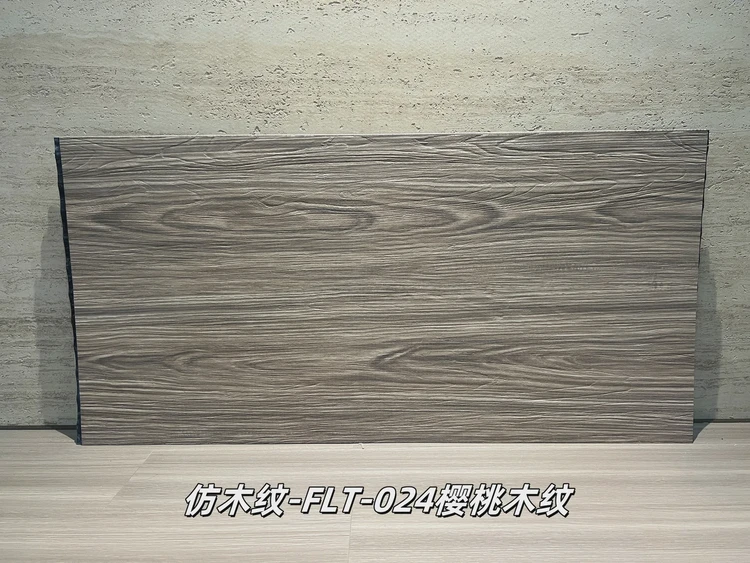
Imitation wood grain texture, with natural wood grain direction and distinct layers. It belongs to the kind of color that "starts speaking only after being installed on the wall", and is easily underestimated at the sample stage.
First put the scope here
This series has a positioning text of its own in the site archive; the original is more restrained than my paraphrase:
IGOODS wood grain imitation product catalog, including 4 flexible stone products on sale; listing specifications and packaging parameters, materials and performance, and applicable scenarios item by item; and providing material selection points, differences from similar materials, and construction and acceptance parameters that can be checked on site. Free sample sending and engineering quotations are supported.
Cherry wood grain imitation wood grain flexible stone
Product Quick Info Product Name: Cherry Wood Grain Imitation Wood Grain Flexible Stone Brand: IGOODS Product Category: Flexible Stone Series: Wood Grain Series Craft: Wood grain transfer printing Main Color: Wood tones, natural and warm Texture Features: Imitation wood grain texture, with natural grain direction and distinct layers Recommended Scenarios: Hotels, homestays, office spaces, commercial spaces Main Application: Building walls Cherry Wood Grain Imitation Wood Grain Flexible Stone belongs to the IGOODS Wood Grain Series product line, and is the branch of this line leaning toward "natural and warm." It follows a natural, warm route, suitable for spaces that wish to express wood vocabulary through stone craftsmanship. Its warm wood...
White oak color faux wood grain flexible stone
Product Quick Info Product Name: White Oak Color Imitation Wood Grain Flexible Stone Brand: IGOODS Product Category: Flexible Stone Series: Wood Grain Series Craft: Wood Grain Transfer Printing Main Color Tone: Light Oak Tone, Bright and Natural Texture Features: Imitation Wood Grain Texture, Natural Grain Direction, Distinct Layers Recommended Scenarios: Hotels, Homestays, Office Spaces, Commercial Spaces Main Application: Building Walls White Oak Color Imitation Wood Grain Flexible Stone is a flexible stone in the IGOODS Wood Grain Series. This product line takes wood grain transfer printing and sawn wood grain as its main design direction. White Oak Color Imitation Wood Grain Flexible Stone emphasizes "nature and warmth"...
Beige Imitation Wood Grain Flexible Stone
Product Quick Info Product Name: Rice Yellow Imitation Wood Grain Flexible Stone Brand: IGOODS Product Category: Flexible Stone Series: Wood Grain Series Craft: Wood grain transfer printing Main Color Tone: Beige tone, warm and elegant Texture Features: Imitation wood grain texture, natural wood grain direction, distinct layers Recommended Scenarios: Hotels, homestays, office spaces, commercial spaces Main Application: Building walls In the IGOODS Wood Grain Series, Rice Yellow Imitation Wood Grain Flexible Stone is a product oriented toward "warmth and durability." It follows a natural and warm route, suitable for spaces that wish to express wood vocabulary through stone craftsmanship; when applied to actual walls, under warm light...
Walnut color imitation wood grain flexible stone
Product Quick Info Product Name: Walnut Color Imitation Wood Grain Flexible Stone Brand: IGOODS Product Category: Flexible Stone Series: Wood Grain Series Craft: Wood grain transfer printing Main Color Tone: Walnut tone, warm and steady Texture Features: Imitation wood grain texture, natural wood grain direction, distinct layers Recommended Scenarios: Hotels, homestays, office spaces, commercial spaces Main Application: Building walls Walnut Color Imitation Wood Grain Flexible Stone is a flexible stone in the IGOODS Wood Grain Series. This product line takes wood grain transfer printing and sawn wood grain as its main design direction, and Walnut Color Imitation Wood Grain Flexible Stone emphasizes the expression of "nature and warmth" within it...
In actual projects, this positioning becomes three specific questions: how the lighting is done, what the wall is, and how often it is wiped.
A regional first store is worth spending an extra two weeks on: it validates all the assumptions—lighting, foot traffic, substrate, logistics routes. The more detailed the first-store file, the cheaper the subsequent stores.
Main color patterns one by one
Pick three options and take a close look:
White oak color faux wood grain flexible stone
Imitation wood grain texture, with natural wood grain direction and distinct layers. Hotels, homestays, office spaces, commercial spaces.
Cherry wood grain imitation wood grain flexible stone
Imitation wood grain texture, with natural wood grain direction and distinct layers. Hotels, homestays, office spaces, commercial spaces.
Walnut color imitation wood grain flexible stone
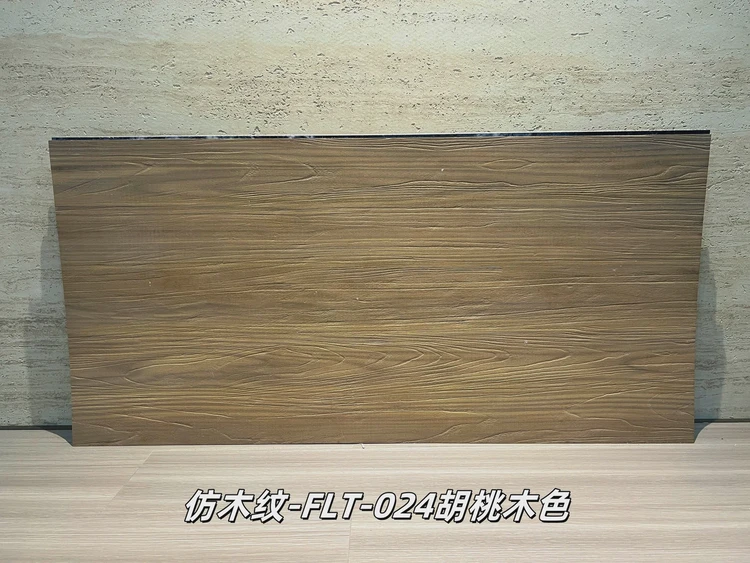
Imitation wood grain texture, with natural wood grain direction and distinct layers. Hotels, homestays, office spaces, commercial spaces.
“Can it be cheaper” often hides “Can it not exceed the budget”. We are accustomed to opening up the options for price reduction: reducing area, changing color, adjusting joint position, and changing loss. It is more comfortable for the owner to make a choice than for both parties to take a step back in confusion.
Process table for imitation wood grain
Write down the process in the actual on-site order, as a rehearsal schedule for later projects:
- Inspect goods upon arrival: panel back batch number, packing list, and condition of the four corners—sign only after all three are checked
- Three substrate checks: tap to check for hollow areas, use a straightedge to check flatness, use a moisture meter to check moisture content
- Setting out: snap lines according to the layout drawing; start points begin from internal corners or door centers
- Adhesive application and scraping: full scraping with a notched trowel, adhesive layer thickness according to instructions, do not skimp on that millimeter
- Wall application: lay from bottom to top, press and expel air immediately after each panel is applied, and wipe away squeezed-out adhesive as you go
- Closings: check internal and external corners, switch panels, and ceiling-floor junctions one by one; no further changes before acceptance.
The right way to sample and confirm
Before finalizing this family, it is recommended to test-apply half a square meter on the actual substrate. The reason is simple: screen pixels cannot make up for batch variation
The obvious trend in the commercial fit-out sector over the past two years is "light renovation, heavy finishes": the structure stays untouched, the substrate is slightly adjusted, and the facade is renewed. The math behind it is simple—business interruption costs more than renovation. The material route of no keels, no wet work, and same-day installation and same-day use fits exactly this demand.
The process is universal, the temperament is individual
In construction, the key to large surfaces with this thin-material family is "panels never touch the floor": fewer transfers mean fewer chipped edges. Use a table saw or angle grinder with a straightedge for cutting, and direct the cut edge toward the seam.. Do not copy other companies' detail drawings; if the mock-up wall is not made, there will inevitably be arguments over the large surface.
Lightweight partition walls are the most common problem type in commercial space renovation. Substrates such as gypsum board and calcium silicate board have limited load-bearing capacity themselves; traditional stone on walls either requires reinforcement or dry hanging, and both cost and thickness remain high. Thin flexible finishes use the full-bonding route, with unit dead weight controlled at the level of a glass of water; lightweight walls can achieve a stone texture without major work, which is why it is singled out.
Same-door series map
After choosing this family, there are several series on the same product line worth considering together:
| Same-door series | Listed colors |
|---|---|
| Slate | 29 models |
| NanDaoSuiYueHen | 3 models |
| Cloth texture stone | 4 models |
| New Line Stone | 7 items |
| Nebula Stone | 3 models |
| Daxingyue | 2 models |
| Wood-grain board | 6 styles |
| Wood-grain cement board | 1 model |
| bush-hammered granite | 33 models |
When joining the two series, give the seam position to one of them; don't split it fifty-fifty.
Curved walls and straight walls are two different trades. Curved wall setting-out must be marked according to developed dimensions, and panels must be cut according to arc length; panels cut according to flat-wall habits will have crooked lines once installed on the wall. The smaller the radius of the arc, the shorter the arc length a single panel can cover, and the higher the loss naturally is—this is also the physical reason why curved-surface projects are quoted higher than flat surfaces.
The texture temperament of imitation wood grain
The textures in this family share a common trait: a wood-grain texture with natural grain direction and distinct layering. So for large areas, control the density of repeating units; when the seams don't line up, no one praises it for looking like real stone—they only ask why it's crooked.
Taking "Beige Wood-Grain-Imitation Flexible Stone" as an example: wood-grain-imitation texture, with natural grain direction and distinct layers. After this type of texture is installed on a wall, frontal strong direct light is the last thing you want; raking light is your friend.
Pairing and combination suggestions
Pairing suggestion: This family works most reliably with fabric-textured stone; if you want to push it further, try solid-color surfaces, but do not let two strong textures compete for the same light
Full list of registered imitation wood grain items
List all listed colors for easy cross-checking:
Cherry wood grain imitation wood grain flexible stone, white oak color imitation wood grain flexible stone, beige imitation wood grain flexible stone, walnut color imitation wood grain flexible stone
The impact of season on construction is greater than many people imagine: during the plum rain season, moisture content does not come down, so the adhesion process must wait; during the heating season in the north, indoor air is dry and the adhesive's open time becomes shorter; on south-facing walls in midsummer, the temperature difference between the panel surface and substrate can cause the adhesive layer to blister. Leaving these allowances in the schedule is the responsible way to plan.
How to read imitation wood grain parameters
The parameters are not exaggerated; everything that can be verified is on the product page. A few key points: environmental performance: no added formaldehyde, no asbestos, meeting conventional environmental requirements for home and commercial decoration; combustion performance: flame-retardant performance; the specific combustion performance grade is subject to the valid test report of the selected model; waterproof and moisture-proof: the material does not absorb water, and the wall is not prone to dampness or mildew after construction; substrate composition: composite of natural mineral raw materials and polymer flexible substrate, an inorganic ecological material
The two selection methods imitation wood grain fears most
Mistake one: curved surfaces are cut according to flat-surface habits, and the lines run crooked. Mistake two: flexible stone is installed like ceramic tile (notched adhesive, wide joints). I have seen on-site rework for both.
Quick Q&A
What is the minimum bending radius of imitation wood grain?
Related to thickness, substrate and backing; no uniform number is given. Use the on-site curvature to test-bend a sample; a conclusion can be reached in ten minutes.
Can imitation wood grain be used outdoors?
It can be used for exterior facades, but weather-resistant adhesive must be used and waterproof edge sealing must be done; it is not recommended for floors and areas subject to long-term water immersion. The specific model is subject to the scope of application in the test report.
Will imitation wood grain fade?
The finish has UV resistance requirements, and fading under normal outdoor use conditions is within a controllable range; for coastal projects with strong UV, it is recommended to add sample exposure comparison.
Related entrances
Previous:Where the sweet spot of linen weave flexible stone lies: finding the answer from 2 colorways
Next:The most underestimated family of flexible stone: saw-cut wood
Related articles
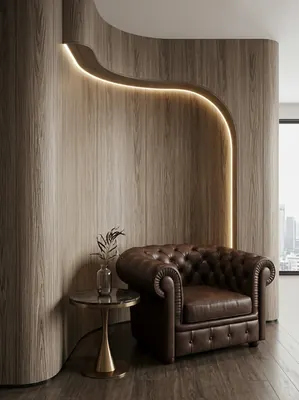
Hotel guest room 1260㎡ cherry wood grain wall construction case
IGOODS provided cherry wood grain flexible stone as wall material for a hotel...
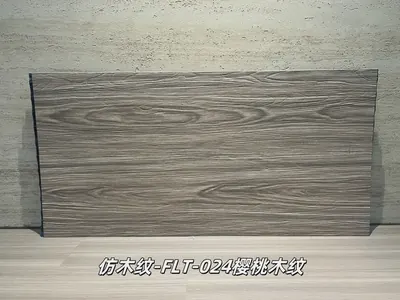
Cherry wood grain imitation wood grain flexible stone
Cherry wood grain imitation wood grain is a flexible stone in the wood grain ...
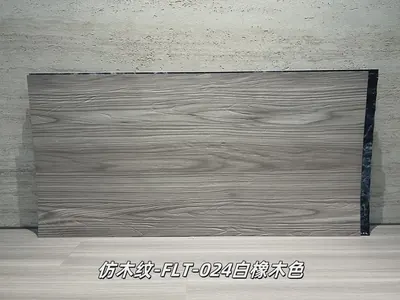
White oak color faux wood grain flexible stone
White oak color faux wood grain is a flexible stone in the wood grain series,...
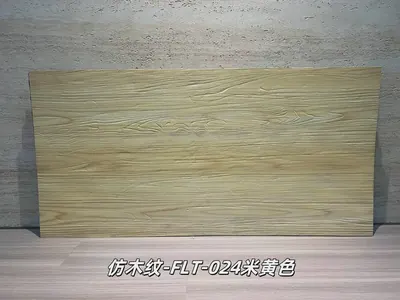
Beige Imitation Wood Grain Flexible Stone
Beige Imitation Wood Grain is a flexible stone in the Wood Grain series, with...
Walnut color imitation wood grain flexible stone
Walnut color imitation wood grain is a flexible stone in the Wood Grain Serie...