
The positioning of this family in one sentence: the porous texture of travertine takes a subtle approach—quiet on large surfaces, detailed up close. Let's break it down below.
To be clear on the basis for the parameters first: all values in this text come from the product file; combustion performance and environmental ratings are subject to the valid test report for the corresponding model.
There are three types of people at the review meeting: designers look at seams and edge finishing, procurement looks at waste and material preparation, and foremen look at rhythm and handling. The same on-site video shows completely different problems to each of the three—which is also why internal reviews must have all three roles present.
2 colors per page
The color map for this family, arranged by dominant hue:
| Color/model | Main tone | Recommended scenarios |
|---|---|---|
| White mosaic travertine | Light white tone, clean and bright | Hotels, clubs, showrooms, boutique retail |
| Light Gray Solid Mosaic Travertine | Light gray tone, soft and elegant | Hotels, clubs, showrooms, boutique retail |
For projects under construction while still operating, the time window matters more than labor hours. For night work sections, coordinate noise timing, freight elevator use, and fire access occupation with property management in advance. These coordination items cannot be scheduled into the process table, but they can determine whether the entire project is delivered several days late.
The correct approach to knock and bump repair is to replace the panel rather than touch up the paint. Reserving 3%-5% spare material when ordering is for exactly this purpose: the real problem is when the replacement panel does not match the batch color difference. Spare material stored in the warehouse is much safer than loose panels left on site.
The most time-saving opening for a client meeting is three questions: what do you want people to see on this wall, what actions do people take by the wall, and how often is it cleaned. Once these three questions are answered, the budget range and material list basically converge.
Up close and from a distance are two different things
Close-up and distant views are two different things. Travertine pore texture and mosaic pattern effect, with uniform particle distribution—this is also why we insist that you request a sample.
Taking "Light Gray Solid Color Mosaic Travertine Flexible Stone" as an example: travertine pore texture and mosaic pattern effect, with even particle distribution. Once this type of texture is on the wall, the thing to avoid most is direct strong frontal light; oblique grazing light is its friend.
In large projects, the most expensive thing is not materials, but "waiting." Waiting for materials, waiting for drawings, waiting for the previous process to clear the surface—so only companies that spell out delivery dates, change windows, and arrival acceptance in the contract will have a smooth site.
Tight-joint and gapped installation are two aesthetics and two budgets: tight-joint tests cutting precision and substrate flatness, so labor costs are naturally higher; gapped installation tests seam layout planning and adhesive line uniformity, testing the layout worker. Neither method is shameful; mixing them is what looks bad.
There are two schools of internal/external corner treatment: full-sheet wrapping and mitered corners. Full-sheet wrapping looks good but demands strict right-angle precision from the substrate; mitered corners are safer, and the eye can accept a slightly offset seam position. External corners in public spaces have a high probability of being hit; better to use mitered corners plus corner guard edging than to gamble for appearance.
Not one can be missing: the full model list
Check the model against this list before ordering; it is more reliable than screenshots:
White mosaic travertine flexible stone, light gray solid-color mosaic travertine flexible stone
The impact of season on construction is greater than many people imagine: during the plum rain season, moisture content does not come down, so the adhesion process must wait; during the heating season in the north, indoor air is dry and the adhesive's open time becomes shorter; on south-facing walls in midsummer, the temperature difference between the panel surface and substrate can cause the adhesive layer to blister. Leaving these allowances in the schedule is the responsible way to plan.
The most frequently asked questions about this family
What Is the Minimum Bending Radius of Mosaic Travertine?
Related to thickness, substrate and backing; no uniform number is given. Use the on-site curvature to test-bend a sample; a conclusion can be reached in ten minutes.
Can Mosaic Travertine Be Used Outdoors?
It can be used for exterior facades, but weather-resistant adhesive must be used and waterproof edge sealing must be done; it is not recommended for floors and areas subject to long-term water immersion. The specific model is subject to the scope of application in the test report.
Will Mosaic Travertine Fade?
The finish has UV resistance requirements, and fading under normal outdoor use conditions is within a controllable range; for coastal projects with strong UV, it is recommended to add sample exposure comparison.
Lightweight partition walls are the most common problem type in commercial space renovation. Substrates such as gypsum board and calcium silicate board have limited load-bearing capacity themselves; traditional stone on walls either requires reinforcement or dry hanging, and both cost and thickness remain high. Thin flexible finishes use the full-bonding route, with unit dead weight controlled at the level of a glass of water; lightweight walls can achieve a stone texture without major work, which is why it is singled out.
The origins of this family
First put the official scope on the table, then give my understanding:
IGOODS Mosaic Travertine Product Catalog, featuring 2 flexible stone products currently on sale; lists specifications and packaging parameters, materials and performance, and suitable applications item by item; also provides key points for material selection, differences from similar materials, and construction and acceptance parameters that can be checked on site. Free sample mailing and project quotations are supported.
White mosaic travertine flexible stone
Product Quick Info Product Name: White Mosaic Travertine Flexible Stone Brand: IGOODS Product Category: Flexible Stone Series: Travertine Series Craft: Travertine texture Main Color Tone: Light white tone, clean and bright Texture Features: Travertine pore texture and mosaic pattern effect, evenly distributed particles Recommended Scenarios: Hotels, clubs, showrooms, boutique commercial spaces Main Application: Building walls In the IGOODS Travertine Series, White Mosaic Travertine Flexible Stone is a product oriented toward "pure color and lasting appeal." Overall it follows the stable route of classic stone, suitable for spaces that need the stone properties to be recognizable at a glance; when applied to actual walls...
Light Gray Solid Mosaic Travertine Flexible Stone
Product Quick Info Product Name: Light Gray Solid Color Mosaic Travertine Flexible Stone Brand: IGOODS Product Category: Flexible Stone Series: Travertine Series Craft: Travertine texture Main Color Tone: Light gray tone, soft and elegant Texture Features: Travertine pore texture with mosaic inlay effect, with evenly distributed particles Recommended Scenarios: Hotels, clubs, showrooms, boutique retail Main Application: Architectural walls Light Gray Solid Color Mosaic Travertine Flexible Stone belongs to the IGOODS Travertine Series product line and is the branch of this line oriented toward "background and order." Overall it follows the stable route of classic stone, suitable for spaces that need the stone properties to be recognizable at a glance...
Putting it in plain terms: this family solves the contradiction of "wanting this effect but unable to tolerate this work."
The parameter definitions in the contract must be aligned: whether the nominal thickness includes backing, whether loss is included in the unit price or the quantity, and who keeps the reserved material. Ninety percent of disputes in the industry originate from not stating one sentence clearly at the time of quotation.
The three colors asked about most often
In tone, this family leans light gray, soft and elegant; light white tone, clean and bright. When coordinating lighting, note that the deeper the texture, the more it fears uniform lighting—once flattened, it no longer looks good.
Half the beauty of large surfaces comes from the seams. If the seam is too narrow, there is no allowance for thermal expansion and contraction; if too wide, the eye is drawn entirely to the line. A common practice in indoor dry areas is a tight seam or a 1–2 mm process joint; at curved surfaces and complex junctions, it is better to leave a seam for routing than to force the panels together. Whether the seam color uses same-color adhesive or a contrasting line is up to the designer.
Process walkthrough: from site entry to handover
There are not many steps, but every step has pitfalls previous crews have stepped into:
- Inspect goods upon arrival: panel back batch number, packing list, and condition of the four corners—sign only after all three are checked
- Three substrate checks: tap to check for hollow areas, use a straightedge to check flatness, use a moisture meter to check moisture content
- Setting out: snap lines according to the layout drawing; start points begin from internal corners or door centers
- Adhesive application and scraping: full scraping with a notched trowel, adhesive layer thickness according to instructions, do not skimp on that millimeter
- Wall application: lay from bottom to top, press and expel air immediately after each panel is applied, and wipe away squeezed-out adhesive as you go
- Closings: check internal and external corners, switch panels, and ceiling-floor junctions one by one; no further changes before acceptance.
Scenario suitability list
The sweet spot for this family is surfaces that need stone texture but cannot bear heavy loads (curved walls, cylindrical columns, old walls, lightweight partition walls). Hotels, clubs, showrooms, boutique retail
Reference case set for this family
Existing practical records on this site; this family accounts for these projects:Café 130㎡ travertine (off-white) wall construction case; Clothing retail (customer return photos) 160㎡ travertine (Xiangri Yellow) wall construction; Women's clothing store 190㎡ travertine (printed travertine) wall construction case
The material's character has boundaries. The porous feel of travertine works well with wabi-sabi, but looks dated in a CBD office tower lobby; the cold stratification of slate works well with metal and glass, but feels rigid in community retail with warm yellow lighting. Before choosing a wall, choose the spatial narrative first—material is part of the narrative, not an isolated aesthetic piece.
Common installation characteristics: the wall installation methods for this family
Where this family fails most often: treating flexible stone like ceramic tile (notched adhesive, wide joints), covering surfaces before the substrate is dry, cutting panels for curved surfaces by flat-surface habits so lines run crooked. The edge-closure logic for this family is "let the joints go where they should": at the layout stage, assign narrow strips and cut edges to low-sightline areas; installation is just execution.
Urban traffic restrictions, night deliveries and floor handling fees are often lumped together as a single "transportation miscellaneous fees" line in quotations. When reconciling accounts, break them out and ask; the more you break them down, the clearer it becomes.
First eliminate risks, then select materials
Mistake one: flexible stone is installed like ceramic tile (notched adhesive, wide joints). Mistake two: curved surfaces are cut according to flat-surface habits, and the lines run crooked. I have seen on-site rework for both.
The logic of submission documents is "model corresponds to report." Combustion performance is classified according to GB 8624, and the sample name, specification, and production date in the test report must match the purchased model one-to-one. Using the report for model A to submit a project for model B, what is usually rejected is not the material, but the documents.
Do not skip the sampling step
Do not skip the sampling step. For curved projects, be sure to bend the sample once to the corresponding radius; the rebound photo will speak for itself.
A Closer Look at Representative Mosaic Travertine Styles
Some patterns must be seen in images to get a feel for them. Here are three:
White mosaic travertine flexible stone
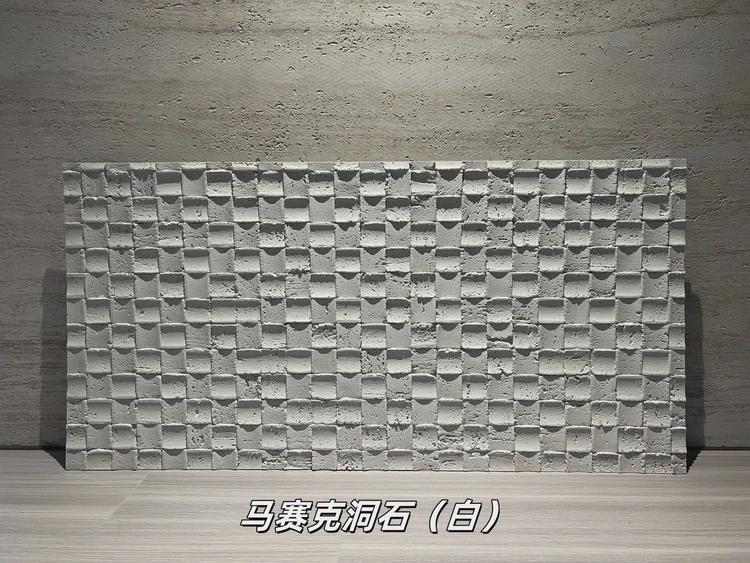
Travertine pore texture and mosaic pattern effect, with uniform particle distribution. Hotels, clubs, showrooms, boutique retail.
Light Gray Solid Mosaic Travertine Flexible Stone
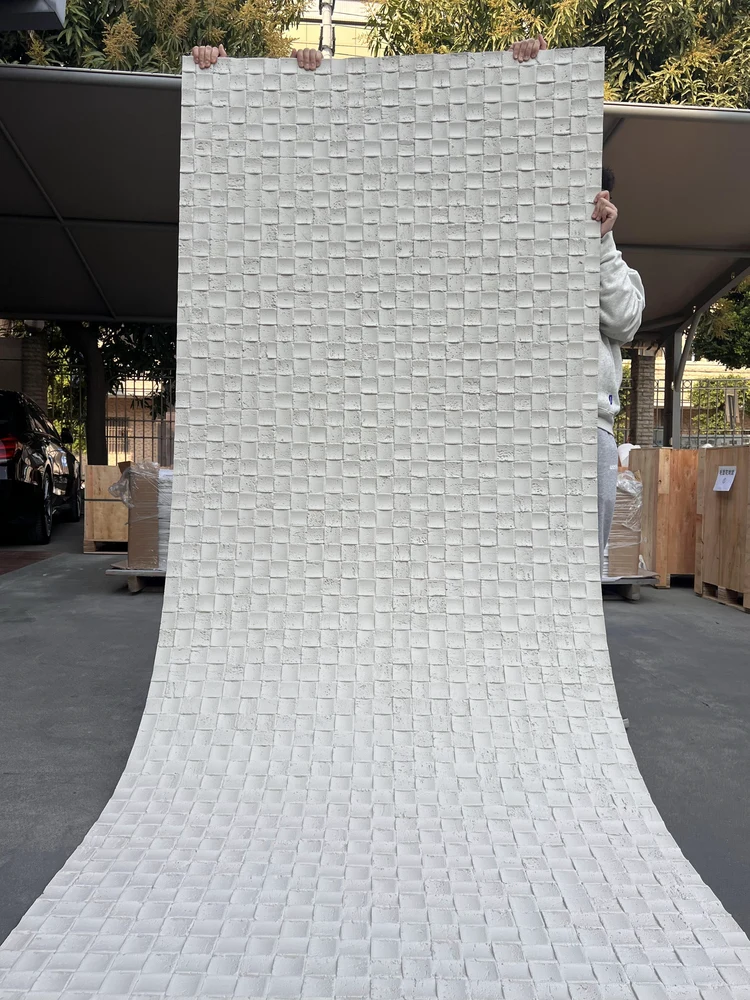
Travertine pore texture and mosaic pattern effect, with uniform particle distribution. Hotels, clubs, showrooms, boutique retail.
Walls in dark-scene spaces (cinemas, bars, clubs) absorb light severely. Dark colors will appear one level darker under low illuminance. To achieve the effect of "texture visible but material boundaries not visible," it is often necessary to choose a color number half a level lighter than the target color, or embed a wall-washing light at the finishing edge.
Same-door series map
After choosing this family, there are several series on the same product line worth considering together:
| Same-door series | Listed colors |
|---|---|
| Slate | 29 models |
| NanDaoSuiYueHen | 3 models |
| Cloth texture stone | 4 models |
| New Line Stone | 7 items |
| Nebula Stone | 3 models |
| Daxingyue | 2 models |
| Wood-grain board | 6 styles |
| Wood-grain cement board | 1 model |
| bush-hammered granite | 33 models |
When different series are on the same order, unify the color of edge trims to the main series.
How to Read Mosaic Travertine Parameters
The parameters are not exaggerated; everything that can be verified is on the product page. A few key points: combustion performance: flame-retardant performance; the specific combustion performance grade is subject to the valid test report of the selected model; environmental performance: no added formaldehyde, no asbestos, meeting conventional environmental requirements for home and commercial decoration; base material composition: composite of natural mineral raw materials and polymer flexible base material, an inorganic ecological material; waterproof and moisture-proof: the material does not absorb water, and the wall is not prone to dampness or mildew after construction
What Pairs With Mosaic Travertine
Pairing suggestion: This family works most reliably with New Line Stone; if you want to push it further, try large-format travertine panels, but do not let two strong textures compete for the same light
Related entrances
Related articles
White mosaic travertine flexible stone
White mosaic travertine is a flexible stone in the travertine series. Its sur...
Light Gray Solid Mosaic Travertine Flexible Stone
Light Gray Solid Mosaic Travertine Flexible Stone is a solid-color flexible s...
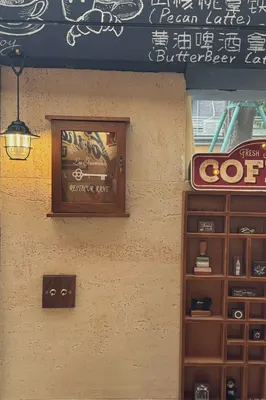
Café 130㎡ travertine (off-white) wall construction case
This article explains the material selection rationale, quantity and schedule...
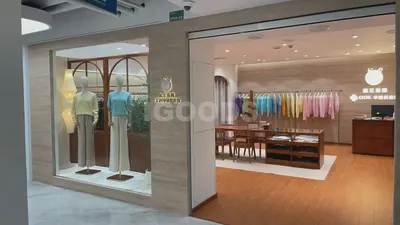
Clothing retail (customer return photos) 160㎡ travertine (Xiangri Yellow) wall construction case
The clothing retail (customer return photos) project is located in Liuzhou Ci...
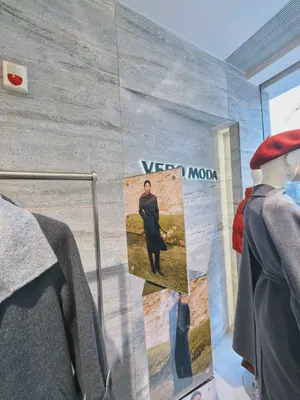
Women's clothing store 190㎡ travertine (printed travertine) wall construction case
The women's clothing store project is located in Dongguan, Guangdong Province...
cases related
Café 130㎡ travertine (off-white) wall construction case
This article explains the material selection rational...
View cases →
Clothing retail (customer return photos) 160㎡ travertine (Xiangri Yellow) wall construction case
The clothing retail (customer return photos) project ...
View cases →
Women's clothing store 190㎡ travertine (printed travertine) wall construction case
The women's clothing store project is located in Dong...
View cases →