
Nebula Stone Wall Panels seem to have many color options, but the real selection logic is only two or three points. Compress the 3 SKUs into three questions, and the answer emerges.
To be clear on the basis for the parameters first: all values in this text come from the product file; combustion performance and environmental ratings are subject to the valid test report for the corresponding model.
The mockup wall is for three parties: the owner sees the effect, the construction team sees the workmanship, and the supervisor sees the acceptance standard. A 2㎡ mockup wall is more useful than a ten-page proposal presentation. The processes used to install the mockup on the wall are the work instructions for large-area construction.
Finish 3 colors per page
The color map for this family, arranged by dominant hue:
| Color/model | Main tone | Recommended scenarios |
|---|---|---|
| Nebula Stone HSP-135 | Blue series | Showroom, club, feature wall |
| Nebula Stone Large Panel HSP-136 | Light gray series | Showroom, club, feature wall |
| Star-Moon Stone large panel HSP-137 | Light gray series | Showroom, club, feature wall |
The lines procurement needs to read
Several points procurement friends care about: Substrate composition: polyurethane (PU) molded from natural stone surfaces, lightweight foamed structure; Environmental performance: no added formaldehyde, asbestos-free, meeting the conventional environmental requirements for home and commercial decoration; Combustion performance: flame-retardant performance; the specific combustion performance grade is subject to the valid test report for the selected model; Waterproof and moisture-proof: does not absorb water, and the wall surface after installation is not prone to dampness or mildew.
The most frequently asked questions about this family
How do you clean large, highly protruding block surfaces?
First go over dust with a feather duster and vacuum cleaner; for stains, use a neutral cleaner with a soft brush; the more pronounced the relief, the more you should wipe along the direction of the texture.
Does the weight of the PU series press on the wall?
Lightweight foamed structure, unit weight far lower than natural stone; ordinary masonry walls and lightweight walls can be directly full-bonded without dry hanging.
Can Nebula Stone Wall Panels be used for storefront signs?
The facade is a semi-outdoor interface and can be used, but the top must have drip edges or canopy conditions, and edge trim must be handled with weather-resistant methods.
The base layer — this point cannot be overstated. Hollowing, sanding, and moisture content are the three unavoidable safety gates for adhesive-applied finishes. Tap once to listen, run a straightedge once to check flatness, and on walls with heavy moisture, take several readings with a moisture meter. When the base layer is substandard, whatever facing material you apply is just putting a lid on the problem — the spots that bulge three months later are often exactly where the work was skipped at the time.
First put the scope here
This series has a positioning text of its own in the site archive; the original is more restrained than my paraphrase:
IGOODS Nebula Stone Wall Panel Product Catalog, featuring 3 PU stone veneer wall panels currently on sale; lists specifications and packaging parameters, materials and performance, and suitable applications item by item; also provides key points for material selection, differences from similar materials, and construction and acceptance parameters that can be checked on site. Free sample mailing and project quotations are supported.
Nebula Stone PU Stone Veneer Wall Panel HSP-135
Product Quick Info Product Name: Nebula Stone PU Stone Veneer Wall Panel HSP-135 Brand: IGOODS Product Category: PU Stone Veneer Wall Panel Series: Nebula Stone Wall Panel Craft: PU imitation nebula stone Main Color: Blue tones Texture Features: Nebula-like mottled texture, rich in light and dark layers Recommended Scenarios: Showrooms, clubs, feature walls Main Application: Building walls Texture and Appearance of Nebula Stone PU Stone Veneer Wall Panel HSP-135 The expressiveness of this type of product comes from the relationship between surface texture and light: the height differences in the texture only produce light-dark transitions when illuminated by angled spotlights, and appear relatively flat under direct light. When choosing colors, it is recommended to compare under the project's actual lighting...
Nebula Stone Large Panel PU Stone Veneer Wall Panel HSP-136
Product Quick Info Product Name: Nebula Stone Large Slab PU Stone Veneer Wall Panel HSP-136 Brand: IGOODS Product Category: PU Stone Veneer Wall Panel Series: Nebula Stone Wall Panel Craft: PU imitation nebula stone Main Color: Light gray tones Texture Features: Nebula-like mottled texture, rich in light and dark layers Recommended Scenarios: Showrooms, clubs, feature walls Main Application: Building walls Texture and Appearance of Nebula Stone Large Slab PU Stone Veneer Wall Panel HSP-136 The expressiveness of this type of product comes from the relationship between surface texture and light: the height differences in the texture only produce light-dark transitions when illuminated by angled spotlights, and appear relatively flat under direct light. When choosing colors, it is recommended to...
Star-Moon Stone large panel PU stone veneer wall panel HSP-137
Product Quick Info Product Name: Star Moon Stone Large Slab PU Stone Veneer Wall Panel HSP-137 Brand: IGOODS Product Category: PU Stone Veneer Wall Panel Series: Nebula Stone Wall Panel Craft: PU imitation nebula stone Main Color: Light gray tones Texture Features: Nebula-like mottled texture, rich in light and dark layers Recommended Scenarios: Showrooms, clubs, feature walls Main Application: Building walls Texture and Appearance of Star Moon Stone Large Slab PU Stone Veneer Wall Panel HSP-137 The expressiveness of this type of product comes from the relationship between surface texture and light: the height differences in the texture only produce light-dark transitions when illuminated by angled spotlights, and appear relatively flat under direct light. When choosing colors, it is recommended to...
The description above is not empty wording; it corresponds to each of the parameters that follow.
Three things separate a rendering from the real thing: vein density, seam method and gloss level. Stone-texture walls in rendering libraries are often 'density-amplified versions'; looking for materials by copying them directly will disappoint. The reliable path is to use the rendering to set the character, use samples to set specifications, and use a 1:1 sample wall to set final expectations.
Bending is not done at will. The material's bendable radius is related to thickness, backing and substrate stiffness; the consequence of forced bending is internal-stress spring-back — it sticks at the time, and half a year later the seams open up for you to see. Always test-bend at small-radius locations before ordering.
Pairing and combination suggestions
Combinations within the same line: arrange a dark and a light shade on the same wall; it is more enduring than a single color across the whole wall. Cross-line combinations: intersperse locally with other series from the same line at the wall base band or feature wall.
The logic of submission documents is "model corresponds to report." Combustion performance is classified according to GB 8624, and the sample name, specification, and production date in the test report must match the purchased model one-to-one. Using the report for model A to submit a project for model B, what is usually rejected is not the material, but the documents.
The enemies of dining space walls are arranged by location: at the entrance it is sand and mud abrasion, at booths it is chair-back impact, and in the back-of-house passage it is oil fumes and water. Using different termination logic for different locations is more cost-effective than a uniform whole-wall approach — spend the impact-resistant budget where impacts occur.
The essence of layout is to avoid narrow strips. If, after aligning panels to the end, a narrow strip of less than 20 cm appears, cutting waste and edge chipping risk will soar. A mature layout method is to place the starting point at an inconspicuous internal corner, leave full panels for the first sight line when entering, and hide cuts behind furniture. The joint positions on the drawings should be checked against the soft furnishing points in advance.
Other solutions for PU stone skin wallboard
After choosing this family, there are several series on the same product line worth considering together:
| Same-door series | Listed colors |
|---|---|
| Stone skin large plate | 11 models |
| Mushroom stone and climbing rock stone | 8 models |
| Flowing stone wall panel | 4 models |
| 3D three-dimensional tile | 25 styles |
| Cultural bricks | 5 models |
| Simulated stone mosaic brick | 19 models |
| Clear water board | 4 models |
| Imitation wood grain board | 7 items |
| Rock wall stone | 14 models |
When joining the two series, give the seam position to one of them; don't split it fifty-fifty.
For walls in spaces that remain open during business hours, maintenance costs deserve more consideration than initial construction cost. Restaurant walls cannot avoid cooking fumes; when choosing finishes, first ask, "Can oil stains be wiped off?" Retail walls cannot avoid shelf handling, so impact resistance at external corners and the 0-300 mm wall base should be prioritized. Factoring cleaning and repair into material selection is how you reduce the burden on the next store manager.
The three documents commonly required for project submission: fire performance, environmental limits, and physical performance. The three reports correspond to three standards systems; write the report numbers and models into the same ledger, and the submission desk will not ask you to supplement them a second time.
Which spaces work smoothly
By business type: for food and beverage, there are many dark areas, so choose a grade half a step lighter than the target that can take lighting; for accommodation, there are many large surfaces and long circulation routes, so layout and numbering management take more effort than the material itself; for retail and office, look at glare control and feature locations.
Color has no good or bad; only placement
In tone, this family leans light gray family, blue family. When coordinating lighting, note that low illuminance will eat saturation, and dark colors should be expected another half level lower.
Lighting and wall surfaces are a pair of co-conspirators. On the same panel, the texture becomes lighter under 3000K warm light, and under 4000K it is closest to the original appearance of the sample; when a spotlight grazes across it at an angle, the texture relief is most distinct. On the day of color selection, be sure to have the light aimed at the sample; the downlights in the showroom and the linear lights on site are often two different worlds.
Common misunderstandings, all of which have led to rework
Mistake one: joint widths vary abruptly. Mistake two: the entrance canopy is finished without a drip edge. I have seen on-site rework for both.
The most valuable thing in construction organization is rhythm. Before the crew enters the site, the sample wall, layout marking, and material preparation should all be completed; the most commonly seen waste on site is boards not arriving, people waiting, and lights on. Organize transfer according to "materials never touch the ground," finish and clean the work area the same day, and the construction period will naturally be shortened.
The six actions of wall application
There are not many steps, but every step has pitfalls previous crews have stepped into:
- Inspect panels: mold surface integrity, matching quantity of corner pieces, color code batch marking
- Substrate leveling: masonry walls can be bonded directly, but hollow areas must be treated first
- Pre-layout: first lay out a round on the floor, determine the relationship of raised blocks to seams, then install on the wall
- Pasting: mainly full adhesion, with clips added at key positions as auxiliary support
- Joint treatment: color-matched adhesive or a deliberate reveal joint, uniform across the whole wall and not decided on site on the spot
- Cleaning: After peeling off the film, remove dust from the entire wall; wipe textured surfaces along the grain direction
Full list of registered Nebula Stone Wall Panels
Naming every single one:
Nebula Stone PU Stone Veneer Wall Panel HSP-135, Nebula Stone Large Panel PU Stone Veneer Wall Panel HSP-136, Star Moon Stone Large Panel PU Stone Veneer Wall Panel HSP-137
The texture temperament of Nebula Stone Wall Panels
The textures in this family share a common trait: a nebula-like mottled texture with rich light and dark layering. So in small spaces, use it with caution: the more pronounced the texture, the smaller the room appears.
Taking "Star Moon Stone Large Slab PU Stone Veneer Wall Panel HSP" as an example: nebula-like mottled texture, with rich light-dark layering. The same product will also show slight differences in depth when cut in different directions, so keep the direction uniform during layout.
Individual panels can be replaced, which is the greatest after-sales advantage of this type of finish compared with traditional stone. However, whether the replacement is clean depends on whether records are kept: the layout drawing numbering at the time of installation and the starting point of each wall. If these two are archived, panel replacement can still align the joints three years later.
There is another hidden variable in old renovation projects: neighbors. Noise windows during business hours, time slots for using the freight elevator, and panels that cannot be stacked in the corridor — these are not on the process sheet, but they can determine the schedule. Holding one coordination meeting with property management in advance is better than writing ten self-criticisms afterward.
Where this family is most prone to failure during installation
The process is universal: substrate → setting out → bonding → finishing. But this family's temperament lies in number management.
The quotation must be broken down to avoid being ripped off: material unit price, substrate treatment, auxiliary materials (adhesive, primer, edge trims), labor, loss, and transport and handling. If one of the six is missing, it may later become an added cost. For loss rate, 8%-12% for flat walls is the conventional range; curved surfaces, columns, and irregular patterns must be calculated separately by developed area.
There are two schools of internal/external corner treatment: full-sheet wrapping and mitered corners. Full-sheet wrapping looks good but demands strict right-angle precision from the substrate; mitered corners are safer, and the eye can accept a slightly offset seam position. External corners in public spaces have a high probability of being hit; better to use mitered corners plus corner guard edging than to gamble for appearance.
Several representative patterns
Finally, name a few items and look at the detail images of the individual products:
Nebula Stone Large Panel PU Stone Veneer Wall Panel HSP-136
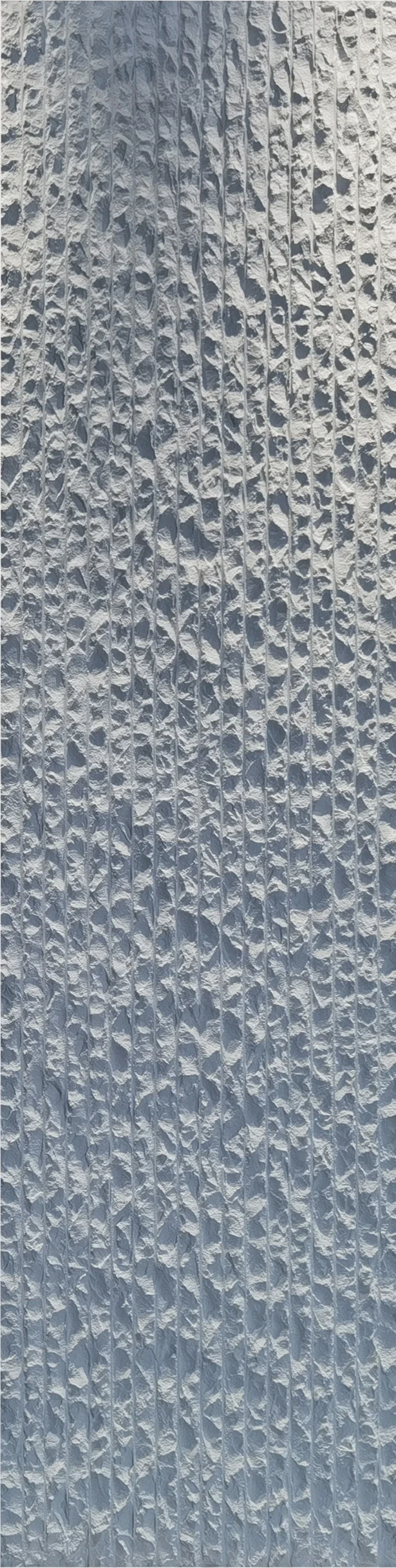
Nebula-like mottled texture, rich in light and dark layers. Showrooms, clubs, background walls.
Star-Moon Stone large panel PU stone veneer wall panel HSP-137
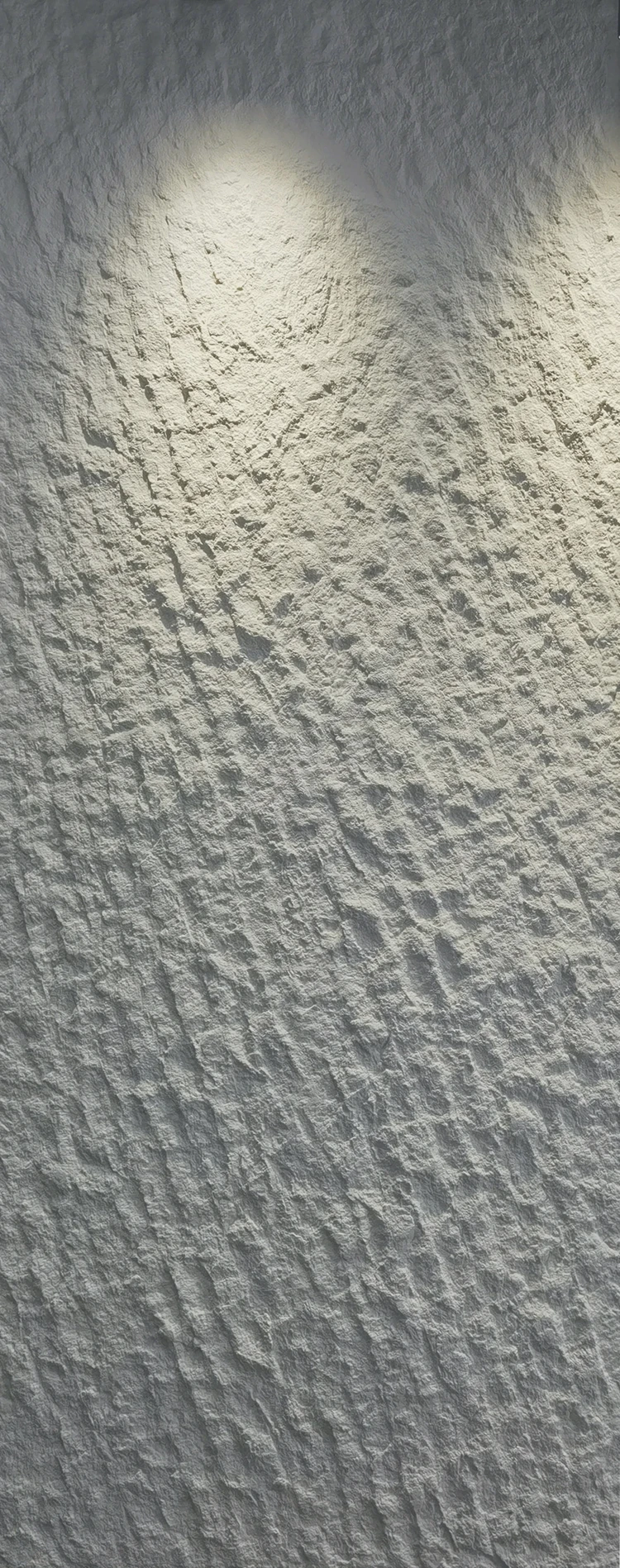
Nebula-like mottled texture, rich in light and dark layers. Showrooms, clubs, background walls.
Nebula Stone PU Stone Veneer Wall Panel HSP-135
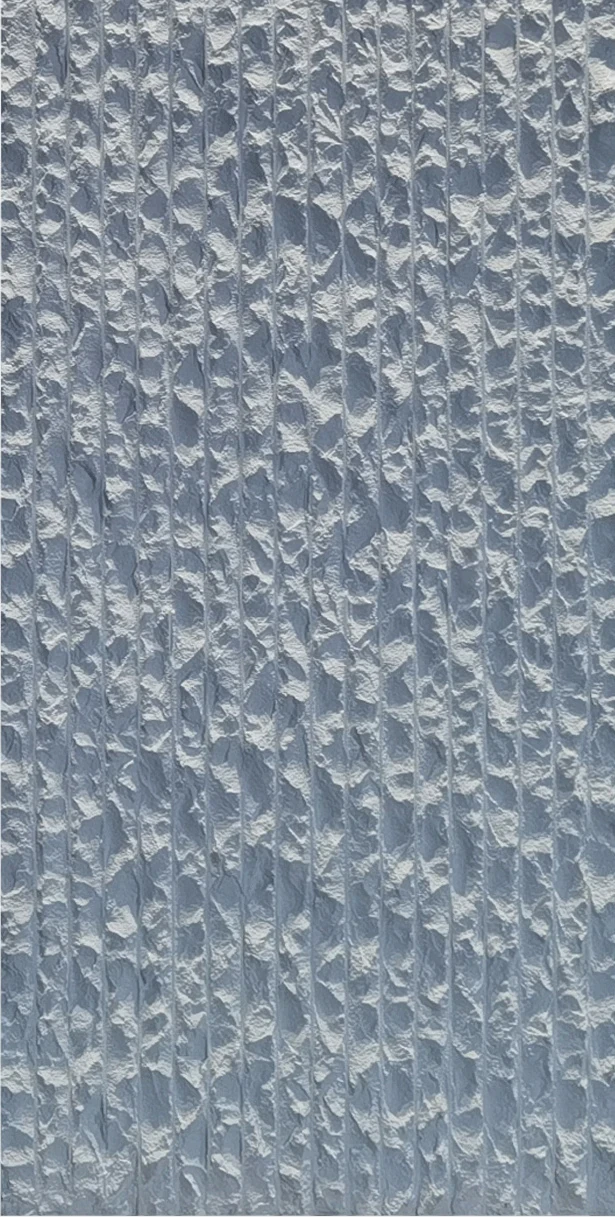
Nebula-like mottled texture, rich in light and dark layers. Showrooms, clubs, background walls.
Do not skip the sampling step
Do not skip the sampling step. Samples should cover at least three kinds of light: daylight, 3000K and 4000K; take one photo under each before comparing.
Related entrances
Related articles
Nebula Stone PU Stone Skin Wall Panel HSP-135
Nebula Stone PU Stone Skin Wall Panel HSP-135 is a PU three-dimensional wall ...
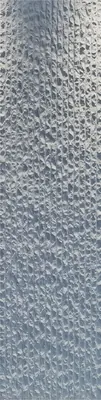
Nebula Stone Large Panel PU Stone Skin Wall Panel HSP-136
Nebula Stone Large Panel PU Stone Skin Wall Panel HSP-136 is a PU three-dimen...
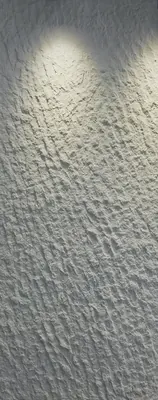
Star-Moon Stone large panel PU stone-skin wall panel HSP-137
Star-Moon Stone large panel PU stone-skin wall panel HSP-137 is a PU three-di...